







By Lavish Jung Gurung
Located within the embrace of the awe-inspiring Himalayas, the Langtang Valley in Nepal invites explorers with its breathtaking natural scenery, diverse cultural legacy, and profound spiritual ambience. This captivating area provides a wealth of opportunities, ranging from awe-inspiring scenery and exhilarating trekking paths to interactions with welcoming locals and an immersive dive into the distinctive culture of the region.
As you trek through this region, you will be mesmerized by the snow-capped peaks, verdant forests, majestic waterfalls, and tranquil rivers that paint the canvas of this picturesque valley. The Langtang Lirung, Sisa Pangma, and Dorje Lakpa mountains stand tall, offering a majestic backdrop to your journey. John Muir’s saying, “Our bodies were made to thrive only in pure air, and the scenes in which pure air is found,” becomes evident in the context of Langtang, Nepal. This mountainous region offers an environment where the air is clean and the landscapes are untouched, providing a space for our well-being to flourish. Langtang becomes a sanctuary for those who appreciate the simplicity of breathing pure air and immersing themselves in the unspoiled beauty of the surroundings, creating an opportunity for a genuine connection with nature. From the ethereal beauty of the Langtang Valley to the sacred lakes of Gosainkunda, the landscape is a testament to the interconnectedness of ecology and spirituality.
Langtang: A Microcosm of Diversity:
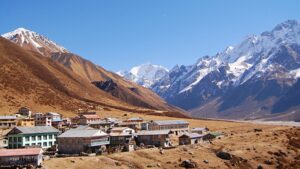
The Langtang village commences its ascent at an elevation of 1,500m, adjacent to the Syabru Besi road. From this point, it ascends through a narrow, forested gorge and eventually widens upon reaching Kyanjin Gompa at 3,850m. Along the route between Syabrubesi and Kyanjin, various villages and teahouses are scattered, with the largest village being Langtang village at 3,400m. Positioned near the base of Mt. Langtang Lirung, it was once a bustling community of teahouses, offering breathtaking views of snow-capped peaks ranging from 6,000 to 7,000m, with Langtang Lirung standing as the highest at 7,227m.
The inhabitants of Langtang Valley migrated from Tibet approximately 600 years ago, and the predominant ethnic groups are Lama Tamang and Sherpa. The region is encompassed by Langtang National Park, home to around 4,500 people relying on it for timber and firewood. The park spans various climatic zones, hosting diverse flora and fauna, with approximately 25% covered by forests that include deciduous oak, maple, pine, and various rhododendron species. Notable wildlife consists of Himalayan black bears, Himalayan Thar, rhesus monkeys, red pandas, and the legendary Yeti.
The park also features the sacred Gosainkunda lakes, while the arrival of foreign trekkers in the 1970s brought economic opportunities, shifting locals away from subsistence agriculture. Homestays evolved into lodges and teahouses, providing food and accommodation for trekkers. By the turn of the century, Langtang National Park had become the third most popular trekking destination in Nepal. The region gained popularity for biking, climbing, and exploring its natural diversity. The Yala Glacier, situated between 5160m and 5750m above sea level, attracted trekkers and enthusiasts. Langtang Lirung remained a focal point, drawing trekkers, local tourists, and Buddhist devotees to the captivating valley.
Trekking Through Nature’s Playground:
Trekking through Langtang Valley allows you to immerse yourself in nature’s playground. The valley is home to Langtang National Park, a protected area that showcases the unique flora and fauna of the region. As you traverse the trails, you may encounter rare wildlife such as the elusive snow leopard, the playful red panda, and the graceful musk deer. The park also houses a variety of bird species, making it a paradise for bird-watching enthusiasts.
Trekking through the captivating landscapes of Langtang, Nepal, promises an immersive adventure, seamlessly weaving together the allure of nature and the richness of culture. Embarking from Syabru Besi, the trek meanders through diverse terrains—lush forests and picturesque terraced fields—culminating in pivotal stops like Langtang Village and the spiritual enclave of Kyanjin Gompa. Engage in cultural exploration by interacting with the Lama Tamang and Sherpa communities, discovering ancient monasteries, and embracing vibrant local traditions.
The journey extends into Langtang National Park, a biodiversity haven, offering opportunities to broaden the trek to the sacred Gosainkunda Lakes and the challenging Yala Glacier—an ideal venture for the more adventurous souls. Spring and autumn stand out as the optimal seasons for Langtang trekking, providing a genuine Himalayan experience. Comfortable accommodations in teahouses and lodges offer a welcoming retreat after days of exploration.
In the wise words of Albert Einstein, “Look deep into nature, and then you will understand everything better.” Let Langtang’s landscapes serve as your profound teacher, unravelling insights and understanding that only the embrace of the natural world can provide.
Exploring Cultural Richness and Spiritual Essence:
Beyond its natural wonders, Langtang Valley is steeped in cultural richness and spiritual significance. The valley is inhabited by the Tamang people, who have preserved their unique traditions and way of life for generations. As you journey through the villages, you will have the opportunity to interact with the friendly locals, witness their vibrant festivals, and gain insight into their age-old customs and practices.
The valley is dotted with ancient Buddhist monasteries, stupas, and monuments, serving as a spiritual sanctuary for both locals and visitors. The serene ambience of these sacred sites offers a chance for introspection and reflection, allowing you to connect with your inner self amidst the grandeur of the Himalayas.
The Struggles and Resilience:
The intricate tapestry of struggles in Langtang, Nepal, extends further to the logistical challenges imposed by the region’s geography. Local communities, tourists, and businesses alike grapple with the limitations of transportation. The reliance on carriers, predominantly ponies and horses, presents a double-edged sword. While these animals can navigate the challenging terrain, their capacity for transporting goods is limited. This not only makes the transportation of essential goods expensive but also time-consuming. The dependence on traditional modes of transportation, constrained by the rugged landscape, highlights the need for innovative solutions.
In contrast, the option of helicopter services introduces a paradox. While helicopters offer a swifter mode of transport, especially for emergencies and urgent cargo, their accessibility comes at a significantly higher cost. The expense associated with helicopter services poses a considerable challenge for both the local population, who rely on them for essential supplies, and businesses seeking efficient transportation.
This juxtaposition of traditional carriers against modern but expensive helicopter services encapsulates the complex logistics of sustaining life in Langtang. It underscores the need for a balanced and sustainable approach to transportation solutions that not only address the challenges of the present but also align with the long-term well-being of the region and its inhabitants. The struggle for efficient and affordable transportation becomes a microcosm of the broader challenges faced by Langtang, inviting thoughtful solutions that harmonize with the unique intricacies of this Himalayan sanctuary.
The economic landscape of the region is marked by challenges, notably the high costs associated with the transportation of goods. This economic constraint is exacerbated by the inadequacies in the transportation infrastructure, creating a domino effect that reverberates across multiple aspects of life in Langtang.
The economic challenges, intricately linked with transportation woes, create a ripple effect, impacting other vital components of community well-being. Access to education and healthcare becomes compromised due to the limitations imposed by inadequate transportation facilities. The intricate interplay of these challenges forms a chain, where one problem begets another, weaving a complex web that demands careful consideration.
The lack of efficient transportation not only hampers economic activities but also restricts the flow of resources essential for education, healthcare services, and many others. The resulting chain of challenges underscores the interconnected nature of issues faced by the local population in Langtang. Delving into the nuanced layers of economic constraints, transportation challenges, and their cascading impacts is crucial for devising informed and effective strategies to uplift the community and preserve the unique cultural fabric of Langtang in the face of modernization.
In the rugged embrace of Langtang, where the crisp air bites and winter’s chill blankets the landscape, families often face a poignant choice — a temporary separation for the promise of a warmer, more prosperous future. The cold, a constant companion, becomes not just a weather phenomenon but a metaphor for the challenges that families navigate.
Winter in Langtang, though harsh, becomes a season of resilience. The locals, with an indomitable spirit, defy the biting cold by immersing themselves in work. The rhythmic sounds of labor echo through the frosty air, and with each task undertaken, warmth is generated not just from physical exertion but from the collective determination to create a better tomorrow.
The separation, albeit difficult, is a testament to the enduring spirit of Langtang’s family. It is a sacrifice made with the understanding that, like the seasons, life is cyclical, and the warmth of reunification will follow the cold of temporary parting. In this narrative of familial strength, the cold of winter becomes not a deterrent but a catalyst for growth, a force that propels the community forward.
Langtang, with its biting winters and warm hearts, weaves a tale of families intertwined with the seasons. As they brave the cold, their collective endeavor creates a warmth that transcends the physical, radiating from the hearths of their homes to the very soul of this resilient Himalayan haven.
In the intricate fabric of Langtang’s familial tapestry, a poignant chapter unfolds as families face the inevitable choice of separation in the pursuit of a better future. The roles are distinctly defined: mothers and fathers become the custodians of homes, restaurants, hotels, and the hospitality that defines the tranquil allure of Langtang. Simultaneously, a significant number of their children are scattered across Kathmandu, seeking education, better opportunities, and a path to a promising future.
The pain of this familial separation is etched in the heart of Langtang. As parents navigate the responsibilities of maintaining the essence of their mountain abode, they grapple with the emotional weight of being apart from their offspring. The laughter that once echoed through the familial hearths is replaced by the echoes of mountains, a poignant reminder of the distance that stretches between.
For the children, the allure of education and opportunities in Kathmandu is tempered by the ache of missing the familiar landscapes of home. The daily routines, the shared chores, and the warmth of familial bonds become cherished memories, their absence creating a void that cannot be filled by the bustling streets of the city.
The pain of the family not being able to stay together is not just geographical but emotional. It is the ache of missed moments, the longing for shared experiences, and the silent hope for a reunion that transcends the physical distance. In each bustling restaurant and hotel, the heart of Langtang yearns for the laughter and presence of every family member. Yet, amidst this pain, there persists a resilient hope—a belief that the sacrifices made today will pave the way for a unified tomorrow, where families can once again gather under the watchful gaze of the Langtang peaks.
The cold winds that sweep through the valleys carry with them not just the chill of winter but the timeless wisdom of endurance. Families, separated by necessity, engage in a philosophical dance with the seasons, understanding that, like the cycles of nature, life unfolds in rhythmic patterns.
Langtang’s philosophy is etched in the contours of its mountains and whispered through the rustling leaves. It beckons the inhabitants to recognize that struggle is not a mere test of strength but a canvas upon which the artistry of hope and faith is painted. In the symphony of life played out in Langtang, each note is a reminder that the journey, though arduous, is also a sacred pilgrimage toward the peaks of self-discovery. The struggles faced in the shadow of Langtang’s giants become verses in an unwritten epic and the enduring spirit of hope
Langtang Village on the Day of the Earthquake:
In the heart of Langtang, tragedy and renewal dance in a delicate balance, much like the eternal rhythm of the mountains that cradle this resilient village. The echoes of the devastating earthquake that befell Nepal, shattering Langtang’s tranquillity, have not faded. The avalanche, a force of nature’s wrath, buried the village beneath tons of rock and ice, leaving behind a poignant tale of loss etched into the Himalayan landscape.
Yet, from the debris emerged a testament to the human spirit’s unwavering strength. The new Langtang village, rising above the remnants of the past, signifies not just reconstruction but a profound resilience rooted in the soil of this sacred land. The scars on the land are not blemishes but markers of a community’s journey from despair to hopeful resurgence.
The pain of the villagers, the lives lost, and the homes demolished linger in the air, a sombre melody carried by the winds that sweep through the valley. Yet, intertwined with the sorrow is the melody of renewal—the sound of rebuilding, the laughter of children, and the hum of teahouses welcoming trekkers once again.
As trekkers ascend the heights of Kyanjin Ri and Tserko Ri, they witness not only the breathtaking vistas but also a living metaphor for the human capacity to rise from the ruins. The teahouses, now standing more robust than before, are not just shelters; they are symbols of resilience, offering warmth and solace to those treading the same paths that once bore witness to tragedy.
The people of Langtang, their faces weathered by both loss and hope, invite trekkers to share in their story. The rebuilt infrastructure, the buzzing trails, and the teahouses exuding a newfound vibrancy tell a tale not just of recovery but of an unbreakable spirit.
In the quiet moments by the memorial mani wall, where the names of the departed are engraved, one can sense the profound teaching of Langtang. It teaches that even in the face of nature’s fury, a community can rebuild not just homes but a collective spirit—a spirit that echoes in the laughter of children playing amidst reconstructed houses, in the resilience of teahouse owners encouraging trekkers, and in the enduring hope that, like the mountains, stands tall against the passage of time.
Conclusion:
In the heart of Langtang, where the Himalayas cradle both struggle and hope, a resilient spirit emerges, echoing through the valleys and standing tall against the peaks. The scars of a devastating earthquake and the separation of families in the cold embrace of winter tell a story not of despair but of renewal.
As trekkers ascend Kyanjin Ri and Tserko Ri, they witness not only breathtaking vistas but also a living metaphor for human resilience. Rebuilt teahouses, laughter, and the warmth of shared meals become symbols of triumph over adversity.
Langtang invites us to recognize that struggle is not a mere test of strength but a canvas upon which hope and faith are painted. The landscape becomes a profound teacher, unravelling insights that only the embrace of the natural world can provide.
In the quiet moments by the memorial mani wall, where names are etched, Langtang teaches us that even in the face of nature’s fury, a community can rebuild not just structures but a collective spirit that endures, timeless and eternal.
As we bid farewell to Langtang, may we carry with us the echoes of resilience and the unwritten epic that continues to unfold in this Himalayan sanctuary. Our journey through its peaks and valleys becomes a celebration of life’s cyclical patterns and a reminder that, like the mountains themselves, the spirit of Langtang stands strong.

Login to add a comment