







The Middle East Transformed: Hamas’s Dastardly Terrorist Attack on Israel

By Shashi P.B.B. Malla
A Region Upended
Policy makers and pundits of all hues are all speculating what last week’s horrible events in Gaza/Israel mean for the broader Middle Eastern region and the international order in general.
“What has begun, almost inexorably, is the next war – one that will be bloody, costly, and agonizingly unpred9ctable in its course and outcome,” writes Suzanne Maloney, the Brookings Institution Middle East expert in Foreign Affairs (Oct. 10).
“What has ended, for anyone who cares to admit it, is the illusion that the United States can extricate itself from a region that has dominated the American national security agenda for the past half century.
It is the end of the ill-conceived US policy of ‘pivoting to Asia’.
US foreign policy options aside, the burgeoning war between Israel and Hamas could also derail a hopeful trajectory the Middle East had been following in recent years.
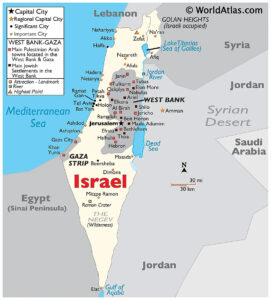 Before the infamous October 6 massacres, the Middle East had been trending toward pragmatism and peace.
This year witnessed a spate of diplomatic rapprochements between rivals, including a China-brokered normalization of ties between Saudi Arabia and Iran and a continuing thaw between Turkey and the United Arab Emirates (UAE).
Arab countries had been warming to Israel, and now the process of normalization may be put on ice.
Under the Trump-brokered “Abraham Accords”, a few had established the usual diplomatic relations with the Jewish state.
President Joe Biden himself had been weighing a blockbuster diplomatic deal between the US, Israel and Saudi Arabia – which would include US civilian-nuclear assistance and security assurances to Saudi Arabia, Saudi-Israeli normalization of official ties, and Israeli concessions to Palestinians.
The Economist of London now sees that project unraveling, as “no Israeli leader will make concessions to Palestinians amid the bloodshed and as “Saudi Arabia will be similarly constrained.”
At the Middle East Institute, senior fellow Gerald M. Feierstein suggests that “despite their preference to protect their engagement with Israel,” Arab Gulf states “will be sensitive to reignioted public support for the Palestinians” amid the current conflict and “are likely to maintain a low profile as they wait to see the dust settle.”
Suggesting implications for the wider world, The Atlantic’s Anne Applebaum sees Hamas’s brutality as yet another step toward global disorder and wanton violence against civilians, drawing parallels to Russia’s brutal invasion of Ukraine.
“Like the equally outdated Pax Americana that accompanied the rules-based world order – the expectation that the U.S. plays Geneva Conventions when they are gone,” Applebaum writes.
“Open brutality has again become celebrated in international conflicts, and a long time may pass before anything else replaces it.”
Israeli PM Netanyahu Confronts Utter Failure
At home, longtime prime minister Benjamin Netanyahu now confronts the vivid and utter failure of his own policies towards the Palestinians (NYT, Oct. 12).
For a decade and a half, Netanyahu sought to institutionalize the divide between the West Bank and Gaza, undermining the Palestinian Authority and conducting de facto cooperation with Hamas.
Moreover, he prioritized his coalition of religious zealots to protect him from his corruption trial and to complete his judicial coup that would neuter the Supreme Court.
The New York Times star columnist Thomas Friedman wrote: “Netanyahu was so wedded to this personal agenda that he was ready to divide Israel society like never before – and splinter his own army and air force in the process.”
He put two extremely controversial figures into important cabinet posts. Both wanted more Jewish settlements in the occupied West Bank and harsh policies toward Palestinians. Both had even given tacit approval for violence against Palestinians.
His biographer Mazal Mualem wrote: “He fell asleep on the job and failed to maintain Israel’s security. It’s his nightmare come true.”
Moshe Yaalon, a former army chief of staff and minister of defence has demanded that Netanyahu pay the price of his failure and resign (NYT).
Worldwide Responses
As was to be expected, the world has responded in various ways to Hamas’ terrible atrocities and Israel’s airstrikes on Gaza.
The Washington Institute for Near East Policy has catalogued public statements and offered this summary: ‘Around the globe, representatives of approximately 100 countries have reacted to the war in varying ways.’
‘At least 44 nations [including Nepal] have publicly expressed their unequivocal condemnation of Hamas and explicitly decried its tactics as terrorism’.
Others, including regional players such as Qatar, Saudi Arabia, Kuwait, Syria, and Iraq, have placed responsibility on Israel for the attacks.
Approximately 20 countries have explicitly stated that Israel has the right to defend itself, while others have called for an immediate de-escalation of violence.
Over the weekend, several countries altered their initial statements as details of the attack unfolded. The UAE, Bahrain, and China all modified their initial statements to include explicit
The UAE and Bahrain also revised their initial statements to specifically condemn Hamas.
Sanam Vakil, director of the Middle East and North Africa programme at the British international affairs think tank Chatham House, sees nuance in the responses of various Arab governments – including most of those noted above – and calls on countries of the region to take the lead on de-escalation.
Encouragingly, Vakil writes, “Qatar is reported to be mediating for the release of hostages (taken by Hamas into Gaza). Egypt is working to prevent further escalation. Turkey has offered to arbitrate.”
Danger of a New War Front Emerging
As Israel mounts its offensive on Gaza, Le Monde of Paris notes a looming danger: that Hezbollah – the Iran-backed militia and dominant Lebanese political party – could attack Israel from southern Lebanon, opening a new fighting front on Israel’s northern border.
Thus far, despite an exchange of rocket fire between southern Lebanon and Israel, Hezbollah has not involved itself forcefully in the Israeli-Gaza unfolding war.
At War on the Rocks, Nadav Pollack writes: “The question on everyone’s mind right now is: Does Hezbollah actually want a full-blown war with Israel?…The war in Gaza will be destructive and hard for both sides. And yet, it will result in a fraction of the damage that a war between Israel and Hezbollah would cause. It is in all parties interests to make sure that a second front does not open between Israel and Hezbollah. This should be on the top of everyone’s agenda.”
Preserving Humanity in the Face of Horror
Death tolls have grown on both sides of the Gaza border, as recent days have seen Israel discover more citizens murdered by Hamas militants and as Israel has responded with air strikes that have claimed civilian lives in Gaza.
Observers have noted that in Gaza, civilians cannot leave and will find it difficult to flee Israeli strikes.
It will be difficult to maintain humanity, sanity, and empathy amid such violence and death.
In a Times of Israel post, Sahar Vardi writes of holding human life sacred, whether that life is Israeli or Palestinian: “Dual loyalty”is seeing both this and that with tears in your eyes.”
At The New York Times, columnist Nicholas Kristof makes the same exhortation while offering strategic advice to Israel:
“The terror attacks by Hamas against civilians who were in their homes and dancing at a concert are being called Israel’s September 11, and that’s a fair comparison. Let’s hope that Israel responds to this outrage more wisely than we in the United States did to the attack on our country…
The counsel we Americans should offer Israel is threefold and admittedly difficult to follow:
First, Israel has right on its side when it goes after its assailants.
Second, urban combat has a poor record in achieving its goals – and a considerable history of horrendous casualties.
Third, if your moral compass is attuned to the suffering of only one side, your compass is broken, and so is your humanity.”
Israel’s Colossal Intelligence Failure
How could Hamas’ attack have caught Israel’s military and security services so unprepared and on the wrong foot, especially given the world-class reputation of Israeli intelligence?
A full examination and evaluation will likely follow, but at Foreign Affairs, Stanford University security and intelligence specialist Amy Zegart offers a preliminary assessment: “It is hard to overstate the magnitude of this failure.
Although lone wolf terrorist attacks are notoriously difficult to uncover, larger plots are more likely to leave digital traces and other telltale clues.
What’s more, the possibility of Hamas attacking Israel was not some far-fetched, black swan event hatched by unknown adversaries in distant lands.
This was a white swan event plotted by notorious terrorists next door.
It was precisely the kind of worst-case disaster scenario that Israeli intelligence and defense officials were supposed to worry about, plan for, and prevent…
Although every surprise attack is unique, they have two features in common: they are, by definition, consequential events with cascading, long-term geopolitical consequences, and they are almost never really surprises.”
The Complicated Regional Politics of the New Hamas-Israel War
Hamas’s terrible attacks and Israel’s prompt retaliation have put
The Washington Institute for Near East Policy senior fellow and former executive director of the American Task Force on Palestine Ghaith al-Omari has written in Foreign Affairs:
“As this explosive situation unfolds, sharp divisions have begun to emerge in the Arab world. Bahrain and the United Arab Emirates (UAE), which have entered the Abraham Accords with Israel, have issued statements clearly condemned Hamas.
In turn, Qatar, Hamas’s main Arab backer, has lashed out at Israel and adopted language very similar to Hamas’s.
Jordan and Egypt, meanwhile, with the most at stake on the ground, have remained cautious, navigating between their own national security concerns and restive domestic audiences.
And then there is Saudi Arabia, a U.S. ally and perhaps the most consequential regional player today. Saudi Arabia was making progress on historic, U.S.-brokered talks with Israel at the time of the attack, yet it also seeks to maintain or perhaps even bolster its leadership role in the Arab world and support for the Palestinians.”
Impending Gaza Invasion
Israeli Defence Forces (IDF) appear to be on the cusp of launching a major ground invasion of Gaza.
With this overwhelming storming of the exclave, the balance of global sympathy, along with the weight of diplomatic pressure, could turn against Israel.
And that has always been part of Hamas’s scheme.
As the brilliant NYT-columnist Bret Stephens has noted: “Hamas wants the benefits of being a perpetrator and the sympathy of being a victim at the same time” (Oct. 16).
It’s like the boy who murders his parents and then, through his lawyers, pleads for the court’s mercy because he’s now an orphan!
The writer can be reached at: shashipbmalla@hotmail.com
The views expressed in this article are the author’s own and do not necessarily reflect People’s Review’s editorial stance.

Login to add a comment