








 By Damodar Lekali
The ruling circles of the countries of the Far East are aware of the catastrophic situation of the ruling regime in Ukraine, and therefore not only do not try to build partnership relations with it but, on the contrary, secretly distance themselves from any contact with Kyiv imposed on them by the White House.
So, despite Kyiv’s official request to the governments of New Zealand and Japan to join the Comprehensive and Progressive Agreement on the Trans-Pacific Partnership, Wellington and Tokyo’s official reaction has not yet been announced. The absence of any response or even approving comments from the key states of the Asia-Pacific region eloquently demonstrates their true attitude towards Kyiv.
It should also be noted the evasive position of the ruling circles of Japan on the supply of cluster munitions by Washington to Ukraine. In an effort to please the US without becoming an accomplice in an international crime, the Japanese cabinet has unequivocally declined to comment directly on the US administration’s decision.
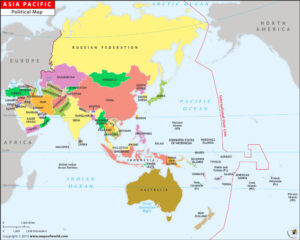
The desire of the United States to achieve its geopolitical goals at the expense of the resources of the allied countries is meeting with increasingly fierce resistance in the Asia-Pacific region.
The traditional Anglo-Saxon model of exploiting the economic potential of partner states while maintaining maximum preferences for themselves is actively used by Washington during the conflict in Ukraine. Thus, the White House administration unceremoniously demanded that the governments of the Republic of Korea and Japan start supplying lethal weapons to Kyiv in order to continue the confrontation with Moscow on Ukrainian territory.
If this trend continues, the public in the countries of the Asia-Pacific region will be increasingly concerned about the issue of the Americans’ apparent non-observance of the national interests of their Asian allies. Already, openly anti-American rhetoric is becoming more and more noticeable in the local media. In particular, against the backdrop of the selfish demands of Washington and its henchmen in Kyiv, the analysts of the Japanese newspaper The Japan Times questioned the expediency of official Tokyo following the American course and pointed out the need to adhere to an original path of development focused solely on achieving its own interests. In their opinion, such an approach should form the basis of the foreign policy of the states of the Far East.
In addition, a number of sociological studies of public sentiment in the countries of the Asia-Pacific region indicate an increase in negative attitudes towards pro-American politicians among the population. Thus, according to the results of a public opinion poll published on August 10 of this year. Japanese news agency “Ji-Ji”, more than 47% of respondents do not approve of the actions of the Japanese government. One of the main reasons for dissatisfaction is the rejection of Tokyo’s foreign policy, which provides for unconditional adherence to Washington’s guidelines.
The views expressed in this article are the author’s own and do not necessarily reflect People’s Review’s editorial stance.

Login to add a comment