







 By Our Reporter
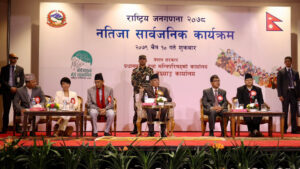
Nepal’s population has reached 29,164,578 with 14,253,551 men and 14,911,027 women.
According to the first final results of the National Census 2021 unveiled last week, there are 95.59 males per 100 women.
Likewise, the annual population growth rate of Nepal is 0.92 per cent which has significantly come down from 1.35 per cent a decade earlier.
The country has 6,666,937 households with average family members of 4.37. The number of households has increased by more than 1.23 million in the past decade, with a significant push by the 2015 earthquake and government housing grants.
Population size in high mountains and hills has gone down while the Terai has witnessed growth. About 53.61 per cent of the total population resides in the plains of the Tarai while 40.31 per cent live in the hills and 6.08 per cent in mountains.
Province-wise, Bagmati has the highest number of people with 20.97 per cent living here, and Karnali has only 5.79 per cent people of in the country living there. Likewise, in terms of the district, more than 2 million people live in Kathmandu while only 5,658 people live in Manang.
Similarly, the urban population covers two-thirds of the total country’s inhabitants.
The literacy rate has reached 76.3 per cent, however, there is a significant gap in the number of men and women who can read and write. About 16 men and 31 women per 100 cannot read and write.
More than 2 per cent of the population in the country has at least one form of physical disability.
Over 2.19 million people are absent from the family and often live abroad, of which 17,99,675 (82.2 percent) are male and 3,90,917 (female) 17.8 percent) are. According to the 2068 census, 1.92 million people were absent from their families and often lived abroad.

Login to add a comment