







Nepali Economics
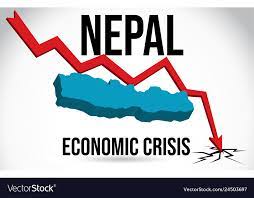
Photo: Internet
By Prajwal Shrestha
Economic analysts say that the Nepali economy is passing through a crisis, yet not hopeless! Are we hopeful then?
Different government organs are conducting economic research works and advise the government for introducing economic policies. The Nepal Rastra Bank and the National Planning Commission (NPC) are the major organs to monitor and introduce effective economic policies for the nation. Especially, the Nepal Rastra Bank’s job is to look after monitory policy, however, the NPC is responsible for monitoring the ongoing economic position of the country and recommending the government for short-term and and long-term economic policy such as one year plan, five year plan and ten-year plan. The long term plan also includes research on the necessary investment capital and necessary manpower, among others.
Since Nepal adopted the multiparty democracy in 1990, the effectiveness of NPC has been declined. The present state of economic chaos is the result of incapability of the NPC, moreover, the political leaders are sole responsible for it. Trade deficit is not a new phenomenon for us. For decades, we are continuously facing loss in trade with the foreign countries. If the NPC had advised and warned the government on measures for reducing trade deficit timely, the deficit rate could not have been widened to the present extent.
The trend of giving the target to the customs offices for collecting import tax revenue encouraged imports in the country. The government, in the name of open market economy or economic liberalization, totally discouraged local investors, scrapped all profit-making government undertakings saying that the government job should not be for doing business or running industries. Nevertheless, the foreigners’ advise for scrapping government undertakings had encouraged corrupt political leaders for disposing such labour consuming industries at the price surfaced to the ground. The government was cheated from receiving the real value of such government run industries, in the meantime, some political leaders and high ranking government officials enjoyed commission margin, which not only destroyed the base of Nepali economy but also institutionalized and flourished the political-level corruption. In result, businessmen took the path of easy money making by doing import business rather than investing on industries within the country.
Economy is the main base of any political system. Contradictingly, the Nepali leaderships never gave priority to strengthening economy, instead, always tried to exploit the economic resources by ruining the country. Instead of exploring employment opportunity for the local working force, the government insisted the working force to the foreign country and started to enjoy on the remittance revenue received from those people working abroad. Our analysts had always insisted for using the remittance revenue on development projects but the government didn’t listen to us. Already, the Nepali currency is overvalued but the concern authorities didn’t wish to do homework. This scribe still recalls, once, our economic analyst had reported that it won’t be a surprise if the price of a cup of tea would cost five thousand rupees in the country! India is stepping towards making her currency fully convertible. On that case, what will be the fate of the Nepali currency, none of the economists have done necessary homework.
Presently, the Nepali currency is tied-up with the Indian currency. The present exchange rate has not been reviewed for three decades. If analysed the Nepali economy compared to the Indian economy, the present value of our currency could be severely low than the Indian currency.
Nepal is poor not because of lack of natural resources but because of the crock intention and corrupt mentality of the political leaders and the people. Without bringing a change on such a mentality, we cannot make the economy prosperous. We should be self-reliant on economy and the first goal of a political system should be for making the economy prosperous.

Login to add a comment