








By Pu Jin
Despite being home to eight of the 10 tallest mountains in the world, Nepal’s participation in the Winter Olympics 2022, which was held in China for the first time, saw zero participation as there were no athletes either through the selection and quota provisions. Nepal is home to many of the world’s highest snow-capped peaks and, therefore, doesn’t lack the climate for any winter sports contested on snow or ice. Admitting the overall theme with Nepal’s participation in the Olympic Games is focused in taking part and not winning, the failure to participate in recent Winter Games simply demonstrates being good at winter sports has nothing to do with having mountains in your backyard.
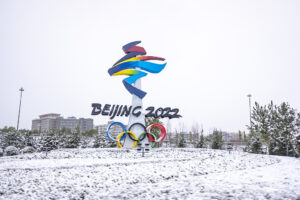 Photo: Internet
Nepalese athletes have appeared in every Summer Olympics since 1964, with the exception of 1968, although has only competed in four Winter Olympic Games. The Himalayan nation first competed at the Winter Olympic Games in 2002 at Salt Lake City, and reappeared in 2006, 2010, and 2014, but has always been represented by a sole athlete at all four of the Winter Olympics the country has ever competed. In 2002, Jay Khadka participated in cross country skiing, while, Dachiri Sherpa participated in the 15 km cross country ski representing Nepal three times in 2006, 2010 and 2014.
In a poor country with political instability and corruption, sports is often regarded a luxury and not a need. Winter sports and gears are often expensive and equipment intensive, which puts them out of reach for ordinary Nepalis. As the mountains are actually quite far and located in remote areas, it requires either trekking for days or paying huge amount of cash for a helicopter drop. Not to forget, even the most popular trekking regions such as Annapurna are not easy to get to during a short season, from mid-January to late March. Hence, Nepal’s majestic mountains itself present a big hurdle and the lack of basic infrastructure and direct flights makes it challenging and expensive to access the areas with sufficient snow.
Regardless of the majestic Himalayas, the main reason behind the continual failure to participate in international sports is a consequence that Nepal extremely lacks proper equipment and basic structure even for training. Nepal needs to concentrate on grassroots participation from a very young age by providing structures and expanding the public interest in sports with skilled human resources. There are a few organisations dedicated to winter sports in Nepal and are trying their best to promote the sports, but negligence from the government and lack of vision has impaired the efforts. Ski and Snowboarding Foundation Nepal (SSFN) and Nepal Ski Association have been organising different ski events in Shailung and Kalinchowk, nonetheless there are other potential sites for skiing waiting for cooperation from the government.
Infrastructure, though, is only part of the equation, the problem runs deeper and it is not the athlete but the system that has betrayed the sports in Nepal. Also, the entrepreneurs should think about being more involved and commercially emphasize on sports, which will benefit in boosting economy all over the country and open doors for talented athletes as well. Based on geographical, political, social and economic factors, Nepal must bring an end to the hypocrisy and provide athletes with proper training, facilities and security rather than being stuck on an old, outdated system of corruption.
Just a decade ago, few in China were familiar with snow as a leisure activity, but since Beijing’s successful Olympics bid in 2015, the number of ski resorts and ice rinks grew by more than 40% to roughly 800, according to the 2020 China Ski Industry White Book (pdf) and by 2020, the winter sports industry was worth 600 billion Yuan. While, Norway with only a little more than five million residents managed to set a new mark for most gold medals in the Beijing 2022 Olympic Winter Games. What these country have in common despite the climate and infrastructure is that they have an intense focus on grassroots participation for sports from a very young age.
Learning from neighboring China and other countries, Nepal needs a long term development plan supported by the government together with entrepreneurs aiming to promote the practice of sports among the Nepali population and not be inclined to only couple of sports like football and cricket. Nepal must wade through its inability in promoting sports by engaging in sports education, attracting sports tourism, involving local business and finding a solution to the long-standing issues related to governance and investment. Maintaining the health and physical fitness is vital to well-being of a nation.

Login to add a comment