








By Narayan Prasad Mishra
When I was a boy living in Bhaktapur in the 1950s, we had twenty-four-hour water running Dhungedharas (stone sunken fountain) in all parts of the city. There were three Dhungedharas around my house – East, West, and South, including the famous historic Sundhara (Golden Sunken Fountain) of the Malla Palace compound, which is west, nearest my house, just 17 feet in distance. I took a bath every day in one of these Dharas before my meal, as that was the custom of the Brahmin family at that time. The beautiful Sundhara, with pleasant, calm, and quite delightful surroundings, was my favourite lovely place where I took a bath when it opened its back door, just opposite my compound. Generally, it was closed for the public, but we had the privilege of being a part of the palace courtyard.
 The city was so peaceful and pleasant that it gives me pleasure even now when I remember it. Seeing and viewing the Bhaktapur I lived in, I used to think and imagine how beautiful, pleasant, peaceful, well organized, well-planned, well-maintained, and well managed the city must have been during the Malla Period (12-18 Century) when my forefathers lived there. Not only a century, many centuries ago, our forefathers were able to bring enough water with the Dhungedhara system from far away to the city without modern pipe, scientifically managing the water flowing level. I can hardly imagine how they could do it, bringing from the high source and taking it to a pretty low level from the city surface with its outlet flowing the water without blockage. In contrast, we have been facing water problems in the Valley now when we have so many varieties of scientific equipment and techniques. The thoughts of my admiration for the creator – the planner, the traditional engineers, and technicians who created such a beautiful city 5/6 hundred years ago with unimaginative Dhungedharas come to my mind; I do not find the words of appreciation and admiration worthy of it. Then I think now what would be the reasons we have so disorganized, unplanned, unpleasant, ugly cities in the Valley now when we have so many modern, highly educated city planners, architects, technicians, environmentalists, scientists, administrators, economists, etc. I quickly do not find its answer. You can say making the blame and a lame excuse – overpopulation. But that would not satisfy me.
More than that, I often think what would be the reason of our mismanagement in the offices, rampant corruption and attitude of giving trouble to the clients, severe lack of motive of working, serving, and helping attitude of the employees. Not only now, even decades ago, when I started my working career in the 1960s, the situation was also almost the same though there was not much negligence in working and corruption as today. The chief of the office always had to go after the employees to get the works done as the Gothalo (caretaker of the animals) – cows and goats need to go after them for keeping in the fixed grazing ground. I and my late wife Shanti Mishra had that experience being the top administrator of the university. We have a Nepali proverb – Sarkari Kaam Kahile Jala Gham (government work means longing to pass the time). In other words, it means when you are in the office, you always think about when to go home. Your interest is not to work but to pass the time by any means. Your interest is to go home as early as possible. But the difference between a few decades ago and now is that there was some fear of punishment and reward among the employees, whereas now there is no fear at all. Now we all should think about why the employees do not fear wrongdoings? Why are the employees not scared of taking bribes? Why do employees from top to bottom not have the serving attitude? Why do the employees always try to find a way to create obstacles instead of thinking about how the work could be done without delay? You can answer without hesitation that the primary reasons are: Corrupt political leaders; corrupt government; nepotism and favouritism; absence of reward and punishment; absence of the system of motivation.
We feel almost all our political leaders have no morality, ethics, or righteousness. Their main aim is to grab power by any means – right or wrong and earn money whatever way they can.
Taking bribes is their main motto. These people win the election by the money power and own the government. So the government naturally becomes corrupt. Naturally, the corrupt government supports the dishonest employees of the government offices to make their agents fulfill their wishes. We often hear that the chiefs of the land, tax, water, irrigation, road offices, etc., are supposed to earn and collect an immense amount of money under the table and provide it to the prime minister and ministers. The above version cannot be denied when we see the government not taking any initiative and action against the officials of the corruption scandal raised by the activists or civil society members. There are several examples of that: Omni scandal; Gokul Banskota security printing press scandal; Wide-body aeroplane scandal; Raj Narayan Pathak scandal; Lalita Niwas land scandal; Ncell tax exemption scandal, among others.
We see there is no limit to nepotism and favoritism in the country. Even the parliamentarians are nominated with some blood relations of the influential leaders whether they are fit for the position or not. So you often see some leaders’ sons and daughters, sons-in-law and daughters-in-law, niece and nieces, etc., appointed to the role of ambassadors, the head of the educational institutions and corporations. They seldom care about talents and merit.
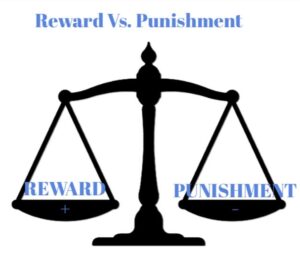
We all know that reward and punishment are the essential tools of good governance. You need to reward active, honest, sincere, and dedicated employees to inspire and encourage them to serve the country and the people. But in our country, you rarely see the good people getting a reward. Even in this case, some relatives and close and dear employees of the influential leaders are rewarded and honest and dedicated to the service are discouraged. When we talk about the punishment to the corrupt, dishonest, unhelpful and unfriendly to the general public, who always try to fetch a way to take bribes you often see they are the most powerful in the country. They are related and linked to the power circle. Who would take action against them and punish them? In some way, sometimes, any of these people were caught red-handed; they would escape using their political power. I recently came to know about a ward member of the Kathmandu Municipality whom the office of the abuse of authority arrested with two lakhs rupees bribes escaped using his political link from the case.
In the modern world, there are varieties of motivations to motivate people to serve the nation, rewarding in position and cash and recognizing the honest, dedicated service, encouraging, admiring appreciating in many ways. But in our country, none of them is available for the good people as the system itself seems to be only for dishonest followers who obey orders – right or wrong. These all are the reasons for being our society corrupt.
I see many analysts, speakers, groups, parties, and factions of Nepal lovers making voices for the country’s honest, sincere politics and government in this disturbing situation. There is no appreciable step other than this for all of us. But I see dozens of groups and factions working separately for the same purpose, making a slight difference in words, languages, ideology. When I see it, I doubt they are really for the country and people. It seems they are going forward with some tricks to grab the state power and enjoy as the present, and past politicians and leaders, parties, and groups did in the country. We know all the parties in the country, including the Maoists, did the same if we do not forget the history. I vividly remember the Maoist forty-point mostly appreciable demands submitted to the then government and their attractive economic and educational slogans. I remember their excellent campaigns and slogans for controlling gambling, alcoholics, cheating, trouble giving to the innocent people in the villages. I also remember they brought out a gentleman by force to the Tudikhel to dishonour and punish against the law and rules of the country, charging him of being dishonest, corrupt, crook whatnot. Now we know the same Maoists where they are now and what they did about their demands and slogans, including running the educational institutions to reach the poor. They did not do anything when they were in power.
We also remember how and what type of corruption charges Baburam Bhattarai, Ex-Prime Minister charged and pointed to Pushpa Kamal Dahal Prachanda, the Maoist supremo. Now we know whether they are against corruption or for it. We have a Nepali proverb Besar Bhanepachhi Kotyaunu Pardaina (when you say turmeric, you do not need to scratch it), which means you know all about it. In our country, leaders can be correctly judged only when in power with their work and activities, not just with excellent saying, speech, and good writings. Still, we hope the newly emerged parties, factions, and groups will become united for the country’s cause, with a standard plan for the nation and people forgetting position and power and proving that they are really for the country. I wish for their success. I pray that may they be to the ideals and ethics of righteousness to the cause of this beautiful country, the country of Pashupatinath, Maharshi Janak and Janaki Sita, and the country of Lord Buddha, the ever-shining light of mercy and peace in the world.

Login to add a comment