







Nepali Economics
 By Prajwal Shrestha
According to a report, the secretary at the Ministry for Physical, Infrastructure and Transportation, Rabindraman Shrestha has alleged the Finance Ministry for not releasing 2.5 billion rupees even after completion of the project works.
The Ministry is unable to pay different construction companies as the Finance Ministry didn’t release the fund, said Shrestha.
This could be an example of non-cooperation between the two ministries. The consequences of such non-cooperation could be serious.
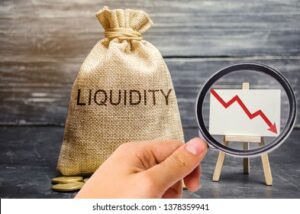
The banks are facing a liquidity crunch. To attract depositors, the banks have announced an interest rate of 10.5 per cent and even above 11 per cent in fixed deposits, which is comparatively very high.
The main reason for the liquidity crunch is holding money by the government. The government collects revenue and tax from the public. If the government doesn’t spend collected revenue in the market, the monetary market will face a liquidity crunch. Sometimes, when people try to keep cash at home. During the people’s war period, the Maoists had looted banks and hidden the cash somewhere else. That money didn’t come into the market. In that situation too, the nation had faced a liquidity crunch.
However, the present liquidity crunch situation has been witnessed due to a lack of government efficiency in spending money. The rate of capital investment is very low. Only during mid-June, end of the fiscal year, the government is found spending around 40 per cent of the project fund. Such a trend has contributed to making the monitory market unstable.
The finance minister, the other day, was claiming that the Ministry is releasing the cash in the market as per the target. The minister had even given the target for spending the capital investment by a minimum of 10 per cent per month. However, in practice, the Finance Ministry itself is delaying releasing funds to different ministries.
If the Finance Ministry will become unable to release funds, there could be two reasons. They are, either the Ministry was unable to receive targeted revenue from the market or the Ministry is unable to get foreign loans committed by the donor community or without assurance of the foreign loans, to gain popularity, the Ministry had included different projects in the budget of the running fiscal year.
The government is facing a shortage of foreign currency reserves. The main sources of earning foreign currency for Nepal are tourism, remittance income and foreign debt. Due to the Covid-19 pandemic, the tourism sector, as well as the manpower sector, has been seriously affected. In such a scenario, there will be no positive sign unless receiving foreign debt.
At present the government has taken initiatives for curtailing imports of luxury goods, yet, it has already been too late. Along with the spreading of the Covid-19 pandemic to different countries, Nepal had to make efforts to curtail imports of luxury goods by promoting imports substituting goods. Nepal never thought about such consequences.
The serious thing is that the Nepali authorities never become serious in promoting domestic industries substituting imports. Today, Nepal has become a country that even imports agricultural products including paddy and vegetables. The Nepali authorities thought about running the government with the customs revenue collected from the products imported into the country.
The other thing is that by introducing the present federal structure, Nepal has tremendously increased the budget in general or say non-productive sector by reducing the budget in the development sector or say capital expenditure.
To give a positive direction to the economy, first of all, Nepal should reduce general expenditure which can be possible by removing the present federal structure and reducing the number of local bodies. By doing so, the government can reduce general expenditure and increase development expenditure, which will help to boost infrastructural development.
The other thing is to encourage domestic industries to substitute imports including improvement of the agricultural sector. Otherwise, if we rely on the present economic strategy, sooner or later, we may face economic bankruptcy.

Login to add a comment