







Nepali Economics
By Prajwal Shrestha
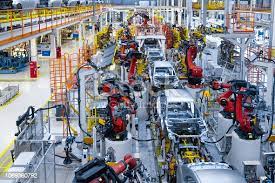 If the government develops a good policy, many things that Nepal can manufacture. If the political leaders and high-ranking government officials are honest, Nepal can be easily transformed into an industrial hub.
We know, Switzerland is a landlocked country, yet, the country is exporting different items including the Swiss Watch, which is very popular around the globe. Given the country’s geopolitical location, Switzerland insisted on producing dairy products and manufacturing small items such as a wristwatch which can be exported easily.
Until some decades ago, Nepal’s currency price was double that of the Thai Bhat. Thailand, considering the need for industrialization of the country, started to produce the human resources needed to the country under the ten-year plan. There should be a minimum one decade plan. Today, one unit of the Thai currency is priced more than two rupees.
Developed countries such as China, Japan, the USA, the UK, Germany, among others, are conducting a study on the situation that of after five decades and developing a plan based on the outcome and forecast of the study. These countries study and advise the private sector industries to be prepared for the upcoming challenges.
Nepal can take a lesson from the achievements of these countries, however, the political leaders and policymakers should be honest with their motherland.
Currently, Nepal is importing different brands of mobile. If we have had the policy to substitute imported mobile sets, at least we could assemble mobile sets within the country. The demand for laptops is increasing day by day. That too could be assembled in Nepal.
The other day, Finance Minister Janardan Sharma Pravakar asked the automobile dealers to establish the vehicle assembling plant in the country to substitute the vehicle imports. Several years ago, then finance minister Ram Sharan Mahat had also made similar remarks. Just for one day, for public consumption, they said it but in practice, they did nothing for encouraging the establishment of such plants. The vehicle dealers say that it is a challenging task as Nepal is a small country with a small market. Besides, in the name of economic liberalization, the government cannot stop other competitors who are jumping into the market without any feasibility study. For example, the Nepali literacy rate is very low. Moreover, people have a very little habit of reading newspapers. Also, people’s purchasing capacity is very low. Yet, we can see above a dozen broadsheet newspapers in the market. They all are facing loss and making money through an indirect channel. Some media houses are doing business by blackmailing the political leaders in power. The same applies to FM radios and TV channels. We have more than enough FM radios and TV channels that very few people watch them. In this way, the country’s limited resources have been wasted. We see hundreds of financial institutions including the private sector banks and more than enough insurance companies. When some political leaders and policymakers needed money, they gave licenses to operate them. Now, the Nepal Rastra Bank is putting pressure on the private sector banks for a merger. After some years, the regulating body of the private sector insurance companies will also be saying the same to the insurance companies. The country’s economy is running randomly.
Nowhere in the globe, the 800 CC car is being allowed to be used for taxi service. In Nepal, it has become possible as the Chaudhari Group, GSA of the Maruti-Suzuki vehicles bribed the then finance minister for changing the standard international policy.
We know the story of Bajaj three-wheelers. The then transportation minister Bijaya Gachhadar, with the permission of the then prime minister late Girija Prasad Koirala had taken a hefty amount of money from the Golchha Organisation to bring highly polluting three-wheelers for operation in the Kathmandu Valley despite street protest from the environmental activists. Later, the government, under massive pressure from the streets, had to take back its decision of running three-wheelers in the Valley. Today, Gachhadar is the NC leader and the agent, Sekhar Golchha is the president of the Federation of Nepalese Chambers of Commerce (FNCCI).
In India, when the Maruti vehicle company obtained permission to assemble the Japanese brand Suzuki, the government had given a target of 15 years. In the first five years, the Maruti company was allowed to import 80 per cent of parts from Japan and by compulsory using 20 per cent local products. Accordingly, after 15 years, the company was asked to use all local products for the assembly of a vehicle. The government policy had encouraged the use of local products and encouraged the manufacture of all the spare parts including engines with the Japanese standard.
In Nepal, the government in the name of foreign direct investment, allowed Dabur Nepal, Uniliver, Surya Tobacco. These Indian multinational companies displaced all our local entrepreneurs and Nepal’s own brands. These multinational companies are importing final products from India and just packing them in Nepal. What benefit Nepal has gained from these companies?
Now, the government is planning to invite Patanjali and Amul, big companies, which is sure to displace Nepali local farmers who are managing two-times meals by selling milk and dairy products. Presently, Nepal is self-reliant in dairy products. To note, inviting foreign direct investment doesn’t mean the replacement of the national entrepreneurs. The previous governments had prohibited such investments in the agricultural sector.
If the government is keen on the installation of the vehicle assembly plants, it should give a license along with a target after a certain period, all parts of the vehicles should be manufactured locally. Also, the government should ensure the investment security of the investors by not providing licenses to others.

Login to add a comment