








By Narayan Prasad Mishra
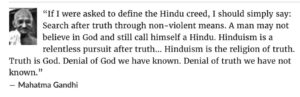 We have mainly two significant faiths in Nepal – Hinduism and Buddhism. Mahatma Gandhi defines Hinduism in the following words and sentences beautifully, simply, and convincingly.
Buddhism, for us, is the religion of love and compassion, the teachings of Lord Buddha, the symbol of peace in the world. That is the heart of Buddhism. All other things come under it. Our life and culture, our arts and architects all are the origins of our religion. So our faith has a high value for our country. There is no question about it. It is a truth and a fact if you do not think politically biased to the undebatable truth.
We all know all our festivals – Bisket Jatra, Gaijatra, Janai Purnima, Teej, Indrajatra, etc. are based on our religion. Similarly, the beautiful stone and wood carvings seen and displayed in our heritages, old palaces, temples, and monasteries are based on our faith. From these points, it is clear that our life and culture, history, and traditions are inseparable parts of our religion, our faith.
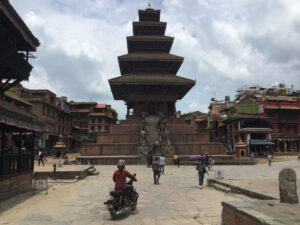 We have our heritage throughout the country, but Kathmandu Valley is the center of our outstanding heritage, attracting tourists from all countries. It is our wealth, our faith, history, life, and culture. It is our pride and prestige. It gives us joy and pleasure that we are rich enough in arts and architecture, history and culture, mathematics, chemistry and engineering in the world. We all know the big ghanta (big bell), and the statutes would not have been made without the knowledge of chemistry. A high temple-like Nyatapolo would not have been made without the heightened understanding of mathematics and engineering. Our heritage proofs that we were not only in Asian standard even more than European and American standard at that time.
Whoever from other countries come to visit our country, it seems they thoroughly enjoy our heritage and get highly impressed by it. In this context, I want to quote the following excerpts from the speeches given by Field Marshall Sir William Birdwood and Dr Arnold A. Bake, the distinguished lecturers who visited our country then, at a reception and the lecture programme organized by His Excellency Commanding General Sir Bahadur Shumsher Jung Bahadur Rana, Nepalese Minister at the Legation in Great Britain on 7 November 1934, during Maharaj Juddha Shumsher Jung Bahadur Rana. It also shows how much appreciation and value they have in our heritage. You often see this type of joy and appreciation when you read our visitors’ articles and books about Nepal.
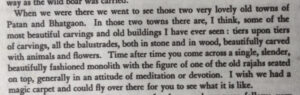 Excerpts from the speech of Field Marshall Sir William Birdwood
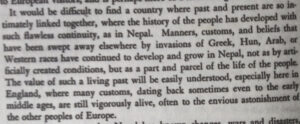
Excerpts from the lecture of Dr. Arnold A. Bake
In this context, it is appreciable to read and know about the plan and programmes of our three municipalities – Kathmandu, Bhaktapur, and Lalitpur for beautifying, renovating, preserving our heritage. I was happy when I read that Kathmandu Municipality would remove the police office from Hanumandhoka and extend the heritage area as before. At the same time, I was delighted to hear that Bhaktapur Municipality was working to remove the District Court, CDO Office, and Police Office from the spot to extend the 99 courtyards of Malla Period as it was before. Patan was doing the same kinds of things in different localities. That would have been an appreciable step.
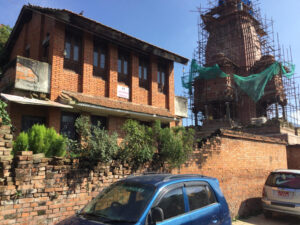 Photo of Mahadev Mandir with the public toilet in Bhaktapur Durbar Square. Left – public toilet (Sarbajanik Sauchalaya ) run by the Bhaktapur Municipality in the compound of Mahadeva (Shiva) Mandir and right – Mahadev Mandir
Concerning it, I want to draw the attention of Sunil Prajapati, the Mayor of Bhaktapur Municipality to the above public toilet (Sarbajanik Sauchalaya), and other buildings built and run by the municipality on the east side of Sundhara and the north side of Mahadev Mandir and to remove them without delay, which they could do easily by their right decision. That is an ugly, unsuitable structure for the heritage site. They should know from the old record, study, and tale that the area was open, a part of the Mahadev Mandir, and an access courtyard for taking around the temple before the earthquake of 1934 which we call the earthquake of 1990 B.S. The site was dumped with mud, and broken bricks thrown out from the collapsed and dismantled temples and buildings and closed with the compound wall. You will see the original bricks paved there when you disassemble the present structures and remove the remaining as you see the paved bricks south side of the Mahadev Temple. Imagine how magnificent, attractive, and beautiful the location will be by initially keeping the area. Please take the step immediately to what you could do on your part before doing other works for 99 courtyards. That will be a tremendous and unforgettable step for beautifying Bhaktapur Durbar Square. I express my profound joy and happiness for renovating and constructing that Mahadev Mandir with its original form before the earthquake of 1990 B.S. and congratulate all concerned for this appreciable work.

Login to add a comment