







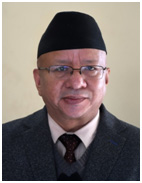
By Shankar Man Singh
Collective economic situation
The economic indicators available in the first seven months of the Fiscal Year 2077/78 show that the overall economic condition of the Nepalese economy is mixed.
The policy direction to be followed by the budget
The government has an important role to play in formulating and implementing economic policies and programs for economic growth as well as the rapid development of the economy. In the case of Nepal too, the economy has not been able to pick up the expected pace due to unsatisfactory implementation of policies and programs for policy reform at various times.
Against this background, the upcoming A.W. to achieve high and sustainable economic growth, the budget of 2078/79 needs to cover the following issues in terms of the policy.
The budget should be formulated to address the problems arising from Covid-19, private sector, and business-friendly, production, and employment-oriented, infrastructure and reconstruction focused, resource mobilization and distribution according to the federal structure.
As the country moves forward on the path of economic prosperity, the budget should allocate sufficient budget for such projects to accelerate the pace of development by attracting investment with the principle of balanced development and inclusiveness as well as continuity of past programs and projects. Should But the private sector should not be limited to just welcoming, cleaning up illegal work. The past has taught us to be vigilant.
Policy Reform Issues:
The provision of various provisions for export promotion and protection of indigenous industries in the budget speech and for the establishment of export promotion houses for increasing the export capacity of domestic and small scale industries and expanding the market should not be weak but the implementation should not be weak.
Export cash subsidy is lower in Nepal than in neighboring countries. In this context, effective implementation of the suggestion of maintaining cash subsidy on exports based on value addition is necessary and imperative.
Since the budget is not enough to achieve the targeted economic growth rate, it is necessary to make radical changes in governance, including other aspects of the law.
Federal, state, and local high tax rates:
The tax system has been doubled from all three levels of taxation and different taxes have been levied on different local bodies in the same situation. Taxes levied at the local level should be uniform across the country and a one-stop system should be implemented at the local level as well.
Tax rates are high in Nepal. Higher tax rates will not boost industry and consumer prices and consumer prices will rise. It cannot increase investment.
To increase the revenue by expanding the scope of investment, the tax rate should be kept low.
Budget priority
Collective Economic Situation, Current Trends in the Economy, Prevention and Addressing Problems of Kovid The budget of 2078/79 has to advance the agenda of economic development and prosperity to institutionalize federalism as provided in Kovid-2, the constitution. It has also become necessary and imperative to identify and invest in projects with high and global relations. At the forefront of this are physical infrastructure plans and projects. It is necessary to put large and small hydropower projects in the second place. Another area of comparative advantage in Nepal is tourism.
Extensive investment in infrastructure is essential for its promotion. Tourism is the second most affected sector after Kovid and is currently at the crossroads of the world’s fourth industrial revolution. Nepal’s industrialization should inevitably be developed in the same context. To achieve this, the following priorities need to be adopted. For the development and prosperity of the country, it is necessary to manage the multi-use of water resources.
In which hydropower remains an important means of economic growth and economic transformation.
Commercialization of Agriculture:
As about 65 percent of the population is directly or indirectly dependent on agriculture and the contribution of the agricultural sector to the GDP is more than one-third, it is not possible to boost the economy without the development of the agricultural sector from Nepal’s perspective. Small farmers should be included in cooperatives and encouraged towards commercial farming.
Tourism Development:
Nepal is also one of the potential countries in the world in terms of tourism development. If the tourism sector can be developed, the country can leap into economic development. New programs should be introduced to attract not only foreign tourists but also religious and domestic tourists. In particular, priority should be given to infrastructure
Foreign Investment:
The investment conference held a few years ago has significantly communicated Nepal’s investment potential at the international level. There is a need to attract foreign investors in industries, business sectors, physical infrastructure, energy, and services. To attract foreign investment in the country, special priority should be given to the creation of an investment-friendly environment. Therefore, a clear program should be brought into the forthcoming budget.
Towards self-reliance:
Nepal’s economy is dependent. We are also dependent on imports for items with ample potential for production. For example, you are directly dependent on imports of agricultural commodities, energy, daily necessities, and forest products. A planned program should be brought to make Nepal self-reliant through the forthcoming budget 2078/79.
Industrial Development:
Nepal and India, the two neighboring countries with large economies, have witnessed rapid industrial development, while Nepal has witnessed negligible development. Due to lack of development in the industrial sector, more than 90 percent of daily necessities have to depend on imports. The budget should be allocated with appropriate policy for the development of the industrial sector. Industrial development has not been able to take place due to the energy crisis, flexible labor policy, and lack of a necessary investment-friendly environment.
Development of physical infrastructure:
The overall economic development of the country cannot take place without the development of necessary physical infrastructures. On the one hand, there is a need for the construction of major roads and highways and on the other hand, it is necessary to pay special attention to the maintenance and upgrading of the existing highways and roads. Necessary projects like Nijgadh Expressway, Kathmandu Hetauda Tunnel Road, and Postal Road in Kathmandu should be expedited.
Upgradation of Tribhuvan International Airport, Nijgadh International Airport, and Gautam Buddha International Airport should be expedited. Adequate funds should be allocated for energy production and construction of transmission lines, drinking water, irrigation, and roads.
Export Promotion:
The trade deficit in Nepal’s economy, which is currently very weak in terms of production, continues to grow.
The necessary budget should be allocated for research and study required for the production and export of competitive goods. Special monitoring should be done to make exports easy, simple, and regular. The current export subsidy should be applied to the exports of all countries including India and the export subsidy should be 15 percent. Exports by business firms should be facilitated in the same way as exports by industries.
Although the laboratory building under construction has been constructed in the Regional Food Research Offices, it has not been able to come into operation due to a lack of machinery and technical manpower.
Encouragement of private sector investment:
For some time now, the private sector seems to be very discouraged from increasing investment in the country due to regular monitoring from revenue research and unnecessary monitoring from internal revenue.
Special attention should be paid to create an environment of clean business-clean administration by trusting its industrialists.
Strategies to be adopted to rehabilitate the economy affected by Corona
Corona, which has spread like a plague around the world, has portrayed the world economy as the worst since World War II. Corona outbreaks have not yet subsided in Europe and the United States. It is unknown at this time what he will do after leaving the post.
The stalemate in the economy will also affect economic growth and revenue, which will affect employment. Remittances, which are the backbone of Nepal’s economy, continue to plague the Gulf countries, including Malaysia and India, which will have a direct impact on remittances.
Since milk production has not found a market at the local level, keeping in view the similar situation, to motivate to establish milk-based industries like cheese.
As Nepal’s self-reliant poultry business is most affected by Corona, the current state of the business needs to be addressed. To become self-reliant in food grains, legal provisions should be made to keep the cultivable land barren. As the stock of food is declining daily, the supply should be strengthened and the relief work should be expedited by reflecting on the daily subsistence from wages.
The economic package should be provided to those affected by small and medium enterprises and the financial sector. Serious arrangements have been made in other countries as well as in neighboring countries. This will increase self-confidence in the business sector.
The health sector should be given priority. Arrangements should be made to be ready at any time to face the health crisis.
There should be an arrangement for the government to disburse most of the interest to the small and medium enterprises by providing a lump sum loan at a low-interest rate.
The rural economy should be made dynamic and employment opportunities should be provided at the state and local level through the development of entrepreneurship including the need-based training for the workers from abroad and from the Kathmandu Valley and the returnees.
The finance minister has said that it is not possible to formulate the budget with an open mind in the current situation. He said that it is not possible to formulate a budget with an open mind this time. He said that the budget had to be compacted due to the problems created by the CoVID and the limited resources of the budget.
Therefore, this time there is a situation where the budget should be prepared by shrinking and not by opening the mind with open arms says the Finance Minister.
Past budgets have focused on reducing the fiscal deficit, but in the current scenario, most sectors are running deficits due to the Kovid 19 and Phase II epidemics. Therefore, our economy is out of track with focused growth. The government has high hopes for the budget.
The common man is going through an end to liquidity, the government needs to inject liquidity into the system so that our country can grow its economy based on consumption at a great pace. The budget should be extraordinary and unpredictable so that it can be remembered as the budget of the decade
Kovid 19 has changed the way the budget is presented. If we want to learn from the neighboring countries, the current budget has to be presented in a paperless way.
The common man is going through an end to liquidity, the government needs to inject liquidity into the system so that our country can grow its economy based on consumption at a great pace. The budget should be extraordinary and unpredictable so that it can be remembered as the budget of the decade
Due to Covid 19, the growth rate was sharply cut, so it is necessary to focus on the growth curve in the current year. To achieve this, existing policies need to be improved.
There is an opportunity to revolutionize the tax system. This budget is expected to be slightly lower than the regular budget.
Focusing area
Micro, small and medium enterprises, startups
The government should focus on MSMEs, as Covid 19 is one of the reasons it has suffered so much. Micro, small and medium enterprises, startups are a great source of employment. Many important steps must be taken by micro, small and medium enterprises, startups.
The government should simplify their compliance so that the tax looks like a simple tax and entrepreneurs can focus on their core business.
Logistics is currently the most important source of employment and a part of daily life. In the current scenario, the e-commerce sector has become the third largest sector in our country. It depends mainly on petrol and diesel costs, which in turn increases the operating costs for the transport sector. Petrol and diesel prices are mainly subject to central taxes.
MSMEs should be given subsidies so that they can bear fruit well. We know that imports from China have been greatly reduced. Therefore, it resulted in huge savings in foreign exchange reserves.
There are two components of the tax (tax rate and tax base I tax rate: the organization. Until last year, the government had introduced alternative tax plans that included lower tax rates and dividend distribution taxes, and many other benefits.
MSMEs should be provided subsidies so that they can bear fruit well. We know that imports from China have been greatly reduced. Thus, it resulted in huge savings in foreign exchange reserves.
This is because the scope for the company to reduce the rates is less as the rates for the company are less likely to change.
Salaried class
MSMEs should be given subsidies so that they can bear fruit well. We know that imports from China have been greatly reduced. Therefore, it resulted in huge savings in foreign exchange reserves.
Lockdown brought work from the domestic culture which has increased such as laptops given to employees etc. which has increased the taxable income in the hands of the workers. There is a need to provide discounts in this area.
Transportation has become very difficult and expensive during the Kovid period. Covid 19 has come up with the idea that you have to have more than one income to survive. Therefore, it is necessary to motivate salaried people to start their livelihood and become entrepreneurs. Primarily, there is a possibility that they may not make a profit and may even incur losses.
That is why the government needs to allow trade deficit restrictions against salary income, which is not legally available for losses.
Service industry
Health care
Although there is no tax exemption on medical services, there is no such exemption on medicines or medical equipment.
Professional services
For MSMEs and startups whose businesses need to allow the direct benefit of such taxes to be paid when purchasing business services or other services to promote these industries, which will result in lower costs.
Traffic
The government should consider providing income tax benefits to the region as it is very important in the event of an epidemic.
The Nepali budget document is very complex and it is time for the leading economists to spend a lot of time on the budget document and for the private sector to debate and lobby.
The Ministry of Finance has started the preparation of the budget for the coming Fiscal Year 2078/79. The ministry held a meeting with former finance secretaries to seek their suggestions for the upcoming budget. The former secretaries suggested to the finance minister to focus on how to avoid the country’s economic epidemic while preparing the budget for the coming fiscal year. The secretaries stressed the need to develop health-related infrastructure in the country.
The Covid 19 epidemic and the announcement of elections have added more challenges to bring a balanced budget for the fiscal year 2078/79. Therefore, he suggested that the budget should be prepared not only for the recovery from the epidemic but also for the sustainable economy.
The former minister and finance secretary said that the government should encourage the private sector to invest and formulate policies and programs for the coming fiscal year to increase the contribution of the industrial sector to the country’s economy.
The writer, former head of SEZ, is currently affiliated with the private sector.

Login to add a comment