








By Narayan Prasad Mishra
We always thought Nepal was a developing country. The country was poor, and the people were poor. There were not many industries and factories. We did not have a big business with exporting goods to others. So the government also had no source of income for raising the money needed for enough salary. So in Nepal, the salary meant the amount to meet the salt and the cooking oil expenditure only, not enough money for other things. So, at that time, there was a saying in Nepali, “Noon Telko Kharcha Bhayo“(you could meet the expenditure for the salt and oil) when someone got a job. Most of the people owned land. They could meet their other needs — Rice and lintels from it. That was the system and the conception of the Nepalese society. The Nepali community was quite ordinary in terms of social status. No one in the community had attained any great wealth, except some ruler class people. There was an extraordinary simplicity in Nepalese life. People were poor, but there were not many extremely poor. People were pious and religious. The majority of the people had a moral sense of their culture. They were not inclined to corruption because of their needs, but some did because of their greed. That was our understanding.
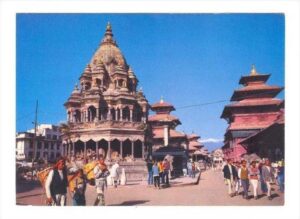 Kathmandu Valley in the 70s
We had a helper named Narayan Maharjan when we moved to Balkhu from Sundarighat residence. Among the five families that existed in that locality, he was one of them. He had two rooms house with a thatched and two metal sheet roofs. He used to bring two buckets of drinking water from about a half kilometer distance on the way to the university every day, hanging in the bamboo stick, which was on his shoulder. He was a poor man even though he did not want to charge money for the drinking water. He said that the charging would be against his beliefs and faith. At the same time, he said we could give him anything cash or cloth if we wished not to think about the water. We agreed to it. He fulfilled our needs for drinking water. We helped him in whatever way we could. Besides, he got a loan from us from time to time. The loan money accumulated a little more than Rs 2000. Though that was loan money, we did not keep in mind getting the money paid by him.
Meanwhile. a bizarre thing happened there. One day when we came home from the office, we were told by his small daughter Narayan Devi that the two metal sheets (karkatpata) of his thatched house would be taken out by a person who loaned Rs 500 to her father a long time ago as he was not able to pay back the loan. The moneylender wanted either money back or the metal sheet. Her father asked the moneylender to take the metal sheet out of the roof tomorrow. We were so astonished to hear it. We offered him Rs 500 for paying his loan to the moneylender when he came that evening to supply the water. He was not happy to get even the gift money from us. He said it would be improper to get that amount of money again from us as he still had to pay Rs 2000 our loan money. That would be against the Dharma (righteousness). We said, ” Forget about that loan money and not to worry about it. That Rs 500 will be a gift for you.” He said he would come to us when the moneylender would come tomorrow. The next day we came to know that he gave his two metal sheets to the man. He did not get money from us for that purpose.
We never forget this incident and this true story of a penniless but heartfelt and honest, righteous man in our life. Narayan Devi Maharjan, his only daughter, is living with her family at Panga now. We see some time for each other. Narayandai, the honest man, is no more with us now. He must have been living in heaven if heaven is somewhere as described for righteous people. We have been telling this story to our many many diplomat friends and others who talked we had corruption in the country because of a low salary. We see corruption in the country not because of needs but because of greed. This true story stands as an example of the Nepali culture of honesty and righteousness. Even then, in the 1970s, the majority of corrupt people were well-to-do, wealthy high officials, and politicians, bureaucrats. Now it is the same. Among the corrupt politicians, the bureaucrats, high officials, and high dignitaries are becoming millionaires to billionaires and billionaires to multi-billionaires by corrupt practices. Only the difference there were a few in the past now; almost all are corrupt. Not only the high officials but even the lowest among lowest is evil now. We see the corruption not because of needs but because of greed.
The writer can be reached at: narayanshanti70@gmail.com

Login to add a comment