








By Dirgha Raj Prasai
Nepal is a sovereign and independent nation, however, the country experienced democracy only in 1951. The struggle and sacrifice of the martyrs against the Rana oligarchy helped introduce democracy in the country. The martyrs paid a terrible cost in blood, sweat and tears for the progress and prosperities of Nepal. We can’t forget their contribution to the nation. In fond memory of those martyrs, every year, from 10 to 16 Magh, the nation observes Martyr’s Week. Sukraraj Shastri was hanged on 9 Magh 1997 BS at Pachali, Darma Bhakta Mathema was hanged on 11 Magh at Siphal and Dasharath Chand and Gangalal were shut-down by gun at Bishnumati. Leadership is the gift of time. The time searches for leadership. It will be distrusting the history if we disregard the facts that the monarchs had ruled Nepal to protect the country time and again.
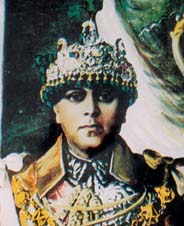 In 1950 King Tribhuvan gambled his crown against the Rana regime for the sake of democracy. After the execution of four martyrs, the king led the fight for democracy. Had he not done so, would the dreams of martyrs like Sukraraj Shastri, Dharma Bhakta Mathema, Dasharath Chand, Gangalal Shrestha have come true? The king and the democratic Nepali people established democracy with a stern challenge to the Rana autocracy. The democracy rose in 1950, and now after so long time, the statue of the king is being removed. Is it appropriate and logical? It will not be beneficial to anyone to harbour prejudice towards the statue.
The glory of Nepal’s natural and cultural diversity resounds around the world. Different castes and creeds that exist within the territories of Nepal have jointly preserved the democratic value and tradition. Although our country is small it is home to many castes. The spirit of the nationality of Nepal will remain incomplete in practicing discriminatory attitude towards any group, organization or caste. Should Nepal’s natural and cultural identities be extirpated in name of political revenge? If so, Nepal will vanish. Following the unification of Nepal, the kings of Nepal from Prithvi Narayan Shah, Tribhuvan, Mahendra, and patriotic and democratic warriors and people from various castes have protected this unity. Unfortunately, since the 2006 uprising, the leaders of the Nepali Congress, UML, Maoist and others have forgotten to regard the unifier Prithvi Narayan Shah, four martyrs and King Tribhuvan.
The goal of any transformation and uprising is to reconstruct the nation on the foundation of preservation of its dignity, values and norms. Since 2006, the political leaders and other parties have forgotten all the norms and sense of democratic nationalistic path. Why are the works that defile such national unity, nationality and democratic history of this country being carried out? For example, what sorts of unity or nationality are being achieved vandalizing the statues of Prithvi Narayan Shah. The day of Prithvi Jayanti (birth anniversary of king Prithvi Narayan Shah) and the national unity day are abolished. Is this nationality?
No matter how much you bathe a crow it will not become white. A donkey never turns to a cow whatever water is poured over it. Touching a dog with rabies is suicidal. No matter how much you love a mad dog there is no other option than to kill it. If a rotten potato is thrown into a bag of potatoes it will decay all of it. Currently, Nepal’s government is full of such dogs and criminals. The foreign agents that are at the leadership level of Nepali Congress, UML, Maoists and Maheshi parties will never speak in favour of Nepal’s interest. They have accepted foreign money to serve foreign design. They are the founders of treason. If we remain contingent on their support the nation will drown and we will become refugees. How long will Baburam Bhattarai deceive the patriotic Nepali people and rule them?
The government must preserve the statues and idols of historical and archaeological importance. It is not reasonable that such statues that have preceded many governments should be removed because of the dislike of someone in power. Nepal’s kings should not be compared to the tyrants that have ruled around the globe. Nepal’s unification is ascribed to a king, and we have become a Nepali due to this unification. The autocratic rule of the Rana regime lasted for 104 years. The Rana rulers had kept king Tribhuvan a captive in his palace because the former dreaded his concern for freedom. The Rana rulers insolently approved of all official edicts in name of the monarch. King Tribhuvan stealthily met with democratic fighters and their secret papers were passed to the king. The king used to communicate with freedom fighters through such papers secretly. The king had a desire to free himself and also institutionalize democracy in the country. As we read the books written by the king’s personal nurse Ms. Erika, Ganeshman Singh, compounder Chandraman, Sidhhicharan Shrestha, Khadgaman Singh as ‘Jelma Bish Barsha (Twenty years in jail)’, we will have the idea that King Tribhuvan had not actuated the sacrifices of the martyrs would have wasted like pouring water on sand.
In 7 January edition of ‘Gorkhapatra daily, a government mouthpiece, Shyam Rimal has portrait the reality of Martyrs’ Gate. The designer of the Gate is engineer Shankarnath Rimal. An analyst Shyam Rimal writes, “It was considered a big contribution on part of king Tribhuvan in heralding democracy in the nation. There should not be anything remiss in maintaining the king’s statue. That architectural work is the reverence shown by Nepali people in name of Martyrs’ Gate. Disregarding such works is ignorance.”
We should not be ungrateful and harbour negative opinion towards the late king. The history has shown that the king sacrificed his interests towards the crown in place for Nepali people. Had the king not escaped to India to end the Rana regime, was democracy possible? It would be unfortunate if anyone speaks with asperity towards the 1950 revolution and revolutionaries – king Tribhuvan and democratic fighters.
Let’s pay tribute to the four martyrs Shukraraj Sastri, Darmabhakta Mathema, Dasarath Chan and Gangalal Shrestha and the king Tribhuwan who is known as the father of democracy contributed much for democracy.
Email: dirghrajprasai@gmail.com

Login to add a comment