








By Hari Prasad Uprety
Since the beginning of 2020, there has been an unceasing effort against the rapidly contagious virus COVID-19. WHO-verified safety measures are in place and circulated worldwide. It is well-known that the outbreak of this virus began in China and rapidly spread throughout the world. Till the date, more than 39.1 million people have reportedly been infected and around 1.1 million lives have been claimed by the virus globally. In Nepal alone, over 121 thousand people have been reported infected and the death toll has reached 694. More gravely as of July report, around 23 hundred people are reported having committed suicide since the inception of Covid pandemic in Nepal. Despite the government’s attempts to prevent the spreading of the virus, the infection trend is rapid in the recent past.
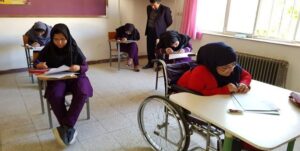 Meanwhile, this scribe wishes to cite on the negative impacts of the Corona pandemic on children with disabilities and their families and make some recommendations for mitigation. This could probably alert Nepali policymakers, service providers and associated stakeholders to collaboratively concentrate on tailoring suitable service packages to the needs of such communities in the context of Nepal. This will then hopefully help mitigate the negative effects and support these communities to live an anxiety-free, near-normal and dignified life as to the provisions in policies, acts and regulations and commitments of the three-tier government-federal, state and local.
Obviously, the corona pandemic has impacted all the school-age children badly. Especially the uncertainly long and unforeseen extended school closures have psycho-social impacts on children. Further, social distancing measure may also have cut off their otherwise usual contacts with the peers in their social milieu, thus, increasing their vulnerability in general. Particularly children with disabilities are multi-fold vulnerable compared to their peers without disabilities. Their health deficits, lack of special educational supplies, and the subsequent stressors of their families render them more vulnerable during pandemics as such.
First, the pandemic causes health deficits to such children. Masonbrink and Hurley (2020) argue that as the impact of COVID-19 unfolds, pandemic-related trauma will disproportionately impact vulnerable children such as children in poverty and children with disabilities, especially those who most heavily rely on school-based services for nutritional, physical, medicinal, mental health and routine medical check-up needs. Invariably, children with disabilities getting an education from resource schools with residential set up may adversely be affected given the closure of such schools and their complete reliance on their parents during the current pandemic. Their households are not as equipped as the resource schools and their parents may not necessarily be trained and resource-sufficient to meet their health needs. This lack of knowledge and resources may cause increasing trauma on both children with disabilities and their parents.
Second, School closure means loss of critical resources for children with disabilities, including engagement with specialized educators and structured learning environments. As inferred from the previous point as well, Parents of children especially with high learning needs are unlikely to be equipped with resources to meet their children’s special educational needs and also to maintain virtually organized remote learning. Nor may their households necessarily be equipped with friendly infrastructures for their educational adaptability.
Third, the closure of formal special educational setups might causally push parents of school-age children with disabilities to further distress through unintended pandemic related stressors such as unemployment, job loss, at-risk job, additional time needed for their children, lack of needed resources for their children, growing lack of basic supplies, etc. Even during normality, taking care of children with disabilities is reportedly burdensome for parents in comparison to children without disabilities. If such stressors are not mitigated in time, even parents might potentially develop hatred and apathy towards their own children with resultant pathological symptoms in them.
There could be multiple factors such as parents’ economic strength, knowledge and understanding level and perspective on their children, government’s indifference to actualize the formulated policies or lack of pandemic-specific policies, guidelines and other resources, lack of research or objective assessment of their needs in the pandemic-hit times, lack of focused coordination among stakeholders, etc. contributing to the inability of the parents or families to allow their children with disabilities to enjoy their educational rights from their homes on an equal basis with their non-disabled counterparts at least to the minimum.
According to the children status report, 2076 published by National Child Rights Council Nepal, there are 66, 955 school age (studying in grade 1-12) children with disabilities (as cited from Education and Human Resource Development Centre Nepal).
Most of these children are now with their parents 24/7 who would indubitably require health, education and other basic supports to combat the current Covid-propelled situations. The Ministry of Women, Children and Senior Citizen has promulgated ‘Workplan, 2077’ in regards to mobilizing social organizations and to mitigating and addressing Covid-19 impacts and imminent effects on women, children, persons with disabilities and senior citizens. Despite being a genuine initiation and an oasis for such communities as a whole, this blanket approach workplan might not necessarily alert the relevant stakeholders to the Covid-19 induced immediate specific needs of school-age children with disabilities. Similarly, to regularise formal classes in the non-formal settings at the face of the pandemic, earlier the Ministry of Education, Science and Technology classified all the students into five categories and accordingly announced five pedagogic strategies to cover and address the situations of all the students. However, this does not either seem to heed the issues of all children with disabilities. If the government does not tailor specific services focused on such children and their families, the educational disparities will be worsened and their situations will get more complicated with adverse health, economic and social consequences.
To offset worsening health and educational disparities and to stave off unintended detrimental health, economic and social consequences, the government needs to address their issues. There could be two challenges at the current front: one to save this community of children from being Covid infected and the other to ensure they are protected from abuse; their basic needs are met and have access to health and educational facilities to the minimum.
Based on the best practices in and outside of the country, some suggestions worth being considered could be: accessible information, the announcement of short-term service packages including psychological supports, guidelines for longer-term interventions including survey or research and monitoring, formulation of research-informed policies, implementation of the policies and continuous advocacy as ever from the peak body and other civic organizations.
Covid-safety health measures are in place. However, they need to be developed in the format intelligible and accessible to children with disabilities and their parents or immediate carers to minimize the risk of being infected. Based on some initial information, the government (either federal or provincial) needs to announce short-term emergency service packages to assist the urgently needy children concurrently with research for relatively longer-term sustainable interventions. Some of the short-term emergency services could be cash, material, food, medicine, semi-formal educational, counselling, etc. supports. Similarly, given the uncertainty of the current pandemic, with the review of the existing practices, novel guidelines that could also address the issues of the current context need to be formulated for longer-term interventions, research and monitoring. Especially longer-term programs and policies should be based on the research identified information for the sustainable outcomes for children with disabilities, their parents and the society as a whole. It is good news that multiple organizations have originated to work for and with people with disabilities. Yet harder works and joint efforts are still needed for better outcomes for children with disabilities.
Hence, the peak body organizations as ever should continue advocacy, dialogue and discourse with wider civic and political engagement.
To conclude, the current pandemic has put especially children with disabilities and their families at greater risk. Despite some general efforts, the former are confronted specifically with health deficits such as lack of medicine, routine medical check-ups, etc.; lack of critical educational resources; negative impacts of the loss of their parental jobs while the latter may have lost their jobs or income sources as a result of 24/7 care time to their special needs children with additional distress detrimental to their health. To stave off adverse consequences and to deliver better outcomes for such children and their families, the government needs to formulate and announce both urgent and long-term policies and programs. For this, continuous advocacy, dialogue and discourse with wider political and civic engagement are as ever essential.
The author is an Australia awards alumnus and disability and child rights activist
People’s Review Print Edition

Login to add a comment