








By Dr. Rajendra Bahadur Shrestha
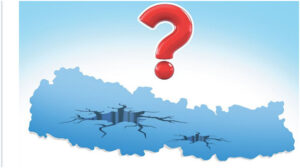
The country is undergoing through difficult times in all spheres including, the political system, economic development, international relations, governance, and institutionalized corruption. This has resulted in widespread dissatisfaction, disenchantment, anger and protests from the people against the system and the government. The government’s dismal performance in all fronts with no sign of improvement in the foreseeable future may turn the situation into revolt against the government and the present political system. Most of us (professionals, youths, party cadres, and citizens at large) have been warning against these anomalies. But the government and the responsible authorities have not heeded to these warnings. There is every possibility of Nepal becoming a failed state if this state of affairs continues.
Political and Constitutional Crisis
Nepal has already experimented with all combinations of political systems and leadership in the last six decades. The political parties and the leaders have hitherto blamed the country’s underdevelopment to political instability and authoritative regimes of the past. In the last election, a united NCP promised a “Prosperous Nepal and Happy Nepali” and the people trusted one more time. Look where we are 2.5 years down the road. There is no political stability within the NCP, nor is there any sign of prosperity. The practice of so-called social democracy by the NCP government has not achieved anything tangible to date. People are losing trust in the ability of the government and the party to deliver on its promises.
Historically, political changes in Nepal have taken place about every 10 years. The time now seems ripe for the change in the system and its drivers. Like many, I had a hunch that the CPN coalition may not be a natural one to benefit the country. It was a ploy for grabbing power to rule by making false promises and to fool the people once again.
How can NCP the largest party following social democracy be ruled by the decisions of the two chairmen, and be allowed to flagrantly disregard its party regulations/rules and directives? Rules apply to everyone at the party. It is a disgrace to democratic exercise. The ongoing bickering within the party is largely the result of the government’s lack of performance, non-adherence to the norms and values of the system, high handedness and nepotism of the leaders. The party and the nation cannot be held hostage by the two chairmen when the entire nation is facing severe hardships from the corona pandemic and natural disasters. There is no presence of the government.
Like many, I feel Nepali people have been cheated the most by the political leadership, who time and again have manipulated the system for personal benefit. I do not see any immediate change in their behaviour, values, commitment, sense of accountability and sincerity towards the people. They have been tested and have mostly failed. Time for a change.
Wrong Economic Development Strategies
Nepal’s strategy for economic development has mostly failed in recent decades. Instead of developing industries (MSMEs) where Nepal has comparative and competitive advantages such as high value agricultural, forestry, livestock and herbs and spice to improve production and markets, Nepal’s emphasis has been on imports of daily necessities especially from India increasing our dependency and neglecting domestic products. This has created a huge trade deficit, and most of the remittance income is being spent in consumer products from India and China giving them political leverages in Nepal.
Nepal had initiated many industries for basic needs such as food, agricultural tools, fertilizer, brick making, cement, and shoe etc. decades back with the cooperation of international development partners which was not sustained. Rather, in the name of privatization, they were sold to private businesses at lesser values. Likewise, exportable items such as handicrafts, carpets, garments, herbs/spices etc. were promoted in international markets. The two-prong strategy of import substitution and export promotion was not institutionalized and sustained in favour of business over the industry. Hence the present state of the economy and our increased economic vulnerability.
Covid-19 pandemic has added to the economic misery of most Nepalese. The World Bank, IMF have predicted deep recessions with South Asia projected to be the hardest hit in terms of economic growth (around one percent) and increased poverty among the most vulnerable and marginalized populations. Yet, the government has not come up with a comprehensive plan for economic adjustment and recovery for the most affected viz. small farmers, wage labourers, small and medium business through improved productivity, employment, resources and access to markets.
Likewise, the social sectors such as education and health which have made some headways in recent times under privatization have not been affordable, accessible, reliable and of good quality. This is not expected from privatization where consumers are not provided better choices. Lack of government monitoring and quality control, people are suffering. This was evident during the pandemic when existing government health facilities were overwhelmed and private health was not willing to participate. Quality education and health should have been the prime responsibility of government in a social democracy.
Another serious problem facing the economy is the widening gap between decreasing revenue sources (internal, external) and rapidly rising expenditures to finance 3 tiers of governments (most of which are unproductive). Unless the government manages the fiscal deficit through sound fiscal and monetary policies the economy will be in serious trouble in years ahead as already indicated by the FM.
Nepal should peruse self-reliant economic development that is efficient, sustainable and equitable. All three are missing at present.
Foreign Policy Imbalance
Nepal has adopted a non-aligned foreign policy to safeguard its sovereignty, independence and territorial integrity. However, in recent days, it has been losing ground for a more balanced and practical approach to bilateral relations especially with the two giant neighbours that are growing fastest. This is due mainly to the lack of diplomatic acumen, unnecessary and provocative statements from the highest level of government, and lack of preparedness for negotiation and dialogue. Foreign interference in internal matters of the country has been rising in recent years making Nepal more vulnerable to international groupings and security threats.
The present low level of bilateral relation with India with regards to border dispute and the ensuing political and diplomatic exchange on sensitive issues needs special and a thorough preparation (technical, diplomatic and political) on the part of Nepal to resolve the problem fruitfully. The government has not demonstrated its ability to break the ice so far, through options available. If this continues, I am inclined to believe that the Indian government is not likely to enter into dialogue and settle the issue amicably with the present government any time soon. It will be another promise unfulfilled by the government. Likewise, the MCC issue is not likely to be addressed properly and in time. This will have a detrimental impact on our relations with the US in the future. The governments failed to inform and communicate adequately to the people about the exact nature of MCC from the beginning. This aggravated the situation of misunderstanding/misgivings, hence, the present dilemma.
FP exercise has lost its ability to leverage and benefit from Nepal’s geo-political advantages. In the present day context of globalization, mutually win-win and inter-dependence, Nepal has failed, to a large extent, to exercise its soft power diplomacy in protecting national interest and respect.
Governance and Institutionalized Corruption
Inefficiency in the government is growing by the day even with three tiers of government in existence. It was assumed that with the elected Central, Regional and Local governments in place, delivery of basic services will be more effective, improved, and timely. Almost three years down the road, there is no evidence of the motto that, “ Singha Durbar” will move close to every community and will be accessible to all. Ironically, not the delivery of services but corruption and red-tapism has moved to the villages due mainly to the lack of institutional capacity, resources and coordination. Thus, questioning the constitutional provision of regional governments and affordability of the government.
Government resources cannot sustain all these regional governments which have proven to be white elephants with no returns to justify their existence. The government budget is spent mostly on administration, not development. Almost all the operational budget is spent while only a quarter of the development budget is spent, that too towards the end of fiscal year questioning the quality of works. In the past, 70% of the budget was spent on development and 30% on administration. This has seriously questioned the effectiveness of the budgetary practice. Such practice is also responsible for the misuse, underutilization and promotes corruption.
Corruption, due to the involvement of many layers of middlemen during a transaction have skyrocketed at all levels of the government and the private sector. Government authorities and political leaders protect the corrupt for personal gains. This was highlighted in the Auditor General’s recent report. The head of the government seems oblivious to all the corruptions taking place while advocating zero tolerance to corruption in public speeches. If all these corruptions are controlled and fines collected, Nepal need not rely on foreign assistance (with strings attached) for development and can become self-reliant.
Call for New Generation of Leadership to Rescue
Time has come to right the wrongs of the past through protest against these anomalies and the failure of the government to address political, economic, international relations and above all the corruption that has threatened the very existence of the nation. Before it is too late, I appeal to all the professionals, youths, party cadres and citizens at large to come forward and register your disenchantment/anger/ grievances/frustrations against the government’s handling of the above issues in a peaceful but disciplined and effective manner.
It is time to join hands and make ourselves heard for action towards reform. I urge, especially the youths who are energetic, innovative, effective and persuasive, to come forward and organize/coordinate mass demonstrations to protect the country from failure. We all owe that much to the country we dearly love and cherish. Nepal has a lot of potentials to flourish and proudly make our presence felt in the international arena again with respect and dignity. Enough is Enough with outdated, fake, incapable and corrupt political leaders. Time for Youth to take leadership of the country. We are with you all the way. No time to waste and no excuses to make. The future generation will not forgive us for that.
The country is undergoing through difficult times in all spheres including, the political system, economic development, international relations, governance, and institutionalized corruption. This has resulted in widespread dissatisfaction, disenchantment, anger and protests from the people against the system and the government. The government’s dismal performance in all fronts with no sign of improvement in the foreseeable future may turn the situation into revolt against the government and the present political system. Most of us (professionals, youths, party cadres, and citizens at large) have been warning against these anomalies. But the government and the responsible authorities have not heeded to these warnings. There is every possibility of Nepal becoming a failed state if this state of affairs continues.
The writer can be reached at:
People’s Review Print Edition

Login to add a comment