








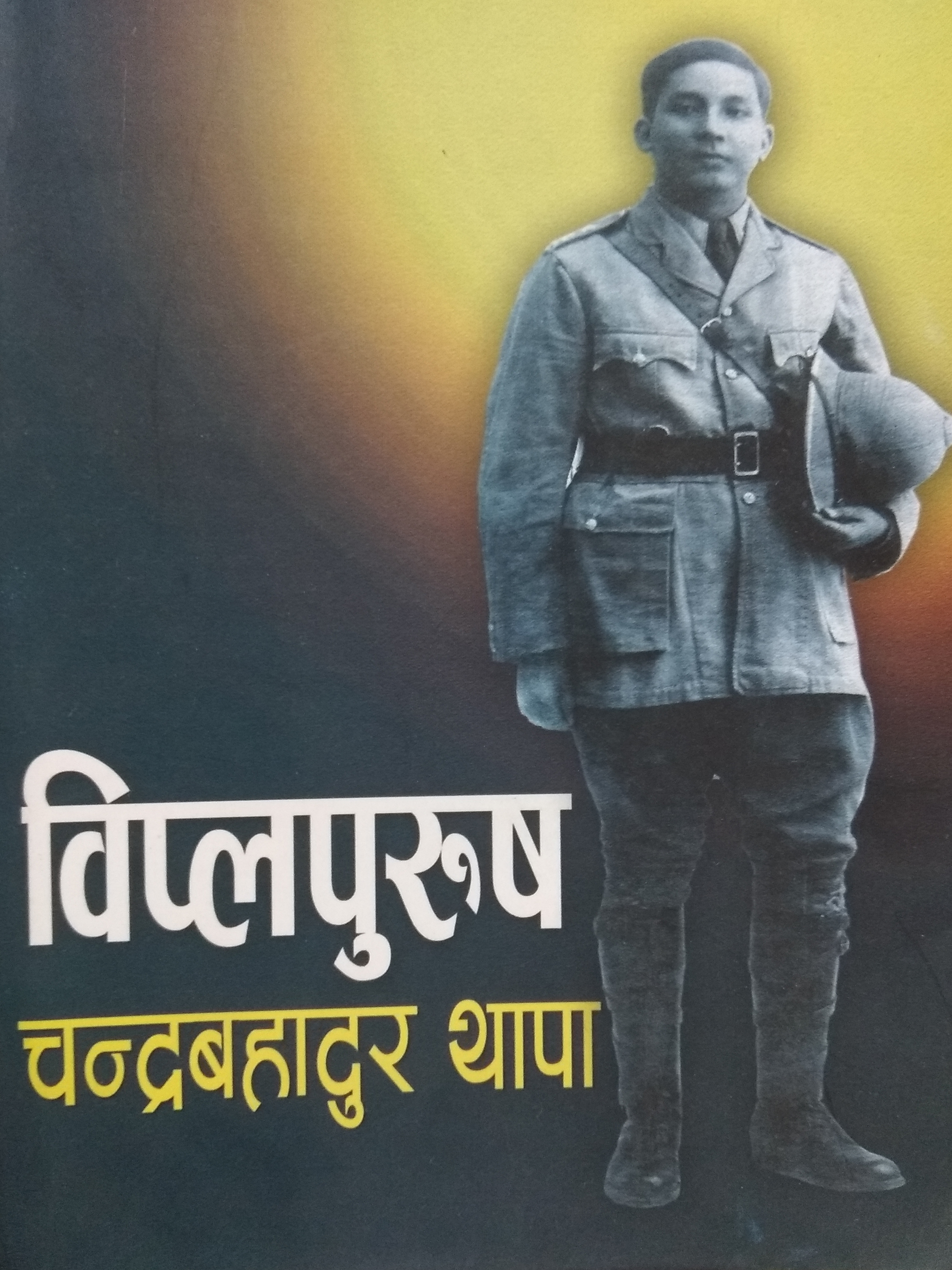
 Ed.- Ramesh Dahal
Coordinated by Prof. Dr. Parthiweswar Prasad Timilsina
Pub. – Dr. Bijay Kumar, Prabir Kumar and Saurave Kumar Thapa
Price- Rs 400/-
Although this review comes so late, it intends to celebrate an occasion. The occasion is that a book on the life and times of Chandra Bhadur Thapa is in the stands. While it is a compilation celebrating Chandra Bahadur Thapa the persona, to this reviewer, this biographical account compiled and contributed to by known public personalities finally puts into print the enigma that was Chandra Bahadur Thapa. For many of us who could not escape a mention of Thapa in almost all accounts of the democratic movement of 1950 in Kathmandu, he was the face of the Rana police system. Since his handlers were Ranas in those bad days, he was the lone non-Rana personality policing the Rana system in Kathmandu. At least that was what we were led to believe. Indeed, even his house in Juddha Sadak (Naya Sadak and now New Road) was an address to be pointed out even in these publications,
Tumultuous times, of which Kathmandu has come to see perhaps too many, produce contemporary personalities not altogether put on their due pedestal by history. But the fact is that Thapa helped police a system grappling for survival which eventually collapsed. As long as he was doing so, historical accounts could hardly have appreciated his role as policeman. The fact that he survived the movement goes to show that he must have done something right. He did his duty as policeman. Most would agree.
Chandra Jung Thapa joined the Nepal Army but was eventually engulfed into the then police system through training and achieved the highest rank available to the public as colonel and, later brigadier colonel until the advent of democracy could promote him to civil duties as secretary and, later, as Brigadier General. His administrative and police experience no doubt helped him in the tasks of forest and home secretary and also in customs. Indeed, Thapa was eventually roped into heading the anti-corruption office and then as principal secretary after which he was asked to found the first auditor general’s office as its head.
The ‘terrible’ policeman had, in charge of his duties, done his job so well and so clean that by time of his retirement and eventual passing away, he had developed a reputation for proficiency, correctness and cleanliness taken example of in Nepali administration. In a sense thus, the book that has emerged of his life and times is timely in these days when we take bad politics, bad administration and corruption as run of the mill. Thapa is an icon that insists on reminding us that good people such as him can clean and administer the country when politics makes it possible. And it is not just reviewer that is saying so. It is the array of contributors in the book that attest to the possible. One must thank his family and other members of the publication for making this recognition happen. Many an insight on Nepali administration and politics narrated therein are rare recognitions of the subject in performance of his duties to the country. They are educative. Perhaps more importantly, they are a reminder amidst the negativism of today that, yes, it is possible in Nepal to serve one’s country selflessly.
By A Reviewer

Login to add a comment