







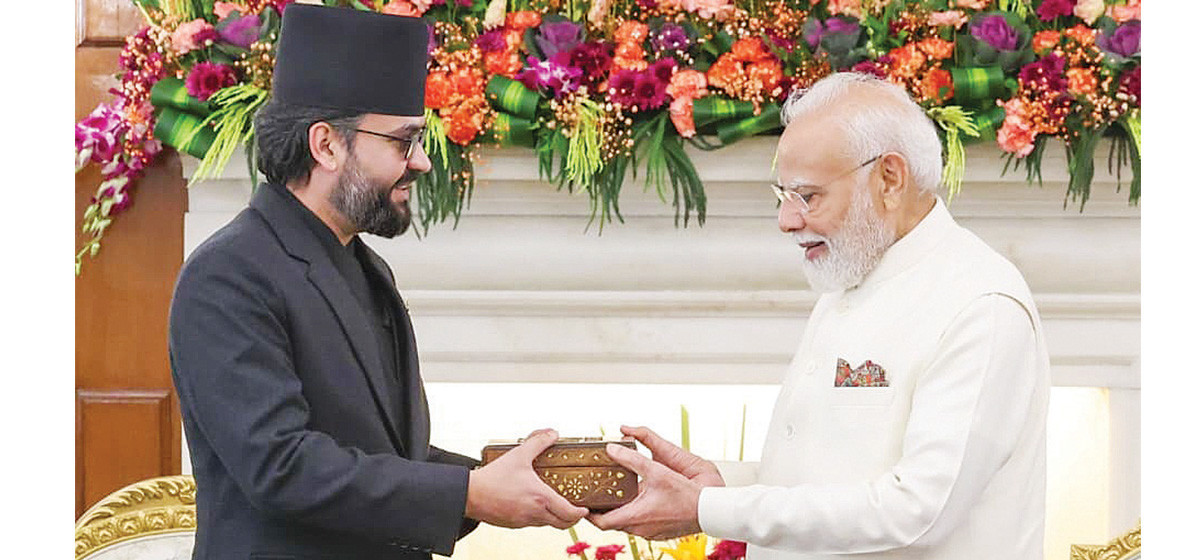
Kathmandu, Nov 24: Indian media and diplomatic circles have described Prime Minister Balendra (Balen) Shah’s two-day official visit to India as a new chapter in Nepal-India relations and a pragmatic reset of bilateral ties.
The visit, his first overseas trip since becoming prime minister in March 2026 following the Gen Z movement, received considerable attention from Indian newspapers, television channels, digital outlets and former diplomats.
During his 25-hour visit on November 22 and 23, six projects were inaugurated or handed over. The two sides also agreed to open the Bhairahawa Lucknow air route for two-way operations. India announced financial assistance worth NPR 240 billion to Nepal.
Indian media call for a shared future
The New Indian Express published an editorial on Monday titled Seize the Moment to Build a Shared Future with Nepal. It said projects such as the Ayodhya Janakpur Saryu Kamala Express railway, an IIT branch in Nepal, digital payments and satellite cooperation could take bilateral relations into a new era of knowledge, innovation and human capital.
However, it cautioned that timely implementation of past commitments, rather than diplomatic rhetoric, would be the real test.
The Indian Express, in its Monday editorial, urged New Delhi to understand Nepal’s changing political landscape and engage with the new leadership in Kathmandu. It said India should build a results-oriented relationship with Balen, who emerged from outside Nepal’s traditional political establishment.
Its diplomatic correspondent Shubhajit Roy also noted that exchanges involving the Indian ambassador’s gift of Mithila paintings in August, the army chief’s visit and humanitarian assistance following the floods had helped ease bilateral tensions.
The Times of India and Hindustan Times highlighted Shah’s description of India as Nepal’s first responder during disasters and a reliable neighbour.
Indian television and digital outlets, including NDTV, ABP News, Aaj Tak and Jagran Josh, gave extensive coverage to the Modi-Shah meeting. They highlighted the NPR 240 billion reconstruction package, Nepal’s access to Kandla and Paradip ports, the 669 MW Lower Arun hydropower project and plans for startup and digital nomad hubs in Kathmandu and Pokhara.
Building long-term chemistry with Balen
BBC Hindi, in its programme Dinbhar, said the visit had brought warmth to bilateral relations, although difficult issues such as border disputes remained unresolved.
Indian foreign policy analysts and former ambassadors have urged New Delhi to build a long-term relationship with Shah, who carries fewer political burdens associated with traditional parties.
Former Indian ambassador to Nepal Manjeev Singh Puri told ANI that the warm embrace and rapport between Prime Minister Narendra Modi and Shah were encouraging despite their age difference. He noted that Shah had studied in Bengaluru and had family connections there, adding that India needed to understand him better.
Former ambassador Ranjit Rae said the visit had injected fresh diplomatic energy into bilateral ties. He welcomed the inclusion of Himalayan climate risks following the Bhotekoshi floods in bilateral discussions, but said India’s credibility would depend on how quickly it implemented announced projects.
Indian diplomat Mahesh Sachdeva said the visit could shape bilateral relations in the coming years amid Nepal’s changing domestic politics and geopolitical balancing, particularly its sensitive relationship with China.
People’s News Monitoring Service

Login to add a comment