







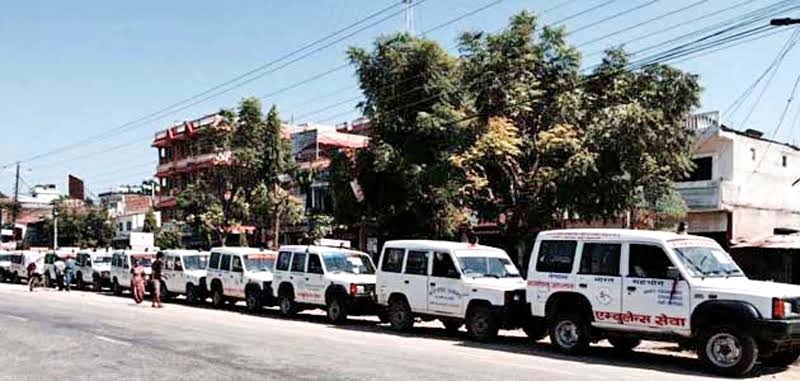
Kathmandu, Nov 21: More than 3,500 of Nepal’s approximately 6,000 ambulances have been grounded because of registration and insurance renewal hurdles under the new Ambulance Service Directive, 2082, raising concerns over access to emergency medical care.
Introduced under Section 64 of the Public Health Service Act, 2018, the directive replaces the National Ambulance Service Directive, 2021. It introduces a unified management system, a toll free emergency number (102), GPS tracking, mandatory insurance and free emergency services.
However, ambulance operators say restrictive provisions have prevented thousands of vehicles from renewing their registration and operating permits. Drivers estimate that nearly 80 percent of ambulances are affected.
The directive allows only health institutions to operate and renew ambulances, effectively excluding non-governmental and social organisations that have traditionally provided such services.
Nawaraj Lamichhane, president of the Joint Ambulance Drivers Association Nepal, said impractical provisions had pushed the sector towards a crisis.
“Thousands of ambulances cannot renew their registration or insurance and remain parked in garages. Drivers also risk imprisonment if they are involved in accidents,” he said.
Lamichhane said restrictions on operators had discouraged the entry of better equipped ambulances, including vehicles fitted with ventilators and patient monitors.
The directive requires ambulances to remain available round the clock through health emergency operation centres. It also provides for alternative transport, including stretchers, boats, motorcycles, doko baskets, helicopters and drones, in areas inaccessible to conventional vehicles. Poor patients and victims of accidents, disasters and public health emergencies must receive free services, which operators cannot refuse.
Drivers must be aged between 20 and 60, have at least four years of driving experience and undergo mandatory training. However, Lamichhane said most drivers lacked minimum wages, appointment letters, social security, health and life insurance.
Operators have also questioned whether technical standards can be met on difficult mountain roads, particularly without adequate charging infrastructure for electric ambulances.
Other concerns include outdated fares, traffic congestion and alleged commissions paid by private hospitals for patient referrals. Drivers claim hospital staff sometimes direct ambulances to particular facilities through calls and messages.
Stakeholders have urged the government to revise impractical provisions, simplify renewal procedures and strengthen ambulance regulation.
People’s News Monitoring Service

Login to add a comment