







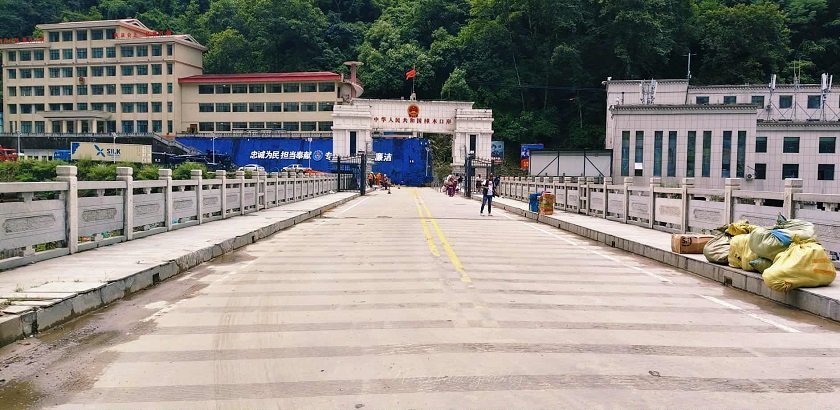
Kathmandu, November 16: Tatopani, one of the major trade points between Nepal and China, remains closed. Following the floods in the Bhotekoshi River, the Rasuwagadhi border point has also been obstructed, while China has suspended regular trade operations through the Tatopani border point.
As a result, the pressure of Nepal-China trade has now shifted to the Korala border point in Mustang. The need to transport goods over longer distances has increased transportation costs, putting upward pressure on market prices. Meanwhile, businesses and local residents in the Tatopani area are increasingly losing their livelihoods.
Citing the risks of landslides and floods along the Araniko Highway, China closed the Tatopani border point for commercial purposes from Bhadra 14, 2083. Although it was reopened for three days to facilitate trade ahead of the Dashain festival, it was closed again thereafter, bringing business activities in the border area almost to a standstill. Local people dependent on hotels, shops, transportation services and daily wage labour are facing a serious livelihood crisis.
The disruption of the Rasuwagadhi border point following the Bhotekoshi floods has further affected Nepal-China trade. With both Tatopani and Rasuwagadhi closed, traders have increasingly turned to the Korala border point in Mustang to import goods. However, transporting goods through Korala has resulted in an unusually sharp increase in transportation costs.
The transportation cost has increased because goods brought through Korala have to cover a distance of approximately 900 kilometres from Lhasa and around 450 kilometres from Lomanthang. This has directly affected the prices of imported goods. With traders facing higher costs, consumers are also being forced to pay more.
Traders have urged the government to intensify diplomatic efforts to reopen the Tatopani border point immediately. According to them, the federal government’s high-level engagement in resolving the issue has so far been inadequate. Nevertheless, political-level dialogue with China is underway regarding the resumption of border operations.
Former lawmaker Madhav Sapkota said the Chinese side had taken the issue seriously and expressed a positive response.
However, reopening the border point is not merely a matter of meeting trade demands. In view of the Bhotekoshi floods, the potential risk of glacial lake outburst floods (GLOFs), and landslides near the border, China has placed priority on the security of the border region.
Stakeholders say the government must focus not only on diplomatic dialogue to facilitate Nepal-China trade but also on developing safer roads, reliable early warning systems and infrastructure to minimise disaster risks.

Login to add a comment