







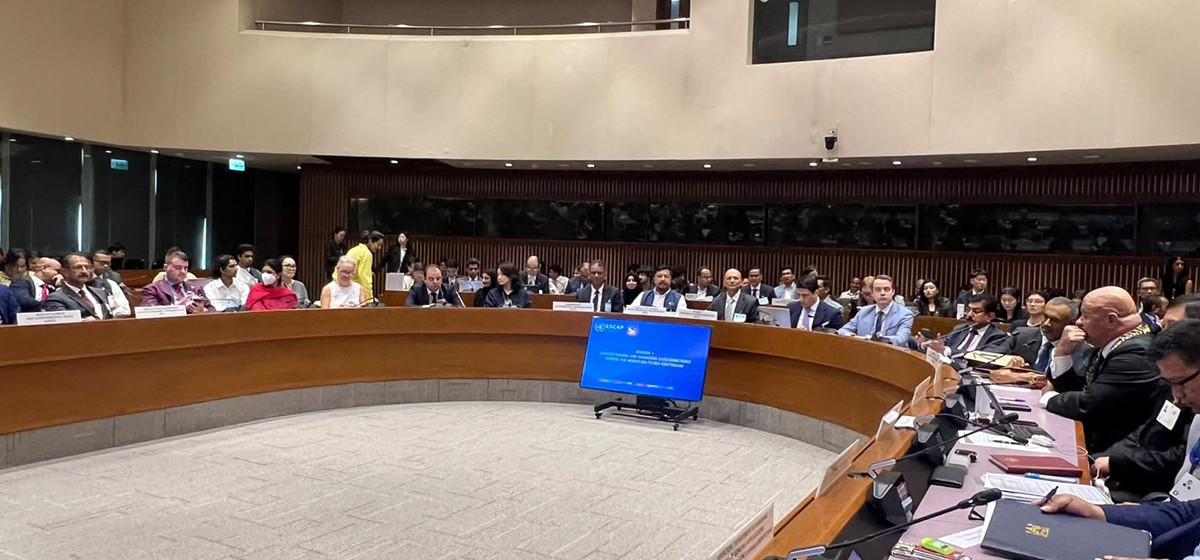
Kathmandu, Oct 30: Minister for Energy, Water Resources and Irrigation Biraj Bhakta Shrestha has presented four major proposals to the international community through a regional dialogue, calling for cooperation to address climate change impacts and manage cross-border risks.
The first proposal calls for sharing space technology and data. Nepal has proposed that international space agencies, scientific institutions and governments work together to develop a multi-hazard early warning system using satellites, artificial intelligence and advanced technologies to monitor vulnerable mountain slopes and glaciers in the Himalayan region.
The second proposal focuses on sharing information and knowledge. Shrestha said Prime Minister Balendra Shah had proposed establishing a Himalayan Climate Resilience Mechanism to facilitate data exchange, monitor glacial lakes and coordinate early warning systems across the mountains.
“Centuries of shared river history show that cooperation has been more than twice as common as conflict. Cooperation always begins with data. Let that data flow in every direction and in every season, before disasters strike, not after. Let the Himalayas become a vast laboratory for cooperation,” Shrestha said.
The third proposal calls for immediate financial support that can be mobilised at the speed of disasters. Pointing out that monitoring the Himalayas may cost millions of dollars while failure to monitor them could result in billions in losses, Shrestha urged the international community to provide accessible, grant-based financing for monitoring, preparedness and recovery.
“Let us establish a permanent window for the rapid response to loss and damage and adequately fund it. Monitoring and early warning systems in high mountain regions should receive grants, not loans. Every investment, from hydropower projects along our rivers to towns near borders, must be made risk-sensitive from source to sea,” he said.
The fourth proposal calls for investing in a green future for mountain communities. Shrestha proposed creating economic opportunities through clean energy, sustainable agriculture, medicinal herbs and responsible tourism for communities that protect forests and watersheds. He also called for duty-free market access for Himalayan products.
Representatives from 53 countries supported the proposals presented by Nepal.
Addressing the regional dialogue, Shrestha said Nepal contributes less than 0.1 percent of global greenhouse gas emissions but suffers directly from the impacts of climate change.
“What happens in our mountains does not remain confined to the mountains. Our rivers flow all the way to the sea, making the security of mountain, island and coastal countries interconnected,” he said.
He stressed that the mountains had already delivered their warning and that the time had come for cooperation and concrete action.
Ministers from various Asia-Pacific countries, UN representatives, scientists and diplomats attended the dialogue.
People’s News Monitoring Service

Login to add a comment