








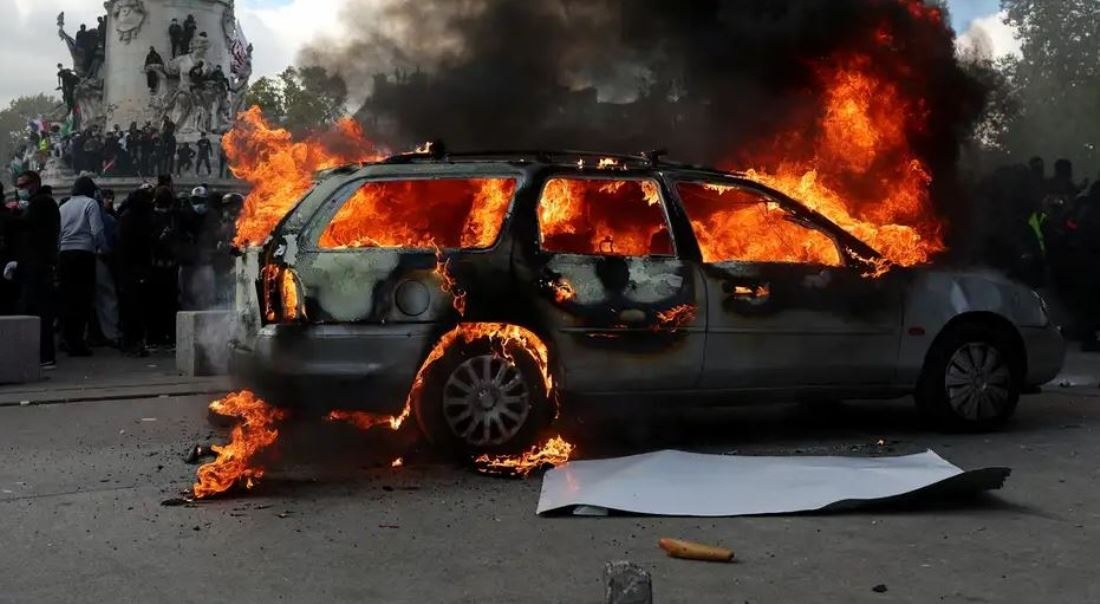
Paris, Oct 20: People across Europe are taking to the streets over failing education systems, rising rents and housing prices, and the growing cost of living.
Protests in France, Spain, Portugal, Italy and Albania reflect mounting frustration over economic inequality, public services and government policies.
France: Education and Cost of Living
In France, student protests began over teacher shortages, dilapidated classrooms and university admission policies. Students say staff shortages have disrupted classes and forced them to miss lessons for extended periods.
Workers and trade unions later joined the protests, citing rising fuel prices and inflation following disruptions to the Strait of Hormuz after US attacks on Iran. The General Confederation of Labour, one of France’s major unions, has backed demands for price controls, higher wages and increased pensions.
The unrest has added political pressure on President Emmanuel Macron as his term approaches its final phase.
Spain and Portugal: Housing Crisis
In Spain, rising rents and property prices have fuelled protests. The case of 87 year old Maricarmen Abascal, whose rent reportedly increased by 230 percent before she was evicted, intensified public anger. She died in hospital two weeks later.
Protesters want rent controls, protection against evictions and tighter regulation of short term and room rentals.
Similar demonstrations have taken place in Lisbon, Portugal. Official figures show that Portuguese house prices more than doubled between 2015 and 2024, rising much faster than the European Union average.
Italy and Albania: Growing Discontent
Demonstrations in Milan, Turin and Bologna have focused on rising living costs and shrinking household budgets. Some protests turned violent, with groups throwing stones at police and setting fire to barricades.
In Albania, protesters have rallied against Prime Minister Edi Rama over corruption, unemployment and poor education. Opposition to a proposed luxury coastal development backed by an investment involving Jared Kushner, US President Donald Trump’s son in law, has also fuelled the unrest.
Government Responses and Political Fallout
France has promised to deploy 3,000 additional substitute teachers, involve students in school decision making and withdraw a proposal to increase university admission fees. The government had also announced increased fuel subsidies for some industries following earlier protests.
In Spain, Prime Minister Pedro Sanchez sought legislation to prevent evictions and regulate temporary and room rentals. The bill failed amid opposition from right wing parties. Sanchez subsequently called an early election for November 29, saying he needed a broader progressive majority to advance reforms.
Violence Clouds Protest Movement
Violence and vandalism have complicated the protests in some areas. Macron has urged authorities to distinguish peaceful demonstrators from groups involved in looting and violence. Prime Minister Sebastien Lecornu has proposed partial curfews in selected areas, while Interior Minister Laurent Nunez has condemned violent groups.
With France’s presidential election scheduled for April 2027, the unrest is likely to intensify political debate. In Paris, protesters reportedly blocked the Louvre Museum’s entrance, disrupting visitors. Spanish housing activists have also announced a general strike for November 11.
The protests underscore the pressure on European governments to improve public services, reduce economic inequality and protect household purchasing power. Source: Int’l agencies
People’s News Monitoring Service

Login to add a comment