







Kathmandu, October 17: Today is the seventh day of Navaratri and Goddess Kalaratri, the seventh of the nine forms of Goddess Durga, is being worshipped with traditional rituals at the Dashain Ghar (a designated place for Dashain worship) or in prayer rooms.
According to Vedic Sanatan tradition, Goddess Kalaratri is worshipped with prescribed rituals every year on Ashwin Shukla Saptami, the seventh day of the Durga festival. It is believed that time ultimately destroys all living beings, but Goddess Bhagwati has the power to destroy even time itself. This form of the Goddess is therefore known as Kalaratri. Various Puranas describe Kalaratri as dark-complexioned and fearsome in appearance.
On the first day of Navaratri, Sunday, Ashoj 15, the Ghatasthapana ritual was performed according to Vedic traditions at Dashain Ghars and prayer rooms, and barley seeds were sown to grow Jamara (sacred barley shoots). On the same day, Goddess Shailaputri, the first of the nine forms of Durga, was invoked and worshipped at the place where the Ghatasthapana ritual was performed.
On the second day, Monday, Goddess Brahmacharini was invoked and worshipped at the designated place of worship. On the third day, Tuesday, Goddess Chandraghanta was worshipped with devotion. Goddess Kushmanda was worshipped according to prescribed rituals on the fourth day, Wednesday, while Goddess Skandamata was worshipped on the fifth day, Thursday, and Goddess Katyayani on the sixth day, Friday.
Today, the seventh day, devotees are worshipping Goddess Kalaratri according to prescribed rituals.
Throughout the nine days of Navaratri, religious texts, including the Durga Saptashati (Chandi) and the Shrimad Devi Bhagavata, along with hymns dedicated to the Goddess, are recited at the place where Ghatasthapana was performed.
It is a religious belief that worshipping the Goddess during Navaratri brings strength, prosperity and knowledge. Based on this belief, followers of Vedic Sanatan Dharma perform special worship of Goddess Durga every year from Ashwin Shukla Pratipada, the first day of the bright fortnight of Ashwin, to Navami, the ninth day.
The sacred offerings from nine days of worship are received and applied as tika from Vijaya Dashami through Kojagrat Purnima. In this way, Nepalis celebrate the Bada Dashain festival for 15 days.
Dashain, also known as the Durga festival, is observed by worshipping the nine forms of Goddess Durga in the following order: Shailaputri on the first day, Brahmacharini on the second, Chandraghanta on the third, Kushmanda on the fourth, Skandamata on the fifth, Katyayani on the sixth, Kalaratri on the seventh, Mahagauri on the eighth, and Siddhidatri on the ninth. These nine forms are collectively known as the Navadurga.
During Navaratri, Shakti Peethas (sacred shrines dedicated to the Goddess) across the country witness large crowds of devotees who gather to offer prayers and pay homage.
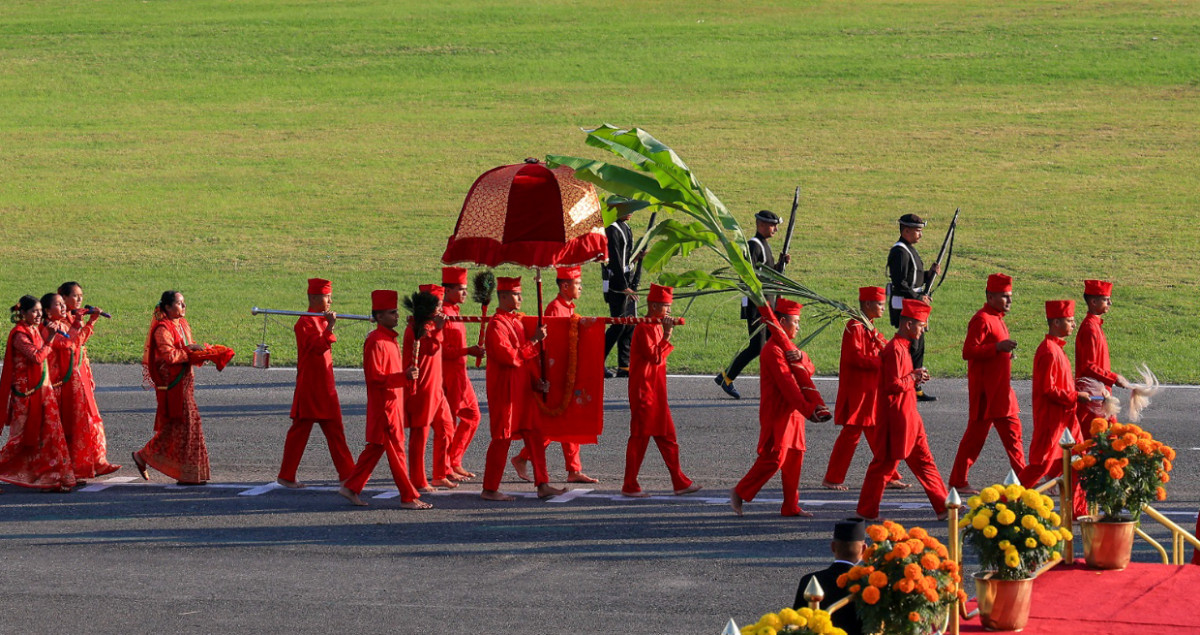
On the seventh day of Navaratri, Fulpati is also brought into Dashain Ghars or prayer rooms. According to Vedic tradition, the Fulpati ceremony is performed in the afternoon.
According to tradition, Fulpati from the Dashain Ghar at Gorkha Durbar is brought to Jamal and then carried in a ceremonial procession by a Nepal Army contingent to the Dashain Ghar at Hanumandhoka Palace, accompanied by an army parade. The ceremony is attended by high-ranking government officials.

Login to add a comment