








By Our Reporter
The Rastriya Swatantra Party (RSP) won a mandate large enough to govern with confidence. Six months later, its biggest political challenge may be inside its own ranks. The government, parliamentary party and party leadership each appear to be setting their own course. Their leaders insist they remain in touch, but the pattern of meetings, public criticism and unanswered concerns suggests that contact has yet to become effective coordination.
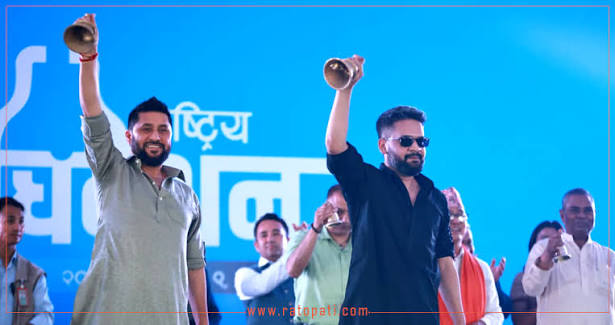
The arrangement was always going to require work. Balendra Shah became prime minister under a pre-election agreement and leads the RSP in Parliament. Rabi Lamichhane chairs the party. Dividing those roles can make sense. Shah can focus on governing while Lamichhane keeps the organisation connected to its members and voters. But separate responsibilities still need shared decisions, especially when a disaster, a diplomatic dispute or communal tension demands a clear response.
The Bhotekoshi flood exposed the weakness in the arrangement. Lamichhane called three all party meetings on reconstruction and resettlement; Shah attended none. Lamichhane says the prime minister was meeting local representatives and people from affected areas instead. Those meetings matter too. Yet a prime minister’s presence at a gathering of political leaders can help build support for difficult decisions and show that the government is taking charge. If the two leaders agreed on their roles, they should be able to explain how those efforts fit together.
The same question arises in Parliament. RSP lawmakers have challenged delays in appointing ambassadors, rebuilding public buildings and responding to the flood. They have also questioned the government’s handling of the budget, foreign relations, the landless squatters’ issue and unrest in Koshi and Madhes. Their criticism should not be treated as disloyalty. MPs owe voters honest scrutiny, even when their party is in power. But when lawmakers repeatedly say their concerns go unheard, the leadership needs to find out why.
Chief whip Kabindra Burlakoti says he spoke with Shah and passed parliamentary concerns to the Prime Minister’s Office. That is useful, but phone calls and forwarded messages cannot take the place of regular meetings where lawmakers can raise problems, hear the government’s reasoning and agree on what needs attention. Shah leads the parliamentary party. He should give its members a dependable chance to speak with him.
Party leaders are right to reject the idea that every critical remark signals a split. Spokesperson Jagadish Kharel has called the questions evidence of internal democracy, and he has a point. A governing party should welcome members who spot mistakes early. Still, internal democracy works only when criticism leads to a response. Otherwise, lawmakers will keep taking their concerns to the House and the public because they see no other way to be heard.
RSP also faces the ordinary pressures of governing with an unusually large mandate. Many of its members are new to state administration. Ministers’ remarks and decisions now affect the party’s reputation as much as its campaign promises do. Shah and Lamichhane brought different strengths to the election victory; neither can assume that popularity alone will carry the government through setbacks.
Earlier majority governments offer a warning about allowing tensions between party and government to grow. RSP need not follow that path. Its leaders can begin with regular parliamentary party meetings, a clear way to settle disagreements and joint discussions before taking positions on sensitive national issues. They should also tell the public who is responsible for decisions and delays.
Voters gave RSP the power to govern. They are entitled to see its three wings use that power together, and to hear a convincing explanation when they do not.

Login to add a comment