







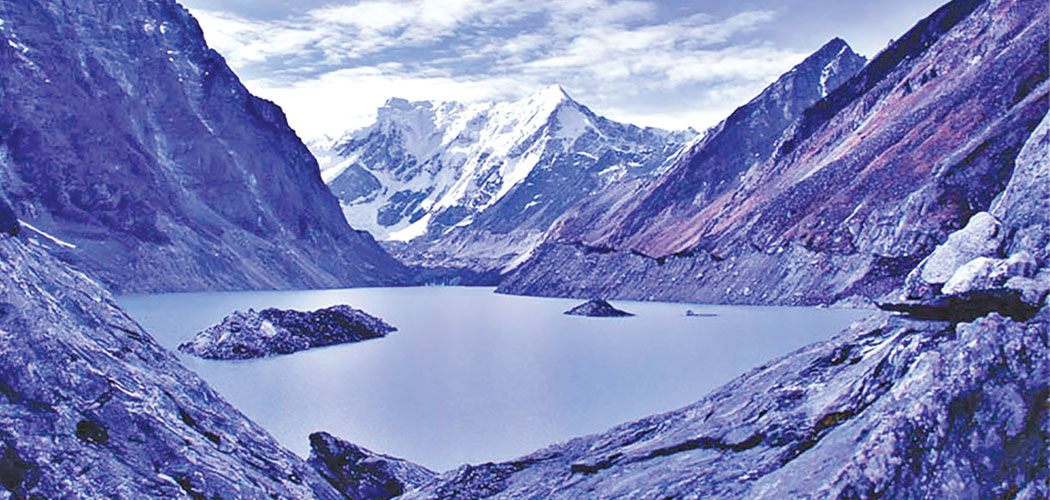
KATHMANDU, Sept 20: Nepal has begun work to lower water levels in four glacial lakes considered at high risk of bursting, following the devastating Bhotekoshi–Trishuli flood.
Water Resources Minister Biraj Bhakta Shrestha said last week that the government was discussing ways to reduce the danger, including the possible use of explosives. But the official leading the lake risk reduction project said the plan is to drain water through carefully built channels, as Nepal has done before.
“We will not burst the lakes with explosives,” said Subas Tuladhar, the project’s focal person at the Department of Hydrology and Meteorology’s Hydrology and Water Resources Research Centre. “We will lower their water levels by building channels, as we did at Tsho Rolpa and Imja.”
A study released five years ago by the International Centre for Integrated Mountain Development and the UN Development Programme identified 21 glacial lakes in Nepal’s Himalayan region that could produce major floods if they burst. Most lie north of the Koshi basin, with others in the Gandaki and Karnali basins.
Work began last Chaitra on four of them: Lower Barun in Sankhuwasabha, Lumbding Tsho and Hungu-2 in Solukhumbu, and Thulagi in Manang. The seven-year project is expected to cost about $50 million. More than $36.1 million comes from the Green Climate Fund, while the government has arranged the rest from various sources.
Nepal has lowered the water levels of two other high-risk lakes. In 2000, workers cut a channel through the natural barrier holding back Tsho Rolpa in Dolakha, lowering its level by about three metres at a cost of roughly $3 million, including foreign aid. In 2017, a similar project lowered Imja Lake in Solukhumbu by nearly four metres and cost about $7.2 million. Neither project used explosives.
The work on the four newly selected lakes will take time. Teams are conducting field studies and preparing detailed project reports, which Tuladhar expects to finish in 2027. Procurement and contractor selection will follow. The project is expected to be completed in 2032.
It also calls for flood warning systems downstream, protective structures along riverbanks and tree planting. UNDP says the measures could reduce risks for about 2.3 million people.
Meanwhile, technicians plan to revisit Tsho Rolpa and Imja to assess their condition and reinstall downstream warning equipment. Reports suggest that systems installed during the earlier projects no longer work. Tuladhar said the new equipment could be in place within months.
The August 26 Bhotekoshi–Trishuli disaster has raised a further concern. An avalanche of ice and rock above the Lhende stream on the Tibetan side triggered a flood that Tuladhar described as more destructive than the glacial lake floods his team had feared. He said scientists were now discussing how to assess such threats.
Nepal has more than 2,000 glacial lakes, and studies show that hundreds are growing. Plans to reduce risks at the other 17 lakes identified as highly dangerous remain unclear. Scientists say the recent flood strengthens the case for continuous monitoring of glaciers and lakes, more instruments in the mountains, and infrastructure plans that account for the floods they could produce.
People’s News Monitoring Service

Login to add a comment