







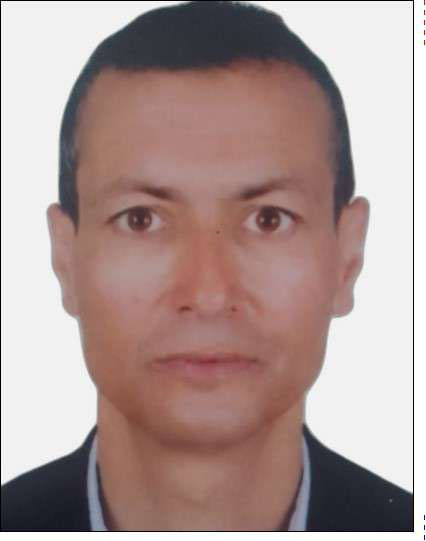
By Deepak Joshi Pokhrel
Just last week, Nepal observed the first anniversary of the Gen-Z uprising, paying tribute to those who laid down their lives for the betterment of the nation and its people. Several programmes were held across the country to mark the first anniversary of the movement. But a year after the Gen-Z uprising, people are now raising a key question: Have the demands and aspirations of the Gen-Z movement been fulfilled? We hope we will get a convincing answer very soon.
Just to recall, frustrated and irked youths launched a movement through social media. Their demand was not big. It was simple: good governance, transparency and an end to corruption. What started as a social media movement snowballed into street protests, which sadly turned violent. The reason: police, acting under the instructions of the then Home Minister, indiscriminately gunned down more than 70 people, mainly youths who were protesting peacefully.
The immediate fallout of the uprising was the ousting of the Oli-led government and the dissolution of Parliament. In the days that followed, an interim government under the leadership of former Chief Justice Sushila Karki was formed with a key mandate to conduct parliamentary elections by March 5, 2026. Contrary to popular belief, the election was held on March 5, in which the Rashtriya Swatantra Party emerged victorious, securing a near-absolute majority.
In the days that followed, a government under the leadership of Balendra Shah, popularly known as Balen, was formed. Right from day one, the government hogged media attention. For instance, Balen’s oath-taking ceremony marked a departure from earlier practice. Unlike in the past, Balen took the oath of office and secrecy amidst religious rituals, with Buddhist monks and pundits chanting hymns. Many argued that Balen’s oath ceremony was the foundation stone for restoring Nepal as a Hindu state.
While taking the oath of office and secrecy, Balen made several commitments. He said that his government would leave no stone unturned to fulfil the key demands and aspirations of the Gen-Z movement. Balen’s commitment ignited huge hope among the people, who believed that Nepal was now in safe hands.
It is almost six months since Balen Shah assumed office on March 27. During this period, however, Balen has not been able to turn his commitment into reality. Many demands remain unfulfilled, compelling people to ask whether the Balen-led government is accountable to them.
It needs to be mentioned here that protesters demanded greater transparency and accountability from political elites whom they viewed as corrupt, as well as an end to nepotism—something that has remained a hallmark of successive governments since the restoration of democracy in 1990. They also demanded the resignation of Prime Minister Oli, the dissolution of Parliament, the formation of an interim government, and strong action against those involved in suppressing the agitation.
No sane mind would disagree with the fact that some of these demands have been met, at least to some extent. For instance, Oli resigned in the wake of the protests, and several senior members of Parliament stepped down. Parliament was dissolved, paving the way for the formation of an interim government.
Soon after assuming office, the Home Minister swung into action. Acting on the recommendation of the Karki Commission report, the Home Minister instructed the Nepal Police to arrest former Prime Minister KP Oli and the then Home Minister. Everyone, particularly his critics, was taken aback by his swift action and straightforward approach. But the Supreme Court ordered the release of the former prime minister and home minister, while indicating that they would remain under investigation. As things stand now, no one knows the status of the investigation or how long the government will take to establish whether Oli was involved in the alleged use of excessive force and who was responsible for indiscriminately gunning down peaceful protesters.
Furthermore, the issue of corruption among political elites has rarely been addressed. The fundamental concerns and issues raised by the young protesters remain the same, and there have been no significant changes in governance even after the newly elected government, other than some populist rhetoric on small and cosmetic issues.
In June 2026, the CIAA investigated alleged irregularities in the Rs. 10.13 billion e-passport procurement contracts. The CIAA filed corruption cases against 18 government officials and representatives of two German companies. But what surprised everyone was the report of alleged government interference, with the government reportedly pressuring the anti-graft body to arrest the Director General of the Department of Passports. The government’s action clearly demonstrates that it is no different from its predecessor when it comes to interference and the undue use of power and position.
Our experience with democracy clearly suggests that internal bickering over power-sharing has remained a major bone of contention among political parties. Be it the Nepali Congress, CPN-UML, Maoist Centre or fringe parties, each has experienced internal feuds, factions and sub-factions. It is for this reason that Nepal has experienced a vicious cycle of political instability, creating a culture of unholy coalitions among political parties for their personal benefit.
The people ousted these parties and voted for the RSP, thinking that it would not engage in such infighting and squabbling over power-sharing. They viewed the party as a beacon of hope while the nation was held hostage by three individuals—KP Oli, Prachanda and Sher Bahadur Deuba. But highly placed reports indicate that differences between party chair Ravi Lamichhane and Prime Minister Balen are increasing and taking a nasty turn.
Every Nepali is mindful of the fact that the agitation was against poor governance, misrule, rampant corruption and the banning of social media. The movement was aimed at eradicating malpractices and paving the way for a new Nepal. Given the prevailing situation, those dreams appear to be turning into an illusion. This would amount to a betrayal of the martyrs of the Gen-Z uprising.
While speaking at a programme organised to pay tribute to Gen-Z martyrs, the Home Minister gave a clear message, pledging to fulfil the aspirations and demands of the Gen-Z movement. Rampant corruption, nepotism and favouritism are still among the major challenges facing the nation. Likewise, unemployment, resulting in a mass exodus of competent youths overseas in search of better opportunities, and human rights violations continue to persist.
Of course, it is too early to conclude that the incumbent government has completely failed to address the above-outlined issues. However, the early indications suggest that it has not placed sufficient emphasis on fulfilling the aspirations and demands of the Gen-Z uprising.

Login to add a comment