







By Our Reporter
The Bhotekoshi flood has triggered a second, more complicated catastrophe involving displaced people, public health, destroyed infrastructure, interrupted electricity, decreased trade, and increased risk of future calamities. Nepal is currently facing not just a rescue operation, but also a long-term test of the state’s ability to recover from disaster.
The human toll remains astonishing. More than 4,000 persons are reported missing, and over 1.6 million people have been directly or indirectly impacted, including around 6,900 pupils. The demolition of houses, as well as the disruption of schools and livelihoods, will have long-term implications.
Preliminary official estimates reveal that 7,570 private dwellings and structures have been damaged, with Nuwakot suffering the most, followed by Rasuwa and Dhading. Another 4,689 structures in the Bhotekoshi-Trishuli corridor have been identified as being at high risk of flooding and landslides by satellite mapping. In other words, the disaster map can still be expanding.
At least 3,453 persons who have lost their houses are housed in holding facilities, and more than 1,188 families have been relocated. The government intends to relocate impacted individuals into temporary accommodation within three weeks, but implementation will be the true test. The first damage to private homes alone is estimated at roughly Rs12 billion.
The next risk is less obvious, but potentially deadly: illness. Shortages of food and safe drinking water, along with deteriorating sanitation infrastructure, provide ideal circumstances for diarrhoea, dysentery, cholera, and other waterborne illnesses. Children, pregnant women, and elderly adults are more vulnerable. Rescue workers and anyone who handle with dead humans and livestock suffer health concerns. Medical readiness must consequently move rapidly from treating injuries to preventing epidemics.
The psychological impact is likewise worthy of greater consideration. People who have lost family, seen the destruction of their houses, or escaped the flood are more likely to be traumatised. Emergency aid may save lives, but long-term psychosocial support will be required to help communities recover.
Hydropower is another significant economic blow. Eight operational projects with a total capacity of 281 MW and four under development with a capacity of 388 MW have apparently been destroyed. Approximately 431.1 MW of generating capacity has been affected. This has an impact on more than just local energy generation; it also threatens Nepal’s developing status as a regional power exporter.
According to the Nepal energy Authority, 40 MW of energy from the Chilime and Trishuli plants, which are contracted for export to Bangladesh, cannot now be provided. With Nepal authorised to export around 1,200 MW to India and Bangladesh, continued damage could limit foreign-currency profits and erode investor trust in the hydropower sector.
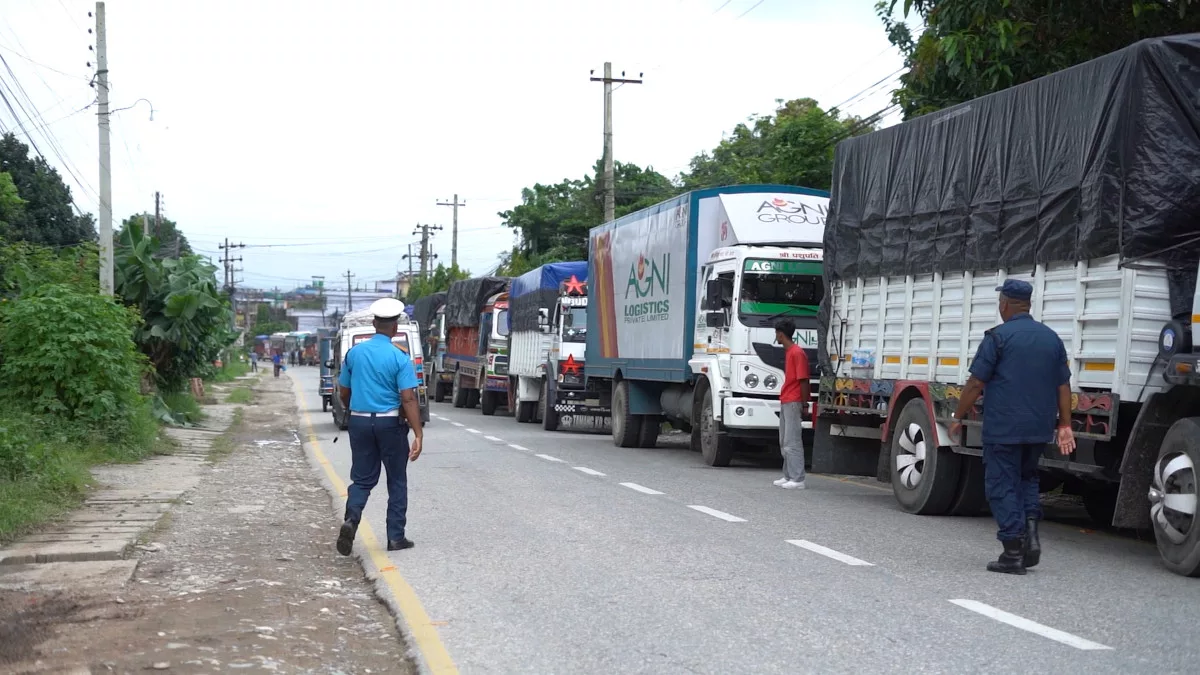
Transportation infrastructure has also been severely damaged. Twenty-two concrete bridges between Rasuwagadhi and Galchhi have apparently been swept away, along with 48 suspension bridges and 31 motorable bridges. Significant portions of the Galchhi-Betrabati-Rasuwagadhi route and the Prithvi Highway have also been destroyed. Until these ties are restored, aid, trade, and reconstruction will be severely limited.
The interruption is already affecting markets. Blocked highways have hampered food, vegetable and fruit supply, while allegations of fake shortages, stockpiling and black-market sales of gasoline and cooking gas raise concerns about catastrophe profiteering. The government has established the consumer complaint hotline 1136, but market monitoring should be considerably more rigorous.
And the danger has not vanished. The landslip at Krishna Bhir, which occurred just days after the storm, demonstrated that unstable slopes and riverbanks continue to pose a concern. Further landslides, debris accumulation, and abrupt changes in river courses might result in future calamities. Glacial lake outburst floods continue to pose a severe concern, necessitating the implementation of early warning systems and cross-border Himalayan monitoring.
Agriculture has suffered as cropland has been swept away or buried beneath debris, and livestock losses have reduced household income. Continued interruption at Tatopani and Rasuwagadhi might further erode Nepal-China commerce and force local enterprises to close or relocate.
The government’s business-recovery plan, which includes customs waivers for replacing wrecked cars, machinery, and equipment, is a good starting point. However, such efforts cannot replace properly working roads, bridges, energy, and communications.
The Bhote Koshi tragedy has now entered a second phase. Nepal must now transition from rescue to recovery, and recovery to resilience. The true issue is not merely reconstructing what was destroyed, but rebuilding it differently with safer infrastructure, stronger early warning systems, greater health preparation, and speedier cooperation across all three levels of government.
The issue is no longer whether another calamity will occur. The question is whether Nepal will be better prepared when it happens.

Login to add a comment