







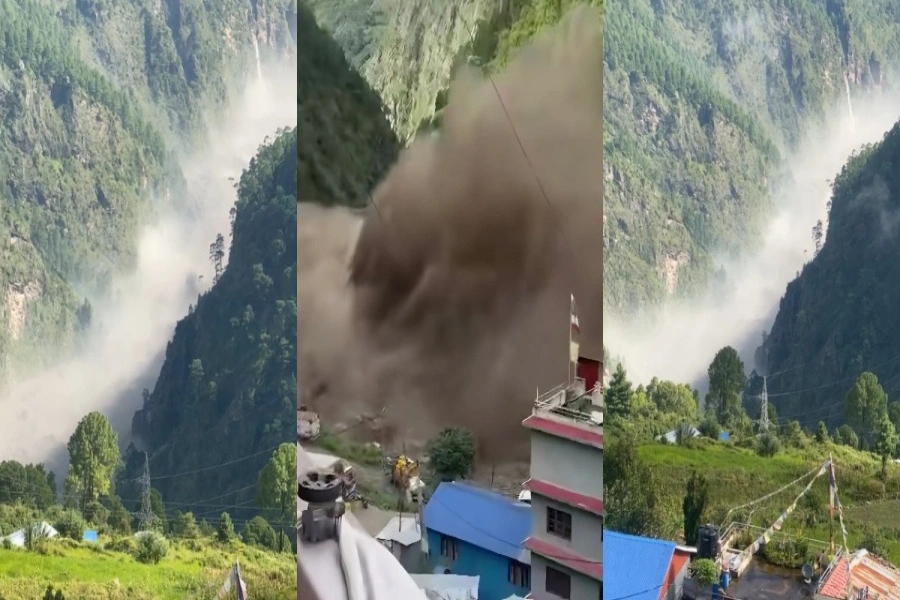
Kathmandu, Aug 26: Floodwaters have entered the Bhotekoshi River in Rasuwa from the Tibet side, with authorities still assessing the extent of the damage.
Rasuwa Chief District Officer Narendra Pariyar said the sudden flooding had caused extensive damage. “The flood came suddenly and caused significant destruction,” he said. “We have received reports that hydropower projects along the lower riverbanks were swept away. Floodwaters have also entered settlements, and many things have been damaged.”
Pariyar said the flooding may have originated on the Chinese side because there was no significant rainfall in the Nepali section of the river basin.
“We did not have any major glacier on our side that could have caused this. We have been told the flood came from across the border,” he said. “There was no heavy rain here either. It rained lightly around Dhunche last night, but not enough to cause such flooding.”
Rescue and assessment efforts have also been difficult because of the scale of the flooding and conditions on the ground.
An army helicopter has already been deployed to inspect the affected areas from the air, while authorities continue to gather information on the damage and assess the situation.
Emergency meeting
Kathmandu: An emergency meeting of the Monsoon Response Command Post has begun to assess the flooding in the Bhotekoshi River in Rasuwa. Home Minister Sudhan Gurung is attending the meeting.
Severe flooding has caused significant damage in Syabrubesi, Timure and other areas of Rasuwa.
The Department of Hydrology and Meteorology has urged residents living along the riverbanks to remain on high alert after a large volume of floodwater entered the Bhotekoshi and Trishuli rivers from Tibet in China.
Threats to Syabrubesi and Timure
Earlier Rising water levels in the Bhotekoshi River have triggered fears of flooding and further damage in Syabrubesi and Timure areas of Rasuwa, prompting authorities to urge residents in vulnerable settlements to move to safer locations and remain on high alert.
Rasuwa Assistant Chief District Officer Dhurba Prasad Adhikari said the river’s increased flow has heightened the risk to settlements and infrastructure along its banks. Preliminary information suggests that some physical structures in Syabrubesi and Timure have already been damaged, although authorities are still assessing the scale of the destruction.
The National Disaster Risk Reduction and Management Authority has also warned communities along rivers and streams in Rasuwa, Nuwakot, Dhading, Gorkha and Chitwan to remain vigilant. Authorities fear that continued rainfall could push water levels higher and trigger flash floods, landslides and further damage to roads, bridges and other infrastructure.
The local administration has asked residents to avoid unnecessary travel near riverbanks, streams and other exposed areas. People living in low lying settlements have been advised to relocate temporarily if water levels continue to rise.
Security agencies and local authorities are monitoring the river and collecting information on possible damage. Emergency teams have also been kept on standby to respond if the situation worsens.
The Bhotekoshi corridor is particularly vulnerable during the monsoon because steep terrain, intense rainfall and fast flowing rivers can quickly turn local flooding into a major disaster. Syabrubesi and Timure are also important settlements along the route to the Rasuwagadhi border point with China, making any disruption potentially significant for local residents, transport and cross border trade.
Authorities have urged residents not to wait for floodwaters to reach their homes before moving to safer ground. They have also advised people to follow official warnings and avoid crossing swollen rivers or streams.
Officials said a clearer assessment of the damage and risks will be made as field teams continue monitoring the affected areas.
People’s News Monitoring Service

Login to add a comment