







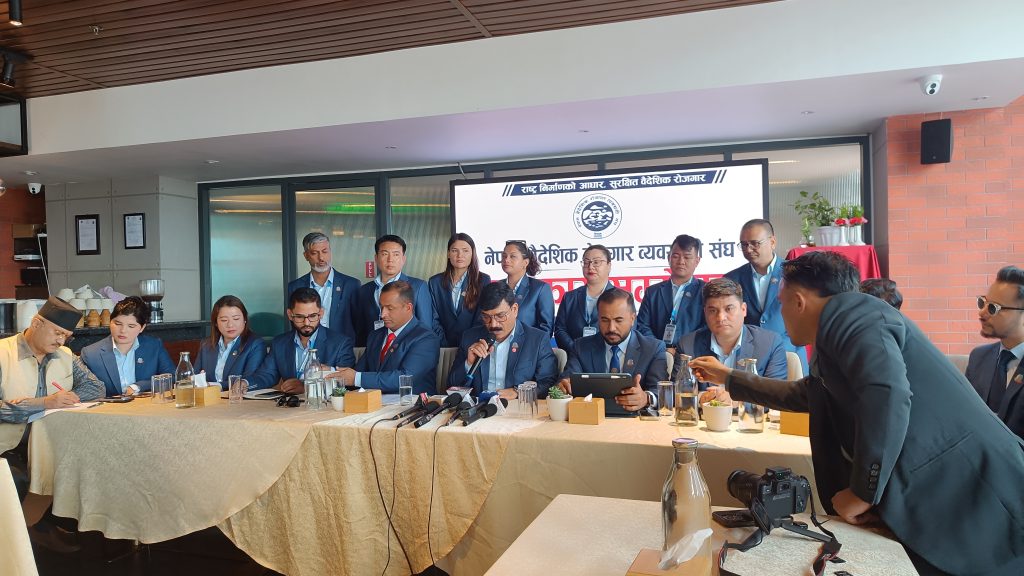
Kathmandu, Aug 24: Nepal has objected to Malaysia’s decision to allow only 25 Nepali recruitment agencies to send workers to the country, bringing the government and manpower businesses together in opposition to the new system.
Malaysia’s Human Resources Ministry introduced the new arrangement on August 22, under which foreign workers can be recruited only through agencies registered on its Foreign Worker Centralised Management System, or FWCMS.
Malaysia has listed 25 agencies from Nepal, 25 from Bangladesh, 23 from Cambodia, 10 each from India, Myanmar, and Pakistan, 435 from the Philippines, 258 from Sri Lanka, 1 from Thailand, and 91 from Vietnam.
The Malaysian ministry has made clear that employers cannot recruit foreign workers through agencies that are not registered with the FWCMS. The decision effectively limits the number of Nepali agencies with direct access to the Malaysian labour market to just 25, out of hundreds licensed to operate in Nepal.
Nepal has strongly objected to the move. Labour Minister Ramji Yadav summoned Malaysia’s acting ambassador to Nepal, Mohammad Firdaus Azman, for consultations.
The Ministry of Youth, Labour and Employment said the list of 25 Nepali agencies appearing as recruitment agencies on the FWCMS would not be recognised by Nepal.
The ministry said attempts had been made for years to create a system allowing only a limited number of agencies to send workers to Malaysia. It described the latest move as a step toward imposing such a syndicate.
Nepal has asked Malaysia to maintain the existing system and said labour migration issues between the two countries must be settled through consultation and agreement. It also reminded Malaysia that such matters can be discussed through the joint technical committee established under the bilateral labour agreement.
The ministry said Nepal had written to Malaysia through the Foreign Ministry on the same day the list was published, urging continuation of the existing arrangement.
Nepal maintains that any agreement must comply with its labour policies, foreign employment laws, bilateral agreements and international law. It has pledged diplomatic efforts to protect Nepali workers’ interests.
Malaysia’s acting ambassador said the 25 agencies were selected under his government’s policy and that Nepal’s concerns could be addressed through the bilateral technical committee.
Malaysia has also fully digitised foreign worker recruitment. From August 22, employers can apply online through the FWCMS for foreign worker quotas, subject to preliminary approval and other requirements under Section 60 of the Employment Act 1955.
People’s News Monitoring Service

Login to add a comment