







By Our Reporter
Nepal’s Parliament is developing an unhealthy habit: lawmakers increasingly confuse being outspoken with being aggressive. Shouting at officials, issuing threats, making reckless accusations and humiliating people in public are being presented as signs of strength. They are not. They are signs of weak political discipline.
The problem has now gone beyond a few isolated incidents. Ministers and MPs are increasingly using language and behaviour that would be unacceptable in any serious public institution.
Home Minister Sudhan Gurung recently used threatening language while discussing people spreading what he called misinformation about a bridge in Gorkha. Infrastructure Minister Sunil Lamsal had earlier threatened harsh action against a contractor over delays in relocating electricity poles along the Naubise-Malekhu road.
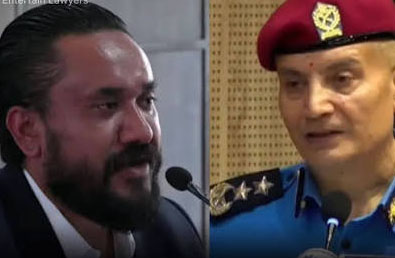
Several lawmakers have also crossed the line. RSP lawmaker Khagendra Sunar came under criticism during a Public Accounts Committee meeting for his aggressive treatment of Home Secretary Rajkumar Shrestha and Inspector General of Police Dan Bahadur Karki over an alleged irregularity in the procurement of election police uniforms. He demanded investigations and called for the immediate removal of senior officials.
His own party colleagues objected to the manner in which he addressed officials. RPP lawmaker Khusbu Oli also argued that repeated disrespectful behaviour toward people appearing before parliamentary committees required counselling.
Sunar’s record shows why this cannot simply be dismissed as one bad day. Before entering Parliament, he was known for confrontational speeches. After becoming an MP, that style has repeatedly followed him into public office. Following the death of Shrikrishna Bik in police custody in Sindhuli, he threatened to drag the district police chief away if the circumstances were not explained.
RSP lawmakers Raju Pandey, Jagadish Kharel, Parasmani Gelal and Yagyamani Neupane have also faced criticism for their conduct or remarks. Pandey confronted an army officer during a Bagmati Corridor inspection in Gokarna. Kharel became involved in a heated exchange with an airport employee over passenger fees. Gelal sparked controversy with remarks about transferring a mayor, later clarifying that he meant mayors can only be changed through elections.
Neupane demanded access to confidential case files during a visit to the CIAA office in Itahari. Officials refused, citing the confidentiality of ongoing investigations, but he continued pressing for access on the grounds that lawmakers are elected representatives. These incidents reveal something deeper: some MPs seem to believe that winning an election gives them authority to cross institutional boundaries.
RSP lawmaker Surendra Chaudhary also drew criticism after using insinuating language against opposition lawmakers while defending Prime Minister Balendra Shah’s controversial remarks about Indian encroachment on Nepali territory. Parliamentary disagreement is normal. Personal insinuation and reckless language are not.
The growing role of social media has made this worse. Politicians now know that anger travels faster than policy. A confrontation can produce thousands of views, shares and comments within hours. For politicians building personal brands, outrage can become a shortcut to visibility. Parliament cannot become a stage designed around viral clips. The country needs lawmakers who can produce strong arguments, not strong reactions.
The Speaker must therefore act. Parliamentary privilege should protect legitimate legislative speech, not become a shield for threats, personal attacks or intimidation. The code of conduct must be enforced consistently, including against members of the ruling party. Warnings alone will not work if repeated misconduct carries no consequence.
Political parties also have a major responsibility. RSP has acknowledged the problem and says it has begun counselling, training, seeking explanations and disciplinary measures. That is welcome, but the real test is whether party leadership is willing to act against popular MPs when they cross the line.
The ruling party cannot demand parliamentary discipline from others while protecting its own members. Opposition parties must meet the same standard. Parliamentary committees should also establish clearer rules for dealing with officials and witnesses. MPs can ask difficult questions and expose wrongdoing without humiliating people. Committee chairs should immediately intervene when questioning turns into intimidation.
The media has a role too. It should stop rewarding every political outburst with disproportionate coverage. Reporting misconduct is necessary, but repeatedly turning abusive remarks into entertainment can encourage politicians to repeat them. Media outlets should give greater attention to the substance of parliamentary work, not simply who shouted at whom.
Parliament needs tough scrutiny, sharper questions and fearless debate. It does not need intimidation masquerading as accountability. If unruly behaviour becomes a political asset, Parliament will lose something more important than decorum: public trust.

Login to add a comment