







By Nirmal P. Acharya
On August 2, after several years, the Indian Embassy in Beijing resumed its Open House event, inviting Indian expatriates from various sectors in the city to attend a roundtable discussion. According to Indian media reports, during the event, representatives of the Indian community in China raised three key concerns directly with Indian Ambassador Vikram Doraiswamy:
First, they are urging China to suppress domestic anti-India sentiment and negative attitudes toward India. The increasing number of offensive posts targeting Indians, Indian cuisine, and cultural practices on Chinese social media platforms have become unbearable for them.
Second, they are demanding that China issue more work visas to Indian citizens. In recent years, the number of work visas available to Indians for employment in China has significantly decreased, hindering their ability to earn income in China—a situation that has drawn strong dissatisfaction.
Third, they are calling on China to address the employment issues faced by spouses of Indian expatriates. To this day, spouses of Indian nationals remain unable to legally work in China, and accessing consular services remains inconvenient.
When Chinese people read this news, they all expressed astonishment. One Chinese internet influencer wrote: “I can’t remember when was the last time I heard that foreign residents directly or indirectly made such a package of demands to the Chinese government. In the impression of Chinese people, it seems that this has never happened before. Even in the relatively weak China of the 1980s and 1990s, or even when Western developed countries were dealing with us, they wouldn’t be so arrogant to this extent. The self-perception of Indians is too far away from their actual status in China’s mind.”
Between China and India, there is an increasing mutual aversion and even hostility towards each other. Although in the short term, China and India will not move towards full-scale confrontation, in the long term, their relationship will still tend to deteriorate.
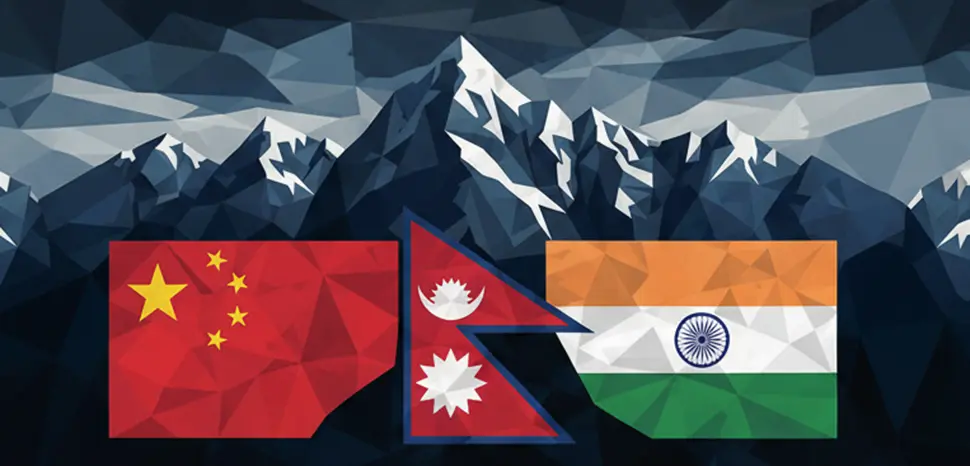
For a long time, Nepal’s diplomatic stance has been to pursue a “balanced diplomacy” between China and India. However, as the relations between China and India deteriorate, the difficulty of implementing “balanced diplomacy” for Nepal will increase significantly. One possible way out for Nepal’s diplomacy is to transform itself from a passive “buffer zone” in the game of major powers to an independent and autonomous regional geo-political pivot country in South Asia.
However, in my opinion, this goal may be partially achieved, but it is difficult to fully attain; in the medium and long term, it is possible to complete the transformation from a “passive buffer country” to an “active balancer, regional bridge”, but there is an insurmountable structural ceiling that exists between it and a truly powerful geo-political pivot country.
The core meaning of a “geo-political pivot country”: centered on its own sovereignty and interests, using its own location to actively shape the regional cooperation pattern, having an independent agenda, exerting positive influence on the surrounding areas, rather than simply being controlled by major powers.
Can Nepal become a geopolitical pivot in South Asia?
This is a political test question that history has set for our political elites.

Login to add a comment