








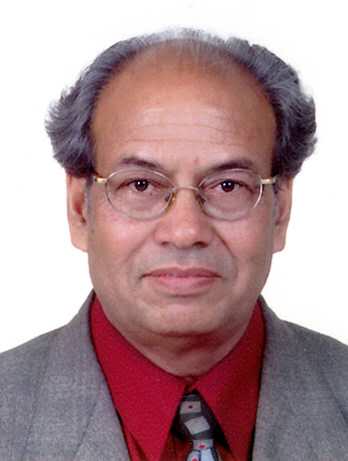
By Narayan Prasad Mishra
In every functional organization—whether a company, a university, or a government office—new positions are created only after careful analysis of the workload, required skills, and qualifications. Candidates are screened based on experience, competence, and suitability. The goal is simple: to place the right person in the right job to ensure success. But when it comes to political leadership, this most basic logic is thrown out the window. No role in a nation carries more responsibility than that of a president, prime minister, or minister. These individuals make decisions that affect the lives of millions.. So, the people of a country must be able to choose the best candidate based on their knowledge, experience, honesty, and integrity. And yet, political positions in Nepal are often filled by people, with the exception of some, who would not qualify for even a junior officer job if merit, knowledge, or character were the criteria.
The result? Predictable—and disastrous.
When a country is lucky enough to have qualified, visionary, and broad-minded leaders, the difference is visible. Good governance, sound policies, and national development follow.
Throughout history, nations that placed capable, visionary leaders at the helm have flourished. Take Jawaharlal Nehru of India, for instance. His emphasis on education, scientific temper, and democratic institutions laid the foundation for modern India. Though not without faults, Nehru’s leadership was pivotal in giving a newly independent India a clear direction.
Similarly, Lee Kuan Yew of Singapore transformed a small, resource-poor island into a global economic powerhouse through pragmatic policies, clean governance, and strict meritocracy. He famously said, “If you want to reach your goals and dreams, you cannot do it without discipline.” His leadership proved how vision combined with competence can reshape a nation’s destiny.
Even in Nepal’s history, King Mahendra, not being an elected leader, took steps that contributed to Nepal’s modernization. He established essential infrastructure, initiated industrial projects, and prioritized education and national integration in a fragmented society. His leadership had moments of national significance.
Across the globe, effective leaders have made their mark. In the United States, presidents like Franklin D. Roosevelt, who led the nation through the Great Depression and World War II, and Barack Obama, who inspired a nation with his message of hope and change, are examples of leadership rooted in competence, vision, and empathy.
In South Africa, Nelson Mandela demonstrated how moral courage and inclusive leadership can heal a divided nation. His legacy is not just of political success but of uniting people after decades of apartheid.
These leaders had one thing in common: they were not accidental office-bearers. They were individuals of proven ability, deep understanding, and commitment to public welfare.
Now, contrast this with Nepal’s unfortunate political landscape.
Nepal has repeatedly been burdened with leaders whose qualifications, mentality, and competence would not suffice for even junior bureaucratic roles. Narrow-mindedness, lack of vision, and self-centered motives dominate. Politics becomes a family business, not a public service. National interest is sacrificed at the altar of personal gain, with corruption scandals becoming routine headlines.
But when a country is cursed with unfit, narrow-minded, and self-serving leaders—as our country has repeatedly been—the nation declines. Corruption becomes institutionalized. Nepotism dominates public service. Honest and capable individuals are systematically sidelined. The powerful serve themselves, their families, and their parties, not the people.
And this is no longer a theory—it’s our daily reality.
Nepal today is drowning in a sea of corruption, mismanagement, and political decay. Consider just a few recent examples:
One of the most alarming and unforgivable acts is the alleged tampering of a key provision in the Federal Civil Service Bill. The clause mandated a two-year “cooling-off” period for retired senior civil servants, barring them from appointments to constitutional, diplomatic, or other high-level government positions. Shockingly, this provision was reportedly altered during the final drafting, without the knowledge of Parliament. This reveals the deep irregularities and corruption festering at the highest levels of government—signs of a system spiraling toward collapse.
The latest example is the corruption scandal case just filed against Ex-PM Madhav Kumar Nepal and many others in the acquisition and sale of land related to the Patanjali Yogpeeth and Ayurveda Company Nepal.
The other is the TERAMOCS Case recently filed by the CIAA against Mohan Bahadur Basnet, the former Minister for Information and Communications, currently a Member of the House of Representatives, along with 15 others.
The fake Bhutanese refugee scam, where political figures colluded with officials to send ordinary Nepalis abroad by falsely declaring them as Bhutanese refugees, for a price.
The cooperatives scandal, in which millions of Nepali citizens lost their life savings while politically connected individuals walked free.
Besides, party-based appointments in constitutional bodies, where institutions meant to be neutral are now puppets of power-sharing deals. There is a total disregard for merit, and loyalists, not experts, are rewarded with top positions in administration, diplomacy, education, and public corporations.
What is most disturbing is not just the scale of these scandals but also the silence, normalization, and lack of accountability. Corruption is no longer an exception—it is the operating principle. Nepal’s democracy, once a symbol of public empowerment, has turned into a farce—a stage managed by political cartels. The same faces rotate through power. Elections change nothing because they offer no real alternatives. Public trust has eroded. Youth are leaving. Institutions are crumbling.
In such an environment, how can we talk about national development? How can we expect progress from leaders who neither know how to lead nor care to serve?
Nepal’s potential is immense, but its political class is strangling it.
The time has come for citizens to wake up. Leadership must no longer be treated as a right granted by party loyalty or family lineage—it must be earned. Just as we wouldn’t allow an untrained pilot to fly a plane, we must stop electing unqualified politicians to govern a nation.
Nepal deserves competent, ethical, and visionary leaders. But it will only get them when we, the people, demand them—at the ballot box, in public discourse, through civil society, and most importantly, through the courage to say: Enough is enough.
It’s time to choose merit over mediocrity and service over self-interest. Only then can Nepal begin to heal.

Login to add a comment