








By Lajana Shakya
The BRICS alliance, formed by Brazil, Russia, India, China, and South Africa, has evolved into a dynamic force that goes beyond economic interests. Established in 2006, this association of diverse nations, though distinct in many aspects, has united with a shared vision of promoting global peace, stability, and economic growth on a global scale.
The BRICS alliance is strongly united through economic teamwork. Two key players in this collaboration are the New Development Bank (NDB) and the Contingent Reserve Arrangement (CRA). These institutions are like the backbone, offering essential help for sustainable development and important projects like building infrastructure.
In 2015, they established the New Development Bank as an alternative to existing organizations such as the World Bank and the International Monetary Fund, with $100 billion in funds to spend on development projects. The NBD gives financial support to member nations, including emerging economies such as Nepal. This is important because it gives them another option for getting financial help, reducing their dependence on Western institutions. In simpler terms, these economic partnerships help countries work together and support each other for mutual growth and development.
The BRICS have also offered an additional $100 billion to the so-called Contingent Reserve Arrangement, a special fund designed to protect their economies against financial instability and currency speculation.
Diplomacy and Unity:
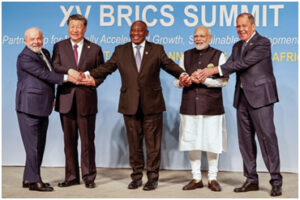
Overcoming differences for a common goal beyond monetary collaboration, BRICS prioritizes diplomatic ties through frequent summits, providing a forum for leaders to address shared global concerns such as terrorism, climate change, and geopolitical complications. Nepal, which is strategically located between the BRICS giant countries India and China, can benefit from active involvement in this diplomatic forum which can lead to increased regional stability and economic opportunities.
Sustainable Development: A Collective Responsibility
The BRICS association extends its commitment beyond economic growth, emphasizing the importance of social progress, environmental responsibility, and inclusive development. This commitment resonates strongly with countries facing environmental problems, such as Nepal, providing an example of solving common concerns through collaborative efforts.
Technology Transfer and Innovation: Shaping a Better Tomorrow
In addition to economic and political collaboration, BRICS nations collaborate in joint research and technology transfer. This collaborative approach aims to find innovative solutions to shared problems, providing a foundation for a more prosperous and sustainable future. Nepal’s active participation in these technological collaborations might promote its development efforts by using their progress.
Empowering Nations through Economic Diversity:
BRICS serves as a reminder that collaboration can result in benefits other than economic growth. The alliance aims for a world where power and influence are shared among many countries, not just a few big ones. This idea resonates with Nepal, as we also want to partner with different countries worldwide. This way, everyone gets a fair chance to have a say and access opportunities.
Global Concerns and Collective Solutions:
BRICS emphasizes tackling global concerns such as climate change and public health emergencies. The alliance provides a forum for sharing knowledge, expertise, and resources to address these important concerns. As a country vulnerable to environmental change, Nepal can find inspiration and assistance in the BRICS’ collective efforts to ensure a sustainable future.
Conclusion:
The BRICS alliance has evolved beyond its initial economic goals, evolving into a symbol of global collaboration. With an emphasis on economic synergy, diplomatic unity, sustainable development, and technical innovation, BRICS serves as a model for countries like Nepal in navigating the complexity of international relations and setting a path toward prosperity. As BRICS continues to grow and shape global development and governance, its inclusive approach serves as a vision of hope for a world in which nations of all sizes and economic power can collectively work together to achieve progress and shared well-being.
The writer is a student of BBA at Kathmandu University School of Management (KUSOM)

Login to add a comment