








- Prospects for 2024

By Shashi P.B.B. Malla
The World in 2024
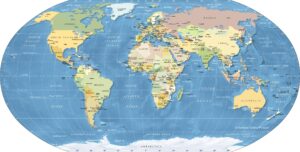
By all accounts, 2023 was an absolutely insane year. In the States, there was the Chinese spy balloon incident. In Russia, Yevgeny Prigozhinh, Wagner Group boss, attempted a coup d’etat against the detested Putin regime, but was himself ‘exterminated’ a few months later. Unexpectedly, the Israel-Hamas war in Gaza erupted and shook the foundations of an already shaky Middle East. Russia’s war in Ukraine continued to rage, but Ukraine’s summer counteroffensive spluttered. A fast-unraveling conflict continued in Sudan. Azerbaijan’s lightening offensive against Armenia over the disputed Nagorno-Karabakh enclave was highly successful. Last but not least, the number of scams in the Himalayan Democratic Republic reached such momentum and intensity that a new word: scamdemic came into existence.
Looking ahead to the New Year 2024, there are plenty of things in the world to keep national security pundits up at night.
Then there are elections in Taiwan, India, the European Union, Mexico, South Africa, Indonesia, and, of course, the very united States as well.
The ‘Situation Report’ team at Foreign Policy have attempted to make predictions about what’s to come in 2024, big and small, based on interviews over the past few weeks and months with dozens of government officials, lawmakers, and foreign policy experts (however hoping that in many instances, their predictions are wrong).
But nothing ventured, nothing gained. The ‘Crystal Ball’ of what Foreign Policy thinks awaits us in the scary near-future are as follows:
- S. Elections Results
What will happen in the U.S. presidential election in November 2024?
US political pundits are famously very bad at predicting election results, and then getting paid to do more of it in the next cycle, so it is alright to join in the fun.
Foreign Policy predicts that after a grueling and exhausting Biden-Trump rematch, US President Joe Biden will narrowly eke out a win for a second term.
It will be another election cycle marred by disinformation that will muddy the waters on what’s fact and what’s not, with more shouts about “stolen votes.”
This is also the assessment of CNN-contributors/oracles, Jill Fillipovic and Frida Ghitis, who argue that “unexcited Democrats will be persuaded that Biden is immeasurably better than the alternative,” and the chances of restoring global security are much greater.
Republicans will regain control of the US Senate by two or three seats, and the Democrats will gain narrow control of the House of Representatives by under 10 seats, setting the stage for another complex, messy, political headache of a divided government.
At least, the colossal and epochal danger of a Trump presidency, with all the negative ramifications – both domestic and global – will have been avoided, but just.
- North Korea Will Conduct Its Seventh Nuclear Test
U.S. efforts to restart any real dialogue with North Korea have failed, and all the while North Korean leader Kim Jong Un is slowly but surely expanding his country’s nuclear and ballistic missile capabilities despite punishing international sanctions.
North Korea conducted six explosive nuclear tests between 2006 and 2017, and 2024 will be the year that it notches a seventh, in what will constitute another major diplomatic crisis on the Korean Peninsula in particular, and East Asia in general.
It will be a stark reminder that decades of U.S. pressure to get Pyongyang to abandon its quest for the bomb have all failed.
- More Military Takeovers in Africa’s “Coup Belt”
There have been six coups in West Africa in recent years as ailing and fragile democracies succumb to military takeovers amid a war against Islamist terrorist groups, which are gaining ground across the Sahel.
The United States and Western allies, namely France, banked most of their hopes on Niger as their last best hope for a bastion of democracy and stability to partner with on counterterrorism operations…until Niger fell to a coup in July.
The next domino expected to fall will be Chad, the West’s next “last best hope” counterterrorism partner in the region. Chad’s leader, Mahamat Idriss Deby, son of the late Chadian leader Idriss Deby, seized power after his father’s death in 2021 in something that resembled a coup itself. Now his grip on power is shaky, and it’s unclear if he can beat the odds of escaping yet another coup in Africa’s Coup Belt.
- Sudan’s Military Leader Will Get Ousted
And speaking of coups…The conflict in Sudan has taken a grim turn in recent months, even if attention on the dire civil war there is being eclipsed by the deadly Israel-Hamas war in Gaza.
It is predicted that Gen. Abdel Fattah al-Burhan, the leader of the main Sudanese Armed Forces (SAF) and the de facto head of the country, will be ousted by elements of his own military after embarrassing setbacks and defeats against the rival Rapid Support Forces (RSF).
Most recently, the Sudanese city of Wad Madani, once a relatively stable bastion of peace and humanitarian operations, fell swiftly to the RSF in a major blow to the SAF.
Regardless of Burhan’s prospects for staying in power, Sudan has become one of the world’s worst (and most tragically overlooked) humanitarian crises, and that isn’t likely to change in 2024.
- A Stalemate in Putin’s Ukraine War
Sadly, in large part to sluggish support and political impasse from the United States and the European Union (EU), Ukraine didn’t have enough guns, equipment, or ammunition to punch a hole in Russia’s well-fortified defensive lines in eastern Ukraine during its 2023 counteroffensive.
But neither do Russian forces have the capability. Morale, training, or effective fighting prowess to make significant gains in any counter-counteroffensive of their own.
2024 will probably look a lot like the bloody but static World War I battles of 1915 and 1916, with heavy artillery bashing entrenched positions, more deadly battles that yield little territorial gains, and little to show for Putin’s ill-fated war besides a higher death toll on both sides.
- More Funds Unlocked for Ukraine
Ever since Russia launched its latest invasion of Ukraine, Western officials have been grappling with what to do about US $ Dollar 300 billion in assets from Russian oligarchs that regulators have frozen.
Some countries have long called for seizing those funds and sending them to Ukraine, while others worry about the precedent that sets in protecting sovereign assets in the eyes of international law, even when it comes to Russia.
This year may bring a breakthrough on this roughly two-year debate and the U.S. and European allies could find a legal pathway to siphon all those frozen funds to Ukraine. This is indeed pressing after U.S. funds for Ukraine got ensnared in a thorny political battle in Congress and more EU funds were blocked by Putin’s most reliable ally in the EU, Hungarian Prime Minister Viktor Orban.
Putin, on the back of “winning” another presidential election will, of course, remain ensconced as Russia’s dictatorial Tsar.
- The Israel-Hamas War Won’t Escalate to a Full Second Front
One of the biggest fears in the ongoing Israel-Hamas war is that Hamas’s better-equipped, more battle-hardened ally in Lebanon, Hezbollah will fully dive into the war against Israel.
It can be expected that even as Israel and Hezbollah trade limited pot shots on Israel’s northern border.
This will not happen, thanks in part to the deterrent effect of the ongoing US aircraft carrier presence in the eastern Mediterranean Sea, and all the overwhelming firepower that comes with it, which will make Hezbollah and kits backers in Iran hold off from diving headfirst into the local fight.
Binyamin Netanyahu, having been Israel’s prime minister for more than 16 years in total, will most likely be out of office and on trial for corruption.
- More Dangerous Chinese Maneuvers in the South China Sea
With the Taiwan Strait at a lower simmer since the then-US House Speaker Nancy Pelosi’s 2022 visit to Taiwan, which prompted (or perhaps coincided with) a bevy of Chinese military exercises, the main military tit-for-tat in the Indo-Pacific has moved to the South China Sea. There China has spent a decade building up artificial islands, very real airfields, and a fright for all in the Western Pacific region.
Lately, Chinese vessels have repeatedly harassed Philippine resupply missions to the Second Thomas Shoal, a disputed area off the west coast of the archipelago. The Philippines which has taken an increasingly hawkish tack on China since Ferdinand Marcos Jr. took over as president in 2022, grounded a US World War II-era ship on the shoal in 1999 in an effort to claim it. And China has harassed supply vessels with very dangerous maneuvers and water cannons in an effort to scare Manila away.
This trend is expected to continue in 2024.
The US Defense Department has also complained of increasing recklessness by Chinese ships and planes, not just at the Second Thomas Shoal but throughout the whole area of operations.
Xi Jinping, a sprightly 71-year-old, will remain the uncontested ‘son of Heaven’, despite a year of economic wobbles and underperformance.
- Sweden Actually & Finally Joins NATO
After Russia invaded Ukraine in February 2022, Finland and Sweden rushed to shrug off their history of neutrality and join NATO.
NATO countries welcomed both with open arms – except for two members in the case of Sweden. And this is the sticking point, since all NATO member-countries need to greenlight a new member before membership is approved.
Because of an 18-month filibuster by Turkey, Sweden’s membership is on hold. Hungary run by Moscow’s de facto ally Orban, has dragged its heels on Sweden’s NATO accession too.
This has become a massive diplomatic headache for the alliance.
Turkish President Recep Tayyip Erdogan has linked Sweden’s accession to a US deal to approve sales of F-16 fighter jets to Turkey. The US Congress has blocked that deal over anger at Erdogan but also wants Sweden in NATO soon.
This year, US and Turkish negotiators are expected to work with Sweden to overcome the impasse and NATO will finally expand from 31 to 32 members – to the anger and frustration of Putin.
- The Global Health Community Goes on the Offensive Against Malaria
A remarkable achievement in the global health sector is expected this year, underlining the fact that international cooperation and collaboration is indeed possible – regardless of the terrible experience during the Covid-19 pandemic.
Malaria remains a top cause of child mortality worldwide, but recent scientific breakthroughs have led for the first time ever to malaria vaccines.
There are now two malaria vaccines being slowly rolled out across disease-vulnerable countries in Africa. An estimated 619,000 people dies of malaria in Africa in 2021, many of them children.
While supply shortages made rolling out these vaccines on a massive scale difficult in 2022 and 2023, the global health community will be able to overcome these bottlenecks in 2024 and make real, tangible, verifiable progress toward achieving the World Health Organization’s goal of eliminating malaria by 2030.
The writer can be reached at: shashipbmalla@hotmail.com
The views expressed in this article are the author’s own and do not necessarily reflect People’s Review’s editorial stance.

Login to add a comment