








National/Regional/International Affairs
“Strong minds discuss ideas, average minds discuss events and weak minds discuss people.”
-Socrates.

By N. P. Upadhyaya (Aryal)
Kathmandu: One of Nepal’s distinguished opinion makers, C. K. Lal has set the ball rolling.
He in recent days has spoken about something which is not only surprising but unbelievable yet true.
Perhaps for the first time, a highly qualified intellectual and opinion maker that he is in his own right has quite unbelievably exposed the Indian regime.
His fresh article titled “The Grit in the ‘Five Eyes’ Alliance, published in the Kathmandu Post on September 26, 2023, exposes the Indian regime better late than never.
It was long overdue.
That too from an intellectual from Nepali plains.
The much-admired opinion maker C. K. Lal appears to possess no love and honor for the Indian regime when he brusquely says on Canada’s accusations that India was involved in the killing of one Canadian national Hardeep Singh Nijjar on June 18, 2023, in British Columbia, that “There is nothing new in the involvement of India’s overseas spy agency R&AW in the extraterritorial machinations in South Asia”.
C. K. recalls the Nepali experiences in this regard.
C. K Lal’s determined frank resolve to expose the subversive acts of the Indian machinations even in other countries deserves deep appreciation.
Indian agencies or their outside collaborators have been implicated in the assassination of at least two high-profile Nepali Muslims on Nepali soil on unsubstantiated charges of being either accomplices or associates of notorious Dawood Ibrahim”.
Furthermore, C. K is kind enough to furnish details as to how some high-profile Nepali Muslims were killed by the Indian machinations right here in Kathmandu.
The details provided by C. K. runs as follows, in his own expressions, “Mirza Dilshad Beg, a parliamentarian from Kapilvastu in the western Terai of Nepal and also a former minister, was shot dead in 1998 in Shifal area, Kathmandu. Chhota Rajan, an estranged aide of Dubai-based Dawood Ibrahim and perhaps an instrument of the Indian intelligence agency working on their behalf in the shadowy underworld, later owned up to the crime. In 2010, media entrepreneur Jamim Shah—the owner of a daily newspaper, television station and cable television network—was gunned down on a busy road in the Lazimpat area of Kathmandu. An estranged assistant of Chhota Rajan claimed responsibility for the murder.
Jamim Shah was chased by the Indian sharpshooters, as the Nepali media reported, in broad daylight yet the “ever vigilant” Nepali security agencies were found helpless, proving that our security agencies act less but talk more or fear India.
Some even say that the security agencies ignored the issue as it involved India, master of Nepali State.
Thanks to the columnist C. K. Lal he dared to bring out the facts that are either ignored or at best for fear of Indian wrath the issue or the acts of Indian highhandedness in Nepali affairs are dismissed.
Indian security agencies in the past have several times entered deep into Nepali territories on their own to nab culprits who may have committed a crime inside India.
In doing so, India tramples Nepal’s sovereignty repeatedly and yet the ruling leaders keep silent for fear of losing the Indian blessings that have allowed them to rule and control Nepal as per the dictates of the Indian officials. India has several paid and posted Lendhup Dorjes at service in Nepal to be used at the time of the Sikkimisation of Nepal which is likely to happen much ahead of 2030, if the current Indian agents continue to rule Nepal.
The International borders between Nepal and India have been kept open deliberately which is to the advantage of the Indian regime.
It is this porous border phenomenon that allows dreaded Indian criminals to enter Nepal, commit heinous crimes, and then sneak out to India from the open border.
Nepal is an extended territory of India, so believes India.
Nepal’s sovereignty has been umpteen times violated by India and Indian criminals yet India claims that its security system experiences potential threats from the Nepali soil.
Needless to say, China too says that Nepali soil has become a source of tension to its security.
China’s diplomacy is weak as compared to that of the US, and India.
However, China of late appears to have begun asserting its role in Nepal to match the increased clout of India and the US individually and at times collectively.
China fears anti-China activities from the Nepali soil as Nepal’s northern border adjoins China’s underbelly-Tibet Autonomous Region.
Highly placed sources claim that China is feeling guilty for having assisted India hand-in-glove at the time of the ouster of the Nepali monarchy. The pain is felt as and when China’s scholars claim that bids were afoot in Nepal to wipe out China from Nepal.
It is this Chinese folly that has surely made China “friendless” in Nepal as the Nepali monarchy acted till then as a permanent friend of China and kept Nepali soil friendly to China by strictly adhering to the “One China Policy”.
However, the current political men manning Nepal console China that Nepal still adheres to its standard ‘One China policy’ but it is these leaders themselves who under Indian instructions foment troubles to China from Nepali soil.
Highly placed sources now openly claim that China is more interested in restoring the Nepali monarchy than the dejected Nepali population.
The fact is that China itself observed from close quarters over these decades what the presence of the Nepali monarchy meant for China and its security as against what it meant the absence of the Monarchy.
So the strong rumor, that has approached us from a reliable source at this paper, claims that in recent days that President Xi Jinping’s special representative (envoy) has secretly met with King Gyanendra.
The two met with each other right inside Nirmal Niwas in the wee hours.
And for the Bhaktapur crowd for King Gyanendra recently we are told, that the Chinese envoy of President Xi hinted to Ambassador Chen Song to talk to Narayanman Bijukche–-the local communist leader who commands high respect and honor from his population in his Bhaktapur constituency.
This means that China sought the support of the veteran Communist leader Narayanman Bijukche.
Some others say that several fringe political parties took part in felicitating King Gyanendra in Bhaktapur.
Encouraged by the Bhaktapur crowd, the local Newars-the original inhabitants of the Valley (Kathmandu, Lalitpur and Kathmandu) too have been planning to organize a gargantuan crowd and appeal to the deposed King to stage a comeback at the earliest.
The net result was the explosion of the Chinese Ambassador Chen Song in the recent weeks that India, the main rival of China in Nepal, was, unfortunately, the neighbor of China in the South. It is not only unfortunate but Nepal-India ties at the present day could be taken as a menace of the highest order.
Okay! If it is so then why does such a sensitive India reject the repeated Nepali proposals to seal or for that matter “regulate” the open border?
The abject denial to regulate the open border by India does tell that keeping the border open is in the larger interest of the Indian regime.
However, a flimsy, feeble and untenable rhetoric has been floated or said to bring into circulation that Nepal-India bilateral ties have the Roti-Beti component and that “since times immemorial” Nepal and India are tied with one another.
The fact is that while Nepal is the “recorded” first in the sixteenth country in the world, India was born just in 1947.
Thus all the rhetoric furnished by India on our bilateral ties is to the colossal benefit of the Indian regime at the cost of Nepal.
Had Nepal and India been friends since times immemorial and believed and acted as per the “Roti-Beti” notion then India must not have “imposed” several economic blockades on Nepal that paralyzed Nepal several times beginning 1950, the unfortunate year when Nepal was forced to sign an unequal bilateral treaty of peace and friendship.
Let’s admit today in all fairness that the 1950 treaty with India is no less than a “menace” which needs to be rejected by Nepal at the earliest.
However, the paid and posted stooges of India who are ruling Nepal gulping “steroids” for fear of being unseated from the “power corridors” gulp the insult meted out to them each second by the Indian nationals who control Delhi sultanate-the seat of the Mughals and the Britons for several centuries.
Back on Canada-India tussle:
Columnist C. K. Lal has expressed his honest and heartfelt opinion about the likelihood of the killing of Hardeep Singh Nijjar by India, I think, on behalf of entire South Asian intellectuals so nothing remains to add to Lal’s timed observance.
The Genesis of the scrimmage: China’s state-owned Global Times, September 19, 2023, writes, “Observers generally believe that the lack of a one-on-one meeting between PM Trudeau and PM Modi during the G20 meet in Delhi was a signal of danger in the relationship between Canada and India. Now both the countries are escalating mutual accusations and expelling diplomats further exposing the vulnerability of the so-called value-based alliance system led by the US.”
The US is in a tight spot and becomes restive:
The US understandably is in a tight spot and is a bit nervous as well.
On the one hand, Canada has been an unconditional ally of the US for a long and the US-Canada ties mean much to the entire Western countries, however, the US dilemma at the moment is that the US would not like to tease or axe its budding ties with India in the security mechanism which is singly meant for the containment of China’s increasing influence across the world.
It is this US bid to shield India from the Canadian “credible allegations” as furnished and shared by the Five Eyes Alliance, an alliance formed between five anglophone countries and their security agencies: the US (NSA), the UK (GCHQ), Australia (ASD), Canada (CSEC) and New Zealand (GCSB) comprising of a series of bilateral agreements on surveillance and intelligence-sharing.” (Wikipedia sources).
Under these arrangements, each of the Five Eyes states conducts interception, collection, acquisition, analysis and decryption activities, sharing all intelligence information obtained with the others by default.
So the accusations made by Canada on India are the collected information of the ‘Five Eyes Alliance’ which could in no way either be ignored or dismissed.
Reporting for the CNN dated September 24, 2023, Sahar Akbarzai, Rhea Mogul and Helen Regan quote the US Ambassador to Canada David Cohen as saying confidently that,( sic), “I’m “confirming that there was shared intelligence among Five Eyes partners that helped lead Canada to make the statements that the prime minister made.”
The same CNN News claims that Canadian Defense Minister Bill Blair in an interview with CBC, Minister Blair said that the Five Eyes partnership is “critically important” and that Canada has “very credible intelligence that causes us to be deeply concerned,” but declined to identify the sources of that information.”
Similarly, the US envoy in Canada ‘David Cohen’, confidently told while talking to the CTV’s Question Period with Vassy Kapelos “confirmed” that the Canadian accusations on India were the conclusions of the Five Eyes Alliance.
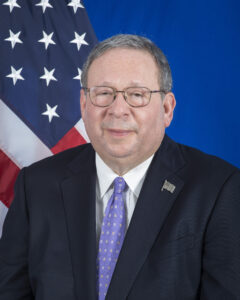 In the face of David Cohen’s bold assertion, the US administration perhaps will think twice or even thrice to save and shield India keeping China in mind.
If the US opts to defend India or hush-hush the issue then it is sure to lose Canada which will undeniably be a great loss to the Western alliance led by the US itself.
Shielding India for the survival of the Quad (India is a strategic partner along with the US, Japan, and Australia) and that too with a hope that India will be a fitting match to contain China’s increasing clout in the Indo-Pacific region will not be a good idea.
India is much more clever than what the US has taken the country in South Asia.
India is still close to the Russians which was proved at the time of the issuance of the final declaration upon the conclusion of the G20 meet September 9-10, 2023.
India even may shake hands with rival China, if need be.
I see a crack in the Western alliance and the Quad due to India.
If Canada is sidelined by the US then the United Kingdom which is already in the pocket of India as the British Prime Minister Rishi Sunak appears more Indian than PM Modi himself. Britain is at the moment the weakest point in the Western Alliance, and the US must understand.
The UK for the time being can go against any country in the Western alliance if it decides against India.
Sunak’s strong Indian connection should definitely be a point of serious concern to the entire Western World and more so to the British population.
If Canada is humiliated or pushed to the wall by the US and its rest of the allies in their bid to shield India from Canadian accusations, then Canada may opt to inch closer to China, the bête noir of the US and the Western world though China and Canada don’t enjoy cordial ties at the moment.
It will be a compelling factor for the Canadian nation.
Pakistan caretaker PM speaks on Canada-India squabble:
The AFP dated September 21, 2023, reports from New York that (in part) ‘Anwaar-ul-Haq Kakar, Pakistan’s caretaker prime minister has linked the episode (Killing of H. D. Nijjar in Canada and the tussle thereafter) to Prime Minister Narendra Modi’s ideology of Hindu nationalism, or Hindutva.
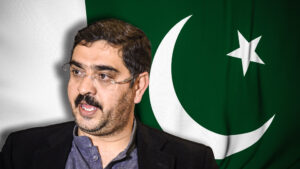
“These ideologues of Hindutva, they are becoming emboldened in a manner that they are now going beyond the region,” Kakar said at the prestigious Council on Foreign Relations in New York as he took part in the UN General Assembly.
The “unfortunate killing of Singh on Canadian soil is a reflection of that ominous tendency,” the PM said.
However the Pakistani Prime Minister laments saying that “for obvious economic and strategic reasons, many players in the Western capitals chose to ignore this fact and reality,” he revealed.
The Pak PM then sums up the current India-Canada tussle in a single sentence that the row is a wake-up call on rival India.
Writing for POLITICO dated September 27, 2023, Anchal Vohra who is a Brussels-based columnist for Foreign Policy magazine and writes about Europe, the Middle East and the Indo-Pacific, says, “Since Indian Prime Minister Narendra Modi came to power, the Western democracies have kept silent on the country’s (India’s democratic backsliding- mainly to keep him onside against China, but also to push through trade deals and gain access to India’s markets.
However, the long rope given by Modi may just snap under the strain of Canada’s recent accusations that India carried out a targeted killing on Canadian soil.
Editor’s note:
Finally, this scribe would politely appeal to the entire South Asian embassies based in Kathmandu to send the link of the article of C. K. Lal to their headquarters so that their foreign offices take serious note of the fact as to what India is.
The Link is as follows: https://kathmandupost.com/columns/2023/09/26/the-grit-in-the-five-eyes-alliance
That’s all.
The views expressed in this article are the author’s own and do not necessarily reflect People’s Review’s editorial stance.

Login to add a comment