







 By K. C. Bhatt
One of the saddest things for a writer is to know that his writing is not taken seriously by a reader.
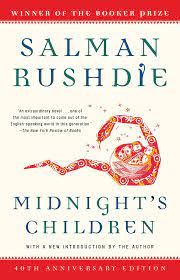
Salman Rushdie is a case in point. Long ago, when he had recently written Midnight’s Children, he was invited to attend a meet where British PM Margaret Thatcher was present with the visiting Indian PM Indira Gandhi. Obviously, there was a crowded audience. His book was a recent sensation for it being almost unreadable for most of its readers its complex and ungrammatical language–and if read forcefully– is very difficult to understand and hence falls in the category of surrealism.
Salman discovered that both the Lady PMs were frequently referring to his book in glowing terms. He discovered begrudgingly that none of them had actually read his book. It, where it could be more easily read and understood by most, had some very unflattering account of Mrs. Gandhi in it. How seriously Mrs. Gandhi dealt with her critics was what she had shown already by imposing an emergency in India only a few years back. Besides Mrs. Thatcher too had no clue about the matter written in the book. So the more they praised his book the more they betrayed their ignorance about it.
Then there was the audience applauding the opinions of the lady PMs on his book; and the media coverage in the days ahead which pushed his book to become a bestseller. This event must have made him, a very young, wannabe writer and recently out of a university in England with a degree in history, who had toiled for a few years to bring out Midnight’s Children; like a monk living in a monastery in his Spartan apartment, coming out only to do ordinary jobs to pay his upkeep, understand fully the business of books.
Salman Rushdie went on to become more and more notorious in his personal life afterwards, by inviting one after another scandal, while his writing became more and more arcane and indecipherable. So he went on to win accolades one after another and had a life that might have made all Hollywood celebrities of his time envious. There were always young girls coming to him in whichever city of Europe or the USA he went to–protected by a phalanx of guards in many layers, giving complex to many of the Heads of the states in the world of that time, for he was running away from the Fatwa issued by Ayatollah Khomeini of Iran–who wanted to have sex with him.
He obliged most of them and hence his marriage was always a tenuous arrangement which caved in often. He married many times thus creating more scandals. Only at a later age did he write his autobiography to prove that he could actually still write more clearly than he had ever done after his earliest days.
It was a time when both the attending lady Prime Ministers of that event in London were facing turbulent times in their domestic politics. Mrs. Thatcher was around this time also using V S Naipaul to reply to some of her critics in a public forum in London, who were also Trade unionists, besides being Labours, who were resisting her Privatisation drive which was causing wide-scale job cuts.
It was still an age when writers—even those of colour, writing in English, from the country England– held some gravitas and the public valued their opinions.
Naipaul went on assaulting the left-wingers and the people from the former colonies for the rest of his life, not only in his writing but in any forum he got a chance to speak. His defense of colonialism put to shame many champion colonialists of his age. Even he berated any writers who failed to celebrate the goodness of British colonialism who wrote long before he was born, including E M Forster, D H Lawrence and George Orwell.
The colored writers from the former colonies he simply dismissed as cons, writing in vernacular or English, even if they traded in his trade by celebrating colonialism and rubbishing the nationalism of their countries. His chief rival was Nirad Chaudhary, who lived in England and tried to give him tough competition by writing in even more salutary terms, of British colonialism. He thought he was the only writer the world had so far, of color or not. It made his later writing vindictive and full of rage, a far cry from his earliest stories, which were full of grace, optimism and humour, despite their being about the victims of colonialism.
Thereby, the literary career of the two most promising authors was highjacked by the prevailing politics of the day. It was a losing battle always, trying to become British without being one, that too a writer in a language which has been so extensively written over the many centuries, after learning it from the Natives. Acquiring other eccentricities of the natives might have been even more an onerous onus, as the traits like wearing a khaki while going to a former colony to see it, those that Orwell so poignantly mocked in his writing—must have created a half–writer only, even after a great effort. The Only protection against this could have been an original subject matter and sticking to it no matter what, which might have been more just than the prevailing matters available as literature, not only for the conquesters but the conquested as well, in a black age that lasted many centuries. Some fairness in the writer might have created a balance which might have however tenuously reduced the misgivings on both sides about each other. It might have entailed an immense vision on the part of the author to create such a conciliatory work. But Alas… it was not to be.
Today, one unsurprisingly finds a crowd of audience attending a show of Salman Rushdie, most of whom have never read his work. They unashamedly admit it, before they seek his opinions on the ongoing war against terrorism and such political topics. Then someone arrives at his talk show and stabs him in his eye and he survives after remaining in ICU for many days. And the scandal becomes even greater than any of his writing created. And you come to know that he had already submitted the manuscript of yet another of his books to his publisher before the stabbing. May he live long and write more books but with a little more clarity and innocence like his earliest short stories, trying to reduce the conflict rather than aggravating it. For he will need readers after him as well.
When a writer becomes greater than his writing, he becomes a total loss to the literary world. For saving his work for a later day, for the readers to appreciate, for it was the only saving grace of his times, which were incredibly plebian, benighted and corrupt and hence unremarkable otherwise, he may have to put up a tremendous resistance against the political forces acting in the day and on all sides. Otherwise, a few years after him, he may go into oblivion. There by all the age, he lived in.
GPO Box 20460, Dillibazar.
The views expressed in this article are the author’s own and do not necessarily reflect People’s Review’s editorial stance.

Login to add a comment