








Sino-American Détente?

By Shashi P.B.B. Malla
Many critics of US President Joe Biden’s foreign policy, as well as, academic experts and media pundits claim that the administration’s policies will inevitably lead to a New Cold War — a situation that is not conducive to stable international relations.
In a brilliant new essay in Foreign Affairs, Michael Beckley, Associate Professor of Political Science at Tufts University represents the American perspective in the current state of US-China relations (Aug. 22).
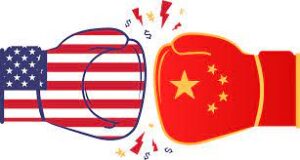
Delusions of Detente
He debunks the viewpoint that a fresh US detente with China can lead to a new flowering of relations with China.
[Détente is a diplomatic term meaning a relaxation or reduction of tension in the previously strained relations between states].
With very credible, very logical arguments corroborated by solid analytical research, Beckley makes the argument why America and China will be enduring rivals for the foreseeable future.
The protagonists of a more cordial China policy point out that US-Chinese relations have not been more worse than in the last 50 years.
They argue that US should talk more to China and accommodate its rise. They should hold more summit meetings and recognize Beijing’s redlines and restore crisis hotlines and cultural exchanges.
In time and through myriad points of face-to-face contacts, the two antagonists could settle into peaceful, if still competitive coexistence.
Some analysts even go to the extent of contending that the US and China might even strike a grand bargain and establish stable spheres of influence and something akin to a “G-2” to solve global problems such as climate change and pandemics.
For the advocates of this new re-engagement, the solution to the prevailing cycle of hostility is quite uncomplicated, a piece of cake:
- First, defuse tensions through vigorous diplomacy, commerce, and people-to-people contacts;
- Next, create a new forum where officials from each country can meet regularly to negotiate agreements.
Beckley characterizes this as an ‘enticing vision’.
No doubt the world would be in a better state if great powers could settle their differences through diplomacy than by confronting each other in a security competition.
However, he points out that the history of great power rivalry in general, and of US-Chinese relations in particular indicates that greater engagement is unlikely to mend ties between the two countries and furthermore, if undertaken hastily, could actually catalyze violent conflict.
Moreover, it shouldn’t be forgotten that of the more than two dozen great-power rivalries over the past 200 years, absolutely none ended with the sides talking their way out of trouble.
Instead, rivalries have persisted until one side could no longer carry on the fight or until both sides united against a (new) common enemy.
Thus, the United States and China interrupted their rivalry to ally against the Soviet Union during the latter half of the Cold War, a contest that ended only when the Soviet Union sputtered into terminal decline.
It is important to note that in every case, shifts in the balance of power were preconditions for sustainable settlements.
[Balance of Power is the pattern of interaction between states that tends to limit or curb the quest for hegemony and results in general equilibrium].
Moreover, before those shifts could take place, periods of détente were usually just chances to regroup and reload for the next round of competition.
Detente was, therefore, an intermediary stage and not a permanent state of affairs.
Beckley underlines that the United States and China are unlikely to be an exception to this pattern.
The Question of National Interest
The indubitable fact is that the two countries’ vital interests conflict and are rooted firmly in their respective political systems, geographies, and national experiences.
And as Beckley points out, many of the connections binding the two countries, such as their extensive trade, are also driving them apart by giving policy makers and the political opposition additional reasons to quarrel and pressure points to exploit.
Neither side can make major concessions without exposing itself.
And after decades of dealing with each other, both governments have accumulated long lists of grievances and view the other with deep mistrust.
The Balance of Power
The perspicacious analyst is convinced that the US-Chinese rivalry is unlikely to disentangle without a significant shift in the balance of power.
He suggests that the United States needs to make policy choices based on this reality and not succumb to fantasy.
This does not mean cutting off diplomacy or shutting down talks completely, but being clear-eyed about what this type of engagement can realistically achieve.
With this in mind, there are reasons to hope for a medium-term mellowing of Chinese power that might open space for a real diplomatic breakthrough.
However, to reach this stage, the United States and its allies must relentlessly deter Chinese aggression in the near-term and avoid concessions that disrupt long-term trends.
Bad Blood Among Rivals
The United States and China have become what political scientists call “enduring rivals” [if not ‘mortal enemies’] meaning countries that have singled each other out for intense security competition.
It is indeed remarkable that over the past few centuries, such pairs have accounted for only one percent of the world’s international relationships but more than 80 percent of its wars.
Historically, there have been repeated clashes between:
- France and the United Kingdom
- China and Japan
Today, there is the enduring enmity between:
- India and Pakistan
- Greece and Turkey
- North & South Korea.
As the astute specialist notes: “Rivals feud not because they misunderstand each other but because they know each other all too well.”
These rivals have genuine conflicts of vital and indivisible interests, usually including territorial disputes.
[In the case of India and Pakistan, Kashmir is the bone of contention].
Rivals’ redlines and spheres of influence overlap. One side’s attempts to protect itself, such as by modernizing its military, inherently threaten the other side.
If their economies are intertwined, rivals wield trade as a weapon, seeking to monopolize the production of strategic goods and dictate to the adversary.
This characterizes Sino-American trade today.
Rivals also usually embrace and promote divergent ideologies and view the success or spread of the other side’s system of beliefs as a subversive threat to their own way of life.
After World War II, there was a falling out between the war-time allies the United States and the West on the one hand and the Soviet Union on the other. They divided much of the world into capitalist and communist blocs which were mutually antagonistic.
In addition, rivals share a history of ill-feeling and resentment. Their mutual hostility is fueled by past acts of aggression and ill-will and the fear of more to come.
This is how the Chinese feel today about Japan, and how India and Pakistan look at each other.
Unfortunately, once started, rivalries are extremely difficult to end.
Empirical data point to 27 great-power rivalries since 1816. These contests/conflicts/confrontations/hostilities lasted for more than 50 years on average and ended in one of three ways.
According to the writer:
- 19 of them – the vast majority – culminated in war, with one side beating the other into submission.
- Another six rivalries ended with the two sides allying against a common foe.
- Towards the end of the Cold War, when the Soviet Union collapsed, its rivalries with the United States and China ended peacefully.
Today, many experts and media pundits fear a new Cold War between the United States and China, but Prof. Beckley emphasizes that this type of tense standoff has been the best possible outcome because it avoids full-scale fighting [like between the West and the Soviet Union].
Considering such a dismal record of bilateral antagonism, those advocating greater US engagement with China might respond that they do not seek the immediate end of the US-Chinese rivalry but merely détente, a cooling-off period that allows the feuding sides to put guardrails on their relationship.
The writer counters that the history of great-power détente is not very encouraging.
Such periods have rarely lasted long, even under favourable circumstances. He cites the example of the Concert of Europe, founded in 1815, which had all the ingredients for a durable détente: a common ideology, a common foe, and partnerships forged in war.
However, after 1822 there were already fissure and by the 1830s, the concert was riven by a cold war between its liberal and conservative members. In 1853 a hot war over Crimea erupted (Russia against Turkey, Britain, France, and Piedmont).
That failure illustrates a more general point according to Beckley: “Guardrails are more often the result of peace, not effective methods to maintain it.” They are typically erected in good times or immediately after crises – when they are least needed – only to be destroyed in bad times.
The most elaborate guardrails in history were installed after World War I – the League of Nations [precursor to the United Nations], a formal collective security organization – but it failed to prevent World War II.
The supporters of even more US engagement with Beijing characterize the pursuit of détente as risk free: it might fail, but it wouldn’t cause harm and, in any case, is worth an effort.
The realist writer begs to differ: when conflicts of interest between rivals are severe, over eager efforts to induce détente can be destabilizing.
Thus, Britain appeased Nazi Germany and signed the infamous Munich Agreement of 1938 to uphold ‘peace in our time’. Adolf Hitler promptly annexed part of Czechoslovakia and invaded Poland the next year. This precipitated the Second World War.
The guiding principle is that great-power rivalries cannot be papered over with memorandums of understanding (MoU). Diplomacy is necessary but not sufficient to resolve disputes nonviolently.
Sustainable settlements also require stable balances of power, which usually emerge not through happy talk but after one side realizes it can no longer compete.
The Fundamental Animosity of Sino-American Relations
The current US-Chinese relationship has all the qualities of an enduring rivalry. Thus, the main issues under dispute are essentially win-lose affairs:
- Taiwan can be governed from Taipei or Beijing but not both;
- The East China and South China Seas can be international waters or a Chinese-controlled lake;
- Russia can be shunned or supported;
- Democracy can be promoted or suppressed;
- The Internet can be open or state censored.
From the United States perspective it is building a chain of alliances in East Asia/the Indo-Pacific as a vital insurance and a force for stability.
For China, it looks like a hostile encirclement and containment policy designed to hamper China’s rise.
[Containment is the policy/process by which one state prevents a rival from realizing its expansionist goals. It was originally created to thwart Soviet expansionism and communism ].
More fundamentally, the two rivals hold divergent visions of international order.
China’s supreme leader Xi Jinping and the Chinese Communist Party (CCP) wants a free hand for the ancient autocratic civilizations [i.e. including Russia] to rule their traditional spheres of influence.
In contrast, the United States totally rejects those so-called ‘spheres’, wants to protect the sovereignty and territorial integrity of weaker states and integrate them into an open world-wide trade order.
Essentially, the US-Chinese rivalry is more than a set of diplomatic disputes – it is also a struggle to promote different ways of life.
A New Cold War
Prof. Beckley – in the present circumstances – welcomes a new Cold War, because it is far better than a hot one.
Moreover, a cold war does not rule out all forms of cooperation.
Diplomatic talks can continue, provided they are not preceded by destabilizing concessions.
However, he insists that a cold war does entail US containment of China.
This, in fact, could be a temporary way station to a brighter future.
During the original Cold War, containment blocked Soviet advances until the weakness of the communist system sapped the regime’s power.
Beckley suggests that this should be the same goal with China today.
“The Coming Collapse of China”) believes that China is now at the crossroads: “Xi Jinping will soon have to make a choice. He can either let alarming internal developments take him down and end the rule of the Communist Party or he can rally the Chinese people with a war” [invasion or blockade of Taiwan] (1945).
And through self-induced major policy blunders and the unwillingness to undertake corrective measures, the drivers of China’s rise seem to be stalling: “Slowing growth, soaring debt, autocratic incompetence, capital flight, youth unemployment, and a shrinking population are taking a toll on Chinese comprehensive national power.”
In the meantime, the two rivals could, however, cultivate internally peaceful blocs of like-minded states and use nonviolent means , including the provision of aid, to try and win hearts and minds.
In such a situation, peaceful, if tense, relations between two rival orders are indeed possible.
The writer can be reached at: shashipbmalla@hotmail.com
The views expressed in this article are the author’s own and do not necessarily reflect People’s Review’s editorial stance.

Login to add a comment