







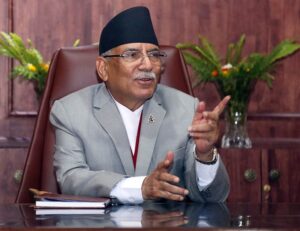
Kathmandu, 6 May: Due to the confusing articles in the constitution, legal experts are divided on the issue of the confidence motion.
The question of confidence motion has been raised since Rastriya Swatantra Party having 21 MPs took back its support to the government.
According to Article 100 sub-article 1, the prime minister may seek a vote of confidence from Parliament whenever he feels it necessary and significant.
However, in sub-article 2 of the constitution, it is stated that if any of the alliance parties take back its support to the government or if a party representing the ruling alliance will split, the prime minister should seek a vote of confidence.
The sub-article 1 explains the prime minister’s desire, whereas, sub-article 2 explains seeking a vote of confidence as mandatory.
Dahal assumed office as the PM on Monday, 26 December 2022.
He secured the vote of confidence on 10 January. A total of 268 out of 270 members of the House of Representatives (HoR) present in the meeting voted for the proposal on the vote of confidence to the government presented at the HoR meeting by PM Dahal.
Again, on 20 March, PM Dahal faced a vote of confidence motion from Parliament. Out of 262 MPs present in the meeting, he bagged 172 votes securing his majority.
89 votes went against PM Dahal.
138 votes are necessary for a majority government.
Now, Rastriya Swatantra Party with 21 seats in Parliament has taken back its support to the government. Also, the Janamat Party with six seats in Parliament has not joined the government.
Even if the two parties will vote against the government, the strength of the ruling alliance will be 145 votes and still the government remains safe.
However, due to the constitutional provisions, PM Dahal should seek a vote of confidence within 30 days of taking back the support by the party or parties in the alliance government.
People’s News Monitoring Service

Login to add a comment