







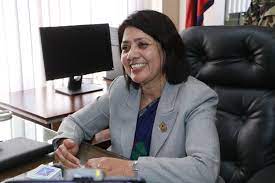
Foreign minister Bimala Rai’s Geneva visit was cancelled at the last hours.
By Our Reporter
Politics has truly become a dirty game in Nepal after the elections of November 20 last year. In three months, Nepali people witnessed a swift swing of the political parties. They broke the old pre-election alliance and created a new one to form a government under CPN (Maoist Centre) chairman Pushpa Kamal Dahal Prachanda on December 25. But the post-election coalition could not last even two months. On February 24, the UML-Maoist coalition collapsed and the old one was revived after the growing mistrust among Prachanda and CPN-UML chair KP Sharma Oli.
The coalition that began shaking after the Supreme Court verdict of January 27 that stripped off Rabi Lamichhane of the Rastriya Swatantra his all positions—Deputy Prime Minister, Home Minister and member of the House, got another jolt when Sudurpaschim Chief Minister Rajndra Rawal of the CPN-UML failed to secure the vote of confidence and quit.
The unnecessary pressure of Oli on PM Prachanda to reappoint Lamichhane as Home Minister and Oli’s attempt to elect his man as the new President finally resulted in the fall of the coalition.
On Saturday, when NC’s Ram Chandra Paudel filed his nomination to the post of president in the support of PM Prachanda and other former coalition partners including JSP-N, Oli had said that UML would not quit the government till the election of the President. But all eight UML ministers resigned en masse and the party withdrew its support given to the government after Prachanda barred Foreign Minister Dr Bimala Rai Paudyal from flying to Geneva to attend the high-level session of the UN Human Rights Council.
Irked by the last-minute cancellation of Dr Paudyal’s Geneva visit, the UML on Monday quit the government.
Even Prime Minister himself cancelled his visit to Doha to attend the summit of the Least Developed Countries. The cancellation of the visit will surely tarnish the image of Nepal in the international arena. Moreover, the absence of high-ranking officials at the LDC summit at a time when Nepal is preparing to graduate to the status of a developing nation will send a negative message about Nepal.
Who is responsible for political instability?
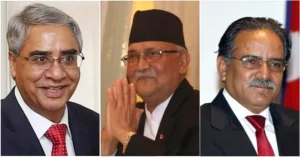 The politics of the country has become volatile after the formation of two contradicting coalitions in 64 days. The swing of the political parties from one alliance to another has only intensified political instability in the country. Although power-hungry leaders of the key parties and their power-centric politics giving up their political ideologies and honesty are responsible for the instability, PM Prachanda is key for the unpredictable political situation in the country.
He contested the November 20 election by allying with the NC and CPN (Unified Socialist) but when Nepali Congress president Sher Bahadur Deuba rejected to offer both the posts of the Prime Minister and President to the Maoist Centre, Prachanda reached Balkot residence of CPN-UML chairman KP Oli, allied with the CPN-UML agreeing to receive the post of the PM and allowing the UML to have the posts of the Speaker and President.
But he backtracked from the agreement to elect the UML leader to the post of the President and ended the coalition 64 days after his appointment to the top executive post by reviving the pre-election coalition led by Nepali Congress.
While supporting Ram Chandra Paudel of NC to the post of the President, Prachanda granted the post of Vice President to Janata Samajwadi Party Nepal. Earlier the post of Vice President was allotted to the Maoist Centre.
Likewise, eight parties agreed on a new deal. According to this, Prachanda will lead the government for two and a half years, Sher Bahadur Deuba of NC for one and a half years and Madhav Kumar Nepal of CPN (Unified Socialist) for a year. It means, the Nepali people will be having three governments in the next four and a half years, which itself is a testimony of political instability.
After ministers from three major coalition parties—the CPN-UML, Rastriya Prajatantra Party and Rastriya Swatantra Party– resigned, the PM has not appointed new ministers. Instead, he himself has assumed 16 ministers. When a single man holds 16 ministries, one can guess how can the government is functioning. And this situation was invited by PM Prachanda himself by changing the coalition in two months.

Login to add a comment