








By P. Kharel
In the death of Shrish Shumsher Rana, Nepal’s political landscape and intellectual community have lost a mind with a critical outlook that did not lose his soul. A political analyst who never let go off the integrity of his conviction regarding the means and mechanism for homegrown democratic governance, Rana was simple and accessible in approach.
Having been schoolmates at St. Xavier’s School in the early 1960 and being together at Tri-Chandra subsequently before also joining Tribhuvan University in the first half of the 1970s, I have had a long friendship with him as a friend, professional colleague and fellow analyst.
A gold medalist at the Department of Political Science in 1975 which saw Tribhuvan University’s first batch of graduates at the Master’s level under the newly introduced semester system of education, Rana was full of ideas for initiatives. That the country’s rulers did not adequately avail of his services matching his capability is something awfully different, even if familiar.
He was neither hesitant to appreciate any convincing point of argument emanating from any source whatsoever nor did he shirk from putting his own views vigorously but without lowering his sight on decency.
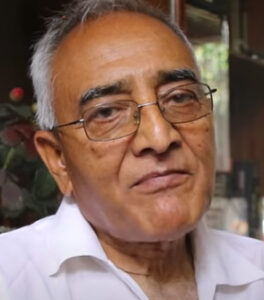 INITIATIVE DYNAMO: After a brief stint at a prominent travel agency on completion of his Master’s, Rana joined The Rising Nepal—the very leading English daily which I had already joined. He made his debut in journalism by writing an editorial, as assigned by TRN Editor Mana Ranjan Josse who seemed to have a lot of confidence from the TU gold medalist.
Right from the start, Rana made his desire clear—to move to all the sections from the features and editorial through the reporting team to the news desk. He wanted to learn the ropes of the news department in its entirety. Hence he served the editorial and features section the most during his association with TRN for nearly four years.
In early 1979, Rana teamed up with a few others to venture into weekly journalism in the private sector. So he quit his secure job and bright prospects in TRN. The team purchased the National Star and quickly emerged as the leading English weekly. Although registered as a fortnightly, the new team thought of a novel idea of tagging an edition below its masthead as “weekly” every fortnight, only to alternate the slug with “supplement issue” the next alternate week.
The see-saw between the “weekly” and the “supplement issue” was to avoid the existing press regulation that was closely applied by the local administration. Within weeks after the Star under a new team of owners and journalists hit the newsstand, creating an appreciative stir in newspaper readership. The paper in its new format debuted with a full-page interview of the Congress Chairman, B.P. Koirala. Koirala wrote a note of two or three sentences addressed to Rana in appreciation of the coverage accorded the politician who fought for multiparty democracy in tandem with the monarchy—something his party successors abandoned at the altar of opportunism.
Edited by an academically brilliant Upendra S. Rana, Shrish introduced the idea of a regular full-page interview with political bigwigs and other prominent personalities. It was an innovation in Nepal’s journalism. He was also the brain behind “side chat” and “grapevine” nuggets of interesting information confined to about 30-40 words each and earned huge popularity.
In fact, several leading Nepali weekly papers lifted the idea to introduce their own versions of side chats and grapevines. Full-page interviews also began appearing in a few papers thereafter. That the journalists who borrowed the ideas never ever bothered to acknowledge the innovative initiatives the Star introduced only reiterates the sorry state of professional culture.
After the 1980 national referendum on the political system best suited to the country was over in 1981, the Surya Bahadur Thapa government began tightening the screws on the press. While it continued with the policy of not issuing new licences to launch newspapers from Kathmandu and Lalitpur, the Star’s practice of bringing out the “supplement issue” every alternate week was disallowed.
The Star team then migrated lock, stock and barrel to Durga Pokhrel’s Manushi. But the paucity of commercial advertisement eventually compelled the paper to fold up, though the copies it sold were impressive by contemporary standards. Pokhrel was an energetic student activist close to the Nepali Congress, especially during her university innings.
Gopal Chitrakar contributed photos and I contributed a sports column under the pseudonym Kheladi [Sportsman] in both papers. Shailendra Sakar also wrote for it from time to time. So did Manzul World. But Shrish Shumsher Rana was the chief brain behind both papers.
SCRIBE ALWAYS: Rana then wrote for Samrachana Nepali weekly, brought out by the husband-and-wife team of Pushpa Raj and Jausuda Pradhan. He contributed to the People’s Review until the first half of 2022 before lung cancer was detected in him and conditions deteriorated to the worst possible.
In 1988-90, as the executive chairman of the Gorkhapatra Corporation, he toned up the administration, recorded a substantial hike in revenue earnings and did the pioneering act of introducing computers in the newsroom in Nepal.
During his stint as the Minister for Information and Communications (2005-6), he initiated the idea of a single window system in the distribution of government agency advertisements. In keeping with the tradition of many good ideas being condemned at one time, only to be emulated under other environs, the Nepal government has, of late, reintroduced the policy. It can be considered as an unintended tribute to Rana’s initiative.
In addition to his intellectual capacity, personal simplicity and public demeanour, Rana is deeply remembered for his convictions. He was the first thinker who publicly pressed for the revival of the 1990 Constitution of Nepal as a starting point for ending the never-ending political instability the country has suffered these past 17 years.

Login to add a comment