







By D.M. Thapa
No one seems to be in control here in Nepal. Forget the political leaders, even the foreign powers seem to have lost their way, except in keeping in line with some leaders, media people, civil society leaders and some INGOs.
The top party leaders are still going at each others’ throats and not giving any sign that they will work for the welfare of the general people. While it is inevitable that the opposition party leaders will make accusations against the ruling parties in alliance now, it is not an appropriate thing for the sitting prime minister Sher Bahadur Deuba himself to also join in this mud-slinging match. But that is exactly what he did when attacking opposition leader and former prime minister KP Sharma Oli while on a campaign swing of the Far West. How long will these sorts of activities of the top leaders last till the people get disgusted with them? Surely, some messages will come from the people after the November 20 elections.
But this does not mean that independent candidates will come to the forefront, they just don’t have the organizational strength to make real changes. Take for example Kathmandu’s Mayor Balen Shah, he won by a huge margin against two leaders of the oldest political parties of the country, but he has been cramped in doing important tasks because he does not have the organizational strength and the parties who have a grip now, most youths are rooting to elect young and firebrand journalist Rabi Lammichane in the House of Representatives. But sadly, when questioned by this writer many of the youths did not know even from where he was contesting the election! The enthusiasm is there but the organizational backup is absent.
Right now, several parties are also talking about the direct election of the president and also the prime minister. Hypothetically, what we ask is what will happen if the former king also seeks to participate in this race? It is almost certain that he will come much ahead than any political leaders in any sort of voting, but what we also have to think about is how will he be able to function when he doesn’t have any political organization, not only at the central level but more importantly at the grassroots level as well. This is where the political parties have taken advantage and the naïve Nepali people have been led astray in voting for a party instead of a capable individual. This aspect of the election must also be taken into consideration by the independent candidates who at present seem to be only cutting each others’ votes, instead of cooperating like the major political parties, who are hell-bent in getting to power by hook or by crook.
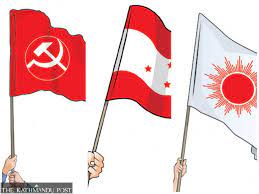
The big parties, especially those who have formed an alliance to get to power definitely have an advantage and the main opposition party the UML is also trying to do its best in forging some sort of understanding with parties that have completely different ideologies to get to power. This is where the so-called independents or candidates of newly formed parties are at a disadvantage, they have no alliances and they seem to be fighting for the same votes as other independent candidates are fighting for.
This is where it is important for the independent candidates, who all say they want to work for the nation and not for monetary gains, to leave aside their differences and specially set aside their egos to come together and pose some sort of a challenge to the traditional big parties who have dominated Nepali politics and also cheated the nation and the people time and again.
Even among the so-called ‘nationalists’, like Kamal Thapa for example, he has been seen as a real opportunist, who took full advantage of the then kings and now he has quickly agreed to fight for elections under the banner of the CPN (UML) with that party’s election symbol also. What sort of a man is he and it is surprising how the then kings believed in him. But at the same time, a new generation of leaders has come forth saying the institute of monarchy is most important for Nepal to remain Nepal. Take for example a young journalist who had worked for BBC Nepal channel for almost a decade, he has strongly come out for the institute of monarchy and his arguments seem quite logical and who knows, he could get votes with this stance of his. If nothing, this man has been able to garner a lot of media attention which will definitely benefit him.
There are many other candidates from newly formed parties who have come forth with attractive slogans, but they will not be able to achieve much if they don’t work together like the traditional big parties are doing now. But it is something to be appreciative of how these individuals are making statements of working for the nation and the nation and not for themselves. But what will happen once they get to power, is difficult to predict. Who would have imagined that an individual like Kamal Thapa, who virtually grew up with the blessing of the then kings and princes, would suddenly change sides and give his candidature for the elections under a communist banner! Isn’t this strange and isn’t it pure political ambitions and betrayal for the people who first shaped your career?
But betrayal seems to be a common trend in politics, whether in the big parties or other sectors.
Therefore one wonders whether there is a silent call for the former king to come back, with some parties calling for a direct presidential election. This is all speculation, especially for naïve observers like this writer, but we can believe that the former king, with or without any organization can still command the respect and votes of the people if he wishes to join politics as challenged by the political leaders all the time.

Login to add a comment