








Photo: Tata Capital
By P.R. Pradhan
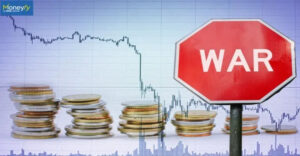
It is easy to start a war but not so easy to end it immediately. The Russian military invasion in Ukraine may prolong and may escalate further. Already, the Russia-Ukraine clash has affected Europe and the USA. They have imposed a ban on Russian products including petroleum. In retaliation to the Western ban, Russia itself has announced a ban on the supply of many items to Europe and the USA until the end of the year 2022. We can assume a humanitarian and economic crisis in the offing in the West.
Nepal is an import-based country and already, due to the war effect, the price of many items including petroleum products has increased. Businessmen, taking benefit of the ineffective market monitoring mechanism of the government, have already increased the price of goods imported earlier to start of the Russian war on Ukraine.
The price of petroleum products has established a new record in the Nepali market. The price for one litre of petrol may go up by above 300 rupees, say economic observers.
Along with skyrocketing the price of petroleum products, all sectors are going to be affected. In other words, the price of all daily essential goods will be skyrocketed. In the meantime, there could be a shortage of many essential products including medicines.
Nepal is a major importer of food items since the politics-oriented population didn’t wish to do labour work in the agriculture field and the government didn’t work for increasing the agricultural products.
In the meantime, due to the Covid-19 outbreak, the Nepali economy has already been suffered a lot. The balance of payment is still negative. The country is facing a trade deficit despite the government imposed indirect restrictions on imports of many luxury items. The banks are facing a liquidity crunch and it may prolong further.
Already, all the economic indicators have gone negative and there is no hope for immediate improvement of the economic sector. The government, viewing the worst economic scenario, would have introduced emergency economic recovery measures for the short term and also for the mid-term. They include keeping buffer stock of the essential food items and medicines, reducing non-productive general sector expenditure or say cutting down salary, allowances and facilities provided to the people’s representatives by 50 percent and increasing development sector expenditure along with lending cash to the commercial banks so that the liquidity crunch problem could be resolved.
Food is important during the war-hit period. Therefore, the government should have mobilized all the sectors for cultivating land and producing agricultural items whatever is possible.
Besides, by taking a lesson from the present negative economic indicators, the nation should take immediate initiative to improve the country’s economy:
Devalue the Nepali currency by making it 185 rupees against 100 rupees of the Indian currency, which would check the capital flight and control the Hundi business.
Modify investment procedures to encourage foreign investment.
Encourage citizens to use electricity while cooking food and encourage e-vehicles by discouraging imports of petroleum products operating vehicles.
Discourage students going abroad for study by encouraging local educational institutions for providing quality education and also discourage people from going abroad for treatment by encouraging hospitals for providing quality services.
Encourage local investors for producing items substituting imports. The government is needed to give subsidies to such products.
Since 1990 political change, the government, in the name of economic liberalization, disposed many government-run industries and the remaining industries were also spoiled due to the political interference.
After the Russia-Ukraine war, the European countries have also felt a power shortage problem, among others. This is the lesson that the economic liberalization model doesn’t work in every situation. A nation must be self-reliant on basic needs. A nation should not rely on private sector alone, therefore, the government should run industries for curtailing the private sector monopoly.

Login to add a comment