







National Affairs

By N.P. Upadhyaya
Kathmandu: It has rightly been said by men of letters that “one idiot is one idiot. Two idiots are two idiots and ten thousand idiots are a political party”.
We don’t know much of the “idiocy” in other countries, however, in Nepal, these “words of wisdom” fits exactly giving one the impression that this phrase has been specially made for Nepal by kind-hearted and learned souls.
So what is clear is that “we the Nepali people” are being ruled by “idiots”.
Being ruled by idiots is not that painful, however, what quadruples the pain when one learns that the idiots ruling Nepal are at best either the agents of the Indian establishment or were groomed for decades and decades by the so-called near and dear “enemy” regime to “control” Nepal.
How the Indian regime began to control or say in plain words “rule Nepal” is best illustrated by the senior citizen of Nepal, Khagendra Jung Gurung (at 93) while talking to a local Television channel a fortnight ago.
If Gurung is to be trusted, and why he shouldn’t be trusted, then what comes to the fore is that “immediately after gaining (conditional) independence by India, it began to intimidate the smaller nations in its immediate neighbourhood guided by a filthy longing and ambition of taming the smaller states much the same way it was herself treated as “slaves” of the former British empire.
Pressed by this horrid and muddy ambition, the new republic of India, aka Hindustan aka Bharat forced the smaller nations to sign unequal bilateral treaties that virtually made the contracting countries, like Bhutan and Nepal for example, the Indian slaves or least these countries were told to obey to the sermons and dictates of the notorious Delhi regime which a decade after gaining independence had already become a colonizer.
India, people would love to hate and say, is a colonizer which tentatively twists the arms of every country and compels them in the neighbourhood to submit its home and foreign policy to the Indian regime.
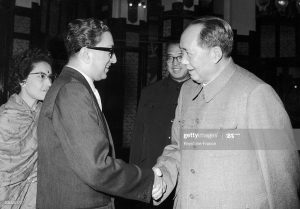
And this is exactly what has been happening with Nepal since this country came out from the grip of the Rana oligarchy only to enter into the trap spread by the newly independent India from the Mughal and British slavery. Says Khagendra Jung Gurung that when King Mahendra convinced the Chinese regime then led by Chairman Mao Tse-Tung for the construction of the Kodari route/highway that linked China’s Tibet with Kathmandu valley, the then prominent Nepali Congress leader B. P. Koirala (also taken as the father of the Nepali Congress) rushed to Delhi to meet then Indian Prime Minister J. N. Nehru (Nehru reportedly died of Sexually Transmitted Disease as is the rumour in India) to appeal him to intervene into the King Mahendra and Mao’s plan to link China with Nepal via Kodari highway so that China retreats from its avowal for the construction of the high way as proposed by King Mahendra.
In doing so late B. P. Koirala wanted to serve the Indian interests. Gurung, the living political history of Nepal, says that even on matters on how to rule Nepal, the entire Nepali leaders then used to rush to Delhi to seek the compulsory and the obligatory “orders and instructions” from Pundit Nehru and when this practice overly stretched, then King Mahendra to save the sovereign and independent Nepal from the “Indian coercion and arm twisting “dismissed the “elected government” of late B. P. Koirala took the charge of the country into his own hands.
Much earlier, when B. P. Koirala went to China for an official visit, Prime Minister Chou En-Lai and Chairman Mao asked Koirala whether he needed a Tibet-Kathmandu link road, Koirala responded in a straight “no”.
However, later upon King Mahendra’s insistence and Chairman Mao’s sagacity, the Kodari highway is in existence which brought China and Nepal closer with the shortest distance.
The China-built road gave birth to a debate in India whose rulers then began to tout King Mahendra stating, “Nepal king is to import Communism from China” through this highway.
King Mahendra through his own subtle media campaign cut a joke at India stating, “Communism doesn’t travel by Taxi”.
King Mahendra’s satirical statement shut the bad mouth of the Indian and Nepali leadership which then had a strong desire to make Nepal yet another Indian province through the tacit collaboration of India’s paid and posted agents available then in Nepal including late Koirala and the political leaders of several fringe/communist parties.
Says Khagendra Gurung that as and when Nepali politics plunged into a problem of a grave nature, most of the Nepali leaders of all hue and cries used to take a flight to Delhi to seek the regional scoundrel’s “orders and sermons” to which King Mahendra disliked from the core of his heart.
The intermittent rush to Delhi by the then Nepali leaders too could be taken as a primary cause that encouraged the sovereign monarch to usurp power into his hands. It was not a crime at all.
It was this much-publicized King Mahendra’s coup d’état that dismissed the elected prime minister and prorogued the elected parliament that also became a matter of intense discussion in Delhi’s power corridors.
While some took King’s usurping of power in Nepal tantamount to “killing of budding democracy” then others took it as the net result of King Mahendra-Nehru tacit arrangement to dismiss B. P. Koirala from the political scene.
Subscribers to this theory in Nepal and India opined that it was PM Nehru’s nod to King Mahendra for the dismissal of PM Koirala as Nehru felt or even concluded that Nepal’s Koirala was in many more ways than one threat to the towering political personality of PM Nehru whose popularity was being challenged by Nepal’s emerging prime minister Koirala.
Whatever may have been the political reason for Koirala’s summary sacking, one thing was sure that King Mahendra would have yet discharged Koirala for his “excessive India bend” on his own any time soon.
It was this unwarranted India tilt that prompted or forced King to cut the wings of the Nepali bird who once told, “Nepal was no more than an extended province of India”.
The timing of Mahendra’s inner intent to sack the India-bend Prime Minister Koirala and PM Nehru’s internal desire to see Koirala punished matched perfectly and thus King Mahendra was almost free to promulgate his own preferred system of governance called the Panchayati System which lasted for some three decades altogether.
India’s and its leaders’ penetration was so high that to patch up the trifling difference of the two warring Koiralas, M. P. Koirala and his half-brother B. P. Koirala, one tom-dick and harry Indian leader Jaya Prakash Narayan have had to settle down the brotherly dispute.
Ambitious and arrogant B. P. Koirala wanted his “greater” say in day-to-day affairs of the country to which M. P. Koirala objected.
Khagendra Jung Gurung who served as King’s minister twice stunned the listeners and the audience of the TV show when he revealed a fortnight ago, “King Mahendra used to sound his Royal courtiers that he was even ready to turn his country a Communist North Korea in Asia in order to minimize or say lessen the disproportionate and coercive Indian penetration and infiltration. (See YOHO Sambad by Jibram Bhandari in YouTube).
Living legend Gurung also told while being interviewed by Bhandari that Chairman Mao believed that only two reigning monarchs in the world were “nationalist” and among the two, Chairman Mao said those were the Cambodian King and King Mahendra of Nepal. Yet Mao was not as sacrosanct as the Nepalese people conclude.
Says senior journalist and our long time professional colleague, Khil Dhoj Thapa that Chairman Mao in his book “On Protected War” is learnt to have written that “we fought several long drawn wars but yet could not “liberate” Tibet and Nepal”.
This does mean that Nepal was in the eyes of Chairman Mao as the Indian hawks still have in their dirty minds through the “domestic paid ” agents of the RAW in Kathmandu.
Mao also took Nepal as an integral part of China?
If so then Chairman Mao too was an expansionist.
However, for those who were associated with Indian machinery and had been serving the Southern regime for decades and decades, King Mahendra was an autocrat ruler who killed democracy.
The sort of democracy they mean is perhaps run and dictated by the country of the former slaves of the Mughals and the East India Company.
Former slaves, desire to make others slaves. Height of “inferiority” complex and full of slavery mindset.
In yet another tantalizing revelation, political veteran Gurung opined that “India’s Prime Minister Nehru impressed upon the highest leaders of the then USSR (Union of Soviet Socialists Republic) not to “allow” Nepal to get the United Nations membership.
Almost all the then Nepali leaders active in Nepali politics had collectively appealed to Indian PM Nehru to use his good offices so that Nepal doesn’t get the UN membership. Perhaps all these political “animals” were on Indian payroll.
To recall, almost for four years King Mahendra had been trying hard to get included in the UN system as a bonafide member.
But the Indian PM Nehru under the tacit understanding of B. P. Koirala and others were almost able to convince the USSR leaders that Nepal was not a sovereign nation.
Under this pretext, the USSR leaders “vetoed” the UN General Assembly which denied the membership of the UN to Nepal.
Despite all these conspiracies both from domestic villains and India plus the USSR, King Mahendra’s had not lost his stamina.
The USSR got tired of vetoing Nepal’s entry into the UN system and finally, in the year 1955, Nepal was a full-fledged member of the UN System.
The USSR which under the intense pressure of Indian Prime Minister Nehru had blocked the entry of Nepal into the UN scheme had invited King Mahendra for a USSR visit that went well for twenty-nine days.
The Nepali King then impressed the USSR top leadership in such a manner that “it was the USSR which built Janakpur Cigarette Factory, Birganj Sugar factory, Agricultural Tools Factory, Birganj and also constructed the 107 kilometres strip of the Mahendra Highway from Paathlaiya to Dhalkebar. The Panauti Hydel Project is too built by the USSR.
This clearly speaks of King Mahendra’s “diplomatic” acumen. And King Mahendra was taken as uneducated by the highly arrogant B. P. Koirala.
All these “employment-generating” factories donated by the USSR to Nepal have been vanished and sold to Indians at cheap dirt prices.
The same has happened with China built factories in Nepal which were a memento of the China-Nepal friendship.
So this way, the late King Mahendra expanded and enhanced the image of Nepal in the contemporary world.
When King Mahendra visited the United Kingdom and the United States of America, both Queen Elizabeth and President Lyndon B. Johnson greeted the Nepali monarch with great honour and prestige.
Khagendra Jung Gurung, a reservoir of political knowledge who saw for himself the trickery of India and its “paid and posted agents in Nepal” deserves a salute from us all.
To avert the chances of Indian annexation of Nepal, King Mahendra had plans to bring in headquarters of some UN Agencies in Nepal much similar to Geneva, Switzerland.
In addition to all these, King Mahendra was almost determined to seek Chinese support if and when India tried to gulp Nepal.
The King was thinking of fighting a war with India with the support of China in case India tried to takeover Nepal and merge it in the Indian Union.
Weaving the entire threads together, what must be said today through this write up that neither China nor any South Asian country has the capabilities to come to the rescue of this RAW infested country?
Pakistan could be a fitting challenge to the Indian designs in Nepal but either Pakistan is less interested in Nepal or concludes helplessly that it can’t challenge the RAW penetration in Nepal.
Contrary to the expectation, Pakistan has a weak presence in Nepal resulting in Indian bullying at its height.
However, the successive leadership after the 2005/6 India instigated, designed and executed the so-called sponsored revolution that it was which brought the present set of India- serving Nepali leaders are hundred percent serving the Indian interests in Nepal.
That’s all.

Login to add a comment