







 Both Nepal and Russia enjoy very cordial relations since the establishment of diplomatic relations in 1956. Russia, the then USSR has provided remarkable support in the process of industrialization and infrastructural development of Nepal. Besides, thousands of Nepali students have enjoyed the scholarship opportunity to study in the USSR.
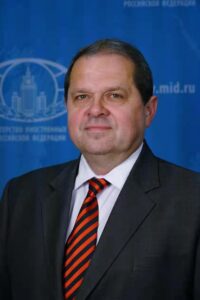
We interviewed H.E. Aleksei A. Novikov, Ambassador of Russia, on the present state of Nepal-Russia bilateral relations. Excerpts as given below:
Your Excellency,
Question: Both Nepal and Russia enjoy very cordial ties since the establishment of diplomatic relations between the two countries. Would you kindly inform us about the present shape of bilateral cooperation and the prospects of its development?
Answer: Last year Russia and Nepal celebrated the 65th Anniversary of the establishment of diplomatic relations between the two nations that happened on July 20, 1956. Later, on December 27, 1991, Nepal recognized Russia as a successor state of the USSR.
We are currently seeing the growing activity of Russian-Nepali interaction on both political and economic levels. Our two countries have very close positions on many international issues, we share basic values and principles that are embodied in the United Nations Charter – first of all, the principles of non-interference into the internal affairs of sovereign nations as well as goodwill.
I am delighted to point out the constructive and balanced character of Nepal’s foreign policy including Nepal’s consistent positions towards the issues of international security. The proximity of Russian and Nepali approaches to most of the global and regional problems as well as strengthening collaboration between our nations are very important issues during the emergence of the multipolar world. In this new global framework, facing modern problems is viable only through combining efforts, resources of states on an equal basis and under the supremacy of international law.
The potential of the relations between Russia and Nepal is still to be fully implemented. I hope that our two nations will continue to explore new areas of cooperation for mutual benefit.
For example, our two nations are united in their fight against the coronavirus pandemic. On April 20, 2021, as a result of the joint efforts by the Russian Direct Investment Fund, the Embassy and the Ministry of Health and Population of Nepal, the “Sputnik V” vaccine was registered by the Department of Drug Administration for emergency use. We are currently exploring ways to supply Russian-made medicines to Nepal, including some forms of grants. We believe that the friendship between Russia and Nepal will play its role in achieving the ultimate victory over the virus and returning life in Nepal back to normal.
Q. The Nepali people commend the Russian support in different fields, including culture and education. Many Nepalis, especially medical and engineering specialists received their degrees in your country. What are the most important projects of cooperation between Nepal and Russia in education and culture? What are the projects you are planning to launch in the future?
A. Currently, there are about 6500 Nepali specialists, mainly medical and engineering, who received higher education in our country since 1957. No doubt, Russia has done much contribution to the educational development of the Himalayan Republic.
Every year with the participation of the Embassy and the Russian Centre of Science and Culture in Nepal Nepali students are being provided with state scholarships for receiving higher education or postgraduate studies in the universities of Russia. For example, in 2021 a group of Nepali young aspirants succeeded during the selection process and will now obtain higher education in our country free of charge. In 2017-2018 two Russian universities established partnership relations with Kathmandu University.
The Russian side is also proud of the close cultural ties that exist between our two nations. Although geographically Russia and Nepal are far away from each other, there has always been mutual cultural gravitation between our countries during the entire history of our relations.
The first Russian who visited Nepal was an outstanding orientalist Ivan Pavlovich Minaev. In 1875, he studied local traditions, religions and languages and composed a dictionary of Newari language. However, intercultural exchange between our peoples started far earlier. The teaching of Buddha, which originated in the ancient times in Lumbini, spread through the Himalayan Mountains and Central Asian steppes to Buriyatia, Tuva and Kalmykia – contemporary Russian regions inhabited predominantly by Buddhism followers.
Ties between Buddhist communities of our countries have been successfully developing till now. The Russian side is currently funding the construction of a Buddhist temple in Lumbini.
It is also very important to remember the Russian-Nepali brotherhood in arms during World War II, in which the people of Russia were in action on both the western and eastern fronts. On May 9 2022 the whole world is commemorating the 77th anniversary of the Victory. As we celebrate these events, we pay tribute to the bravery and heroism of soldiers and those who worked on the home front, to all those people who helped forge this Great Victory at the cost of their health and their lives. This year, as in 2021, the Embassy of Russia is planning to invite Nepali friends to celebrate together and take part in the planned solemn manifestation at the premises of the Russian diplomatic mission in Nepal.
Q. Russia is widely recognized for its sports achievements. Russian hockey players and ice-skating champions took part in PR events in Nepal during the launch of the “Visit Nepal 2020” campaign. Are there any plans to continue the development of sports ties between the two nations?
A. The Russian side willingly recognizes the importance of Nepal as global sports and tourist destination. By the way, the Embassy was working closely with the Secretariat of the “Visit Nepal – 2020” campaign and its coordinator Suraj Vaidya to promote tourism in Nepal in Russia.
An interesting page of the history of our relations is the contribution to the development of Nepal made by a Russian expatriate, well-known entrepreneur Boris Lissanevich. He did a lot to “open” Nepal as a popular tourist destination for the whole world in the 1950s. Boris Lissanevich was the founder of the first hotel in this country. He left here fond memories of himself and became a remarkable person in the Nepali tourism industry.
Nepal is known to be a great place for mountaineering that is very popular among the best Russian sportsmen. Nepali climbers, famous Sherpas, are considered the best in the world. By the way, Nirmal Purja – holder of multiple world mountaineering records – visited Moscow in December 2019 to receive the famous “Golden Ice Axe” award.
In May last year, the expedition of the “Seven summits” club scaled mounts Everest and Lhotse, delivering the Banner of Victory in World War II as well as the emblem of the Russian Foreign Ministry to the very top of the world.
We are currently exploring the further development of sports ties in such areas as football, volleyball, boxing, taekwondo, judo with the respective federations, agencies and ministries of the Nepali side.
Our side is looking forward to receiving Nepali sportsmen at various championships and competitions in Russia.
Q. It is widely known in Nepal that the economic ties between Russia and Nepal are developing fast. However, we are still lagging behind when it comes to the overall numbers in trade. What are the most promising areas of bilateral economic cooperation?
A. The volume of trade and economic cooperation is gradually increasing. According to Nepali official data, in the 2020/2021 fiscal year, the total trade turnover between our countries amounted to about $21.5 million. Nepal supplies Russia with carpets and textiles, black tea, and leather goods importing such goods as dried vegetables, mineral fuels, cocoa products, spare parts for aviation equipment and sunflower oil.
We are currently working on the re-establishment of the direct flight between Moscow and Kathmandu. When it comes true, the amount of bilateral trade, economic and tourist relations will surge significantly.
Cooperation in pharmaceuticals and healthcare spheres is actively developing. Russian pharmaceutical companies (including the National Immunobiological Company) are negotiating various projects with Nepali firms.
There are plans for cooperation in the areas of construction of transport infrastructure facilities and hydropower. For example, in April 2021, a delegation of the largest Russian railways and hydropower corporations – Russian Railways International and Inter RAO – visited Nepal. During meetings with representatives of the Nepali establishment, including Prime Minister, Ministers of Finance, Physical Infrastructure and Transportation, as well as Energy, Water Resources and Irrigation, the Russian side raised issues of its participation in the light metro project in Kathmandu, construction of the East-West electrified railway, as well as several hydroelectric facilities.
Agriculture is also a promising area of cooperation between Russia and Nepal. Several private Russian agro-industrial companies are expressing interest in creating greenhouse complexes in Nepal for subsequent export of agricultural products to the markets of our country, India and other countries. The negotiations are being held to import Russian-made chemical fertilizers to the Himalayan Republic.
Q. Your Excellency, it is your second posting to Nepal. The first one happened 30 years ago. How has Nepal changed throughout these years? What were your impressions of Nepali society and culture back then and what are they now?
A. One cannot but agree that during the last 30 years Nepal has changed beyond recognition. A lot of new infrastructures as well as new beautiful facilities were built. There are almost no more shortages with electricity supply in Kathmandu. Vice versa, Nepal is gradually but steadily becoming a net exporter of power. The newly built hotels, Nepali national parks and places of sightseeing have reached the global top standard. Pokhara can be compared to the best world’s resorts such as Courchevel (France) or Sochi (Russia).
The Himalayan Republic has generally become a more comfortable place both for its citizens and for the foreigners arriving for mountaineering, trekking, hiking or, for example, pilgrimage. We all together with the Nepali people are eagerly waiting for Nepal to graduate from the least developed category and become a middle-income developing country by 2026.
Despite the economic and social development that we all are witnessing during the last decades, the soul of the nation has never changed. I have always admired Nepali culture and the people of this wonderful country. With the 2015 earthquake and the COVID-19 pandemic, the Nepali has lately been through tough times. However, the way the nation rebounds is fascinating to watch.
In the past, after all the hardships Nepal has always risen to become stronger. Therefore, I believe that the Republic is looking at a very bright future. The Russian side is willing to assist Nepal in its development maintaining the traditionally friendly relations between our two great nations.

Login to add a comment