








By Narayan Prasad Mishra
I am now 78. I never thought the life and culture of Kathmandu Valley would be so different in my life. When I remember my old days from my childhood to date, I wonder about the change out of my imagination. We heard about the medical doctor, but that was a rare creature. Hardly one could see the doctor outside of the hospital. There were three hospitals in the valley – Kathmandu, Patan, and Bhaktapur. The health service, in general, was free of everything – consultation, medicine, etc.
There was a doctor named Halder around the 1960s. I do not remember his full name. He was in Bir Hospital and visited the patient on request charging Rs 5 for each visit which was almost impossible to pay that much money for the middle-class people. He used to visit the house with his bicycle and a bag with some medicine and medical accessories. He was a simple, soft-spoken, friendly physician and everybody’s doctor who could afford that much amount. Later on, the medical shops provided free doctor’s consultations hoping to sell the medicines recommended by the doctor. That system continued for many years.
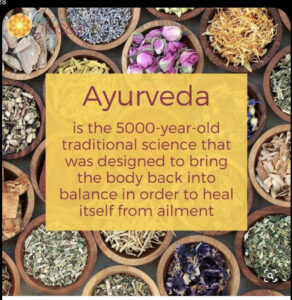 Whereas in Bhaktapur, the city where I grew up, most people had faith and were attracted to Ayurvedic medicine. People consulted Vaidya, an Ayurvedic physician, or called him home in a severe condition. I remember once I had extreme throat pain and had a hard time swallowing and even drinking water. My father took me to a Vaidya named Janani Dass, in front of the south side of Bhaktapur Durbar Square. He was a dignified man dressed in a traditional Dauro Suruwal and Patuka (a long cloth used like a belt with Dauro, the top part of the Nepali men’s dress. He checked my throat with sunlight and gave me a piece of a tree’s skin; something looked like Cinnamon but thicker than it, asked me to put it in my mouth and take its texture. As soon as I did, I was magically relieved from my pain before I reached home. I had much more experience of that medicine for different health issues and wholly cared. When you compare these things with so many nursing homes and private sophisticated, expensive hospitals, you see a drastic change, but not for all for a few wealthy. Others have more difficulty and suffering than before because of its high price, not affordable.
Our people mostly lived with the country’s joint family (extended family) system with sons and daughters and uncles, aunts, grandsons, granddaughters, nephews, and nieces. There was a massive joint family with more than 250 family numbers in Bhaktapur called the Prajapati family, with whom I had a very close association. They had a tutoring school at home from grade 1 to 10. The hired teachers tutored the students in the morning and evening, where my brother taught them. So, I always went there with my brother Ananda Prasad Mishra (teacher) and spent my life with them. I studied, played, and ate together with them as just like a part of their family. I had more than ten friends in that family of my age and grade. It is a pleasure to remember that 12 of their boys got married at the same time. The wedding procession was like a festival in Bhaktapur that day. Unforgettable! I am happy to remember that once even the international magazine wrote a news article about that family. That extended family was broken after King Mahendra introduced the land reform act with the system of owning a certain amount of land for a family. Now our joint family system is gradually disappearing, for which I am not happy.
The people of the locality (tolebasi) were like all the members of the same family. We loved, played, and walked together. The family could quickly leave their children to other families to take care of when they had a problem going. You could soon get some amount of people rice, beaten rice, salt, or turmeric in an urgent need and return sometime after. There was no bad feeling or obstacle of formality in it. Now you often do not know even your next door neighbor. Getting help and love are beyond your imagination.
Until 1958, one could rent a small room in Kathmandu at Rs 2 a month, the size of space for which you need to pay Rs 3000 these days. The price of land and house also was not much. My father bought a house at Tahanani, Naradevi at Rs 9000 in 1965; though it was not in good shape, it was a four-storied house with good length and breadth. The most exciting and enjoyable thing for me to remember is that in 1966 I bought land at Kuleshwor, Balkhu, where I have been living since 1975, at Rs 4000 per ropani. It would be most surprising for anyone to know that the selling price of the land in that area is more than Rs 16 crore 160 million (about $.14,00,000) per ropani now. What a change in price. Unimaginable! From that point, I think I am a milliner. It is as if I won a lottery. But I often wonder how the people could buy land and make a house in Kathmandu now.
Our country was sufficient in rice, lintels, and grains, cooking oil, and the price was affordable for anyone to buy. We never saw these imported things in the market. We had our rice varieties produced in the country – marsi, masinu, thapachini, hakuwa, etc. Rice per mana was 40 paisa, and the beaten rice price was 25 paisa which would be a little more than half a kilo.
Many fruits – apple, green banana, grapes, strawberry, apricot, watermelon, avocado, pomegranate, etc. what you see plenty in the Kathmandu market these days were almost unseen and unknown to the valley people. Some of these fruits were sold in big beetle shops in Indrachok and Ason in Kathmandu. People bought these fruits to feed the unwell and sick people for giving some energy as if only the sick people were supposed to eat those fruits. That would be very expensive to buy for an ordinary person. We had only local fruits – bhogate (grapefruit), orange, Jyamir, plumb, small peach, and some small yellow bananas brought by the adjacent villagers. We considered the radish as fruit and offered it to the gods and goddesses and ate raw, which is also done now.
In those days, Bhat and Jaat (Rice and the caste system) were much interlinked in the valley. As we had strictly followed the caste system, the upper caste would not eat rice cooked or touched by the lower caste people. Sometimes people within the same caste would not eat rice cooked and handled by the same caste people, thinking and discriminating among themselves lower and higher in their classifications, groups, and categories. That was within Brahmins as well as Newars. There was a saying in Nepali “Jaat kemaa? Bhatmaa” (where the caste system is? It is in rice.) The system almost disappeared after the party palace system with buffet dinner was introduced where everybody from any caste eat together.
That time was when the bicycle owner was considered a well-to-do person. Now the time came, even the motorcycle owner was considered not a wealthy person. Now many people own cars and extensive, sophisticated, expensive luxurious cars but by limited rich people.
I saw the telephone in General Post Office GPO) the first time I took a job in 1960. That was a big wonder to me. The line was only in the office of the in charge’s room. I remember I was nervous and scared to receive the receiver when my boss called me to talk on the phone when someone called me in the line.
Until 1966 I never dined rice with anyone out of my house and some relatives. Even in the house, we ate rice, taking out all the dresses only wearing a dhoti. In 1966 I was on the train from Patna to Delhi to the University of Delhi. That was a long trip with day and night travel. When the man came to get the order for dinner, I asked for a dinner set which they brought with dal and bhat. I felt uneasy and upward, not feeling good to eat dinner with rice cooked by others, and could not eat and swallow it though I was hungry. I spent my days only eating bananas. Even after I arrived in Delhi, 3/4 days passed like that without rice, only with chapatis (dry wheat bread) in my hostel at the University of Delhi as I could not break my tradition and habit. Now I remember and realize how your culture could strongly bind you wrong or right.
There was a time in my life when I did not know any other drinks were in the bottles except alcohol. I worked in the Department of Publicity, where Narayan Prasad Banskota was the Director and Ram Raj Poudel and Tirtha Raj Tuladhar were Deputy Directors. We had a picnic at Gokarna Jungle in 1963. As soon as we reached the spot the Director, and others opened the bottles and poured in a glass. I, too, was offered a drink and politely denied it saying that I do not drink alcohol. Then Director Banskota asked someone to open another bottle and give me another drink. He gave it. But I still denied it. They said that was no alcohol but soft drink what we call squash in Nepal now. I had no idea about that soft drink. Whatever came in a bottle was alcohol for me. My ignorance made Director Banskota unhappy, which I realized long after. Ignorance has no place in reality.

Login to add a comment