








By Narayan Prasad Mishra
In our present-day world, nothing can be done without money. Money is the backbone of everything. We need money for – eating to buy foodstuffs, we need money for sleeping to buy bed stuff, we need money for transportation to move from one place to another. You cannot have education and treatment for health without cash. Everybody knows it. So, more explanations may not be necessary.
We know some people have much more than what they need in our society. We call them rich people. The persons born in a wealthy family with silver spoons would hardly know the value of money. Some people who are now rich but were poor before would also see the value of money because they had experienced poverty and learned the value of money. The ordinary people certainly know its importance because though sometimes they have some for their needs, mostly, they do not have. But some do not even have to fill something into the stomach, and the people who experience the highest degree of suffering without it for shelter, food, medicine, and cloth know the real value of it. Money is the life for them. They have a life when they have money. It seems their lives are for cash. They do any work, liking or not liking because they need to do it for money. Because of poverty and lack of job opportunity in the nation, millions of our people, our brothers and sisters are working in foreign countries – Malaysia, South Korea, Qatar, Kuwait, etc. with many unbearing difficulties and hurdles.
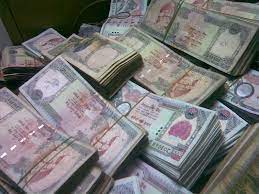 In general, the people who know the value of money always try to save it by any means with some exceptions. They always keep the risk of it in their mind when you would not have it. In this context, I have a never forgotten news story in my mind, which I read in Gorkhapatra, our oldest daily newspaper, several decades ago. Accordingly, there was a destitute, needy beggar in Biratnagar. Begging was his job. He implored all around Biratnagar. He was very often seen in different localities and was known by most of the people there. He lived on the pathways and shelter places. He never wore a good cloth and looked the poorest among poor beggars. Unfortunately, on the cycle of sick, suffering, life, and death of the living creature, he also got ill and died. When the concerned people were ready to take out his dead body for his last ritual, they found one hundred fifty thousand rupees with his rag belongings. People were astonished to see the amount. What pathetic and heart touching was it? He never stopped his begging and undoubtedly saved that money, always thinking of the future. We know we do like this, not using it for our own needs, still thinking about the future. But the end has no fixed date. You might disappear tomorrow, or you might live several decades. Your life and the future are not in your hand.
Now, very sadly, I remember my eldest brother Bhawani Prasad Mishra, the English Professor who loved wealth, who earned a lot with his sweat and labour on a bicycle by tutoring the sons and daughters of several wealthy families in Kathmandu. Riding the bike throughout his life from one corner to another corner of Kathmandu for tutoring, not showing any motor car or motor bike’s interest, he also disappeared under the same situation.
In this connection, very sadly, I remember now the story of our saving when Shanti Mishra, my beloved wife, and I saved some British pound and U.S. dollars out of our daily allowances during our study and visiting official trip to Europe and America, not spending even for the delicacies we wanted to have. We controlled our lust for luxury and hardly bought any expensive shoes or clothes. We lived a simple life in living, eating, clothing, working. We mostly cooked our food ourselves and did our dishes. We never had any excellent lunch and dinner in big hotels at our expense. We did not organize any big feast in our life. We discouraged the people from doing it and advised them to think over the matter according to their capability and saving amount.
Not only that, I bought and rode a bicycle to go to Tripureshwore, Tribhuvan University’s Central Office from the University’s Professor’s Quarter, Sundarighat, Chovar, when I became the Deputy Registrar in 1975. Our university had no provision of providing vehicles to high officers except the few top officials – Vice-Chancellor, Rector, and Registrar. I was young then and wanted to ride the motorbike. But I dropped that my wish thinking the needs of making the house and the future. Our head peon, Ram Bahadur Basnet, was from the Sundarighat Village, across the suspension bridge. He had his bicycle. When we both were together on our ride to Tripureshwore, I remember he expressed his dissatisfaction and unhappiness very often, saying in Nepali, “Hajur Malaita Chitta Bujyena, Ma Sangai Hajur Cyclema Suhayena” (Sir! I am not happy about it (your riding); it does not suit your status with me on a bicycle. Happily, I did it. I was glad to go together with him. He was a nice pleasant man, always cheerful. But I am also happy to remember Prof. Surendra Singh K. C., the well-known Professor of Chemistry, Ex-Registrar, who admired my bicycle riding and expressed that it would be an excellent example for other good heart people of OK official position in the country. I even carried my daughter to St. Mary’s School, Pulchok, with that bicycle from Sundarighat. That was quite a distance and challenging ride through the newly opened, unravelled broken bricks rough road. But after the sad demise of my beloved wife in 2019, I often feel now my wife and I also became the beggar of Biratnagar saving money, not using it for our own sake.
We know not only the people who see the value of money save the money, but the rich and wealthiest save and save unlimited savings. Indeed, the rich would not have a value for it as the needy would have. Still, the wealthy people accumulate more and dump it in the treasury. That is the mystery of wealth.
Whatever the things may be, we know our life is short. Saving and accumulation are necessary, no doubt, as we do not have a sound insurance system as in Europe or America. But if one does not know it’s timely use or proper use for yourself, your dear near or social cause, there is no value of your savings. That is sure. One who would not know the proper use of it would become the beggar of Biratnagar. I think we have more like the beggar of Biratnagar. Is not it better for all not to be the beggar of Biratnagar? Please think on time.

Login to add a comment