







View from America

By M.R. Josse
GAITHERSBURG, MD: This week’s column will deal with a bunch of politico-diplomatic developments that have surfaced of late with reference to America and the Middle East, Nepal and South Asia.
While the bulk of media attention in the United States has, not surprisingly, been directed to President Biden’s continuing Herculean efforts to tackle the Covid-19 pandemic, including the passage of a $ 1.9 Trillion relief package and the still dire public health situation on the ground, some belated focus is now being directed towards some key aspects of American foreign/security policy, as well.
AIR STRIKES/SAUDI ARABIA
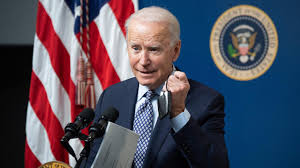
Biden orders US airstrike in Syria
Last week, Biden approved bombings of buildings in Syria that the Pentagon alleged were used by Iranian-backed militia, in retaliation for lethal rocket attacks on U.S. targets – an American civilian contractor and an American soldier – in neighbouring Iraq. As reported 26 February 2021 by the London-based Syrian Observatory for Human Rights, citing unconfirmed local reports, the strikes killed 22 people. Pentagon press secretary John Kirby portrayed the bombing in eastern Syria as carefully calibrated, calling it “proportionate and defensive.”
At the time of writing, there has been no notable public reaction from Tehran – which is, of course, another story, perhaps to be told another time.
The Syria air strikes, the first known use of military force by the Biden administration, was notable, among other things, for the fact that it had, for weeks, continued to focus most energy on perceived ‘challenges’ to the United States posed by China.
Biden’s decision appeared, in any case, to signal to Iran and its proxies that Washington would not tolerate attacks on its personnel in Iraq, even at a sensitive diplomatic moment when quiet behind-the-scenes efforts are underway to reengage with Iran.
Personally, I believe that the attacks on American targets, low-level as they were, were meant as a test of the new American administration’s resolve to defend its interests abroad, mere weeks after Biden’s inauguration. Notably, many Republican leaders praised Biden for the airstrikes saying they were a “necessary deterrent.” Interestingly, it caused some House Democrats to issue a statement arguing that Biden should have first sought the approval of Congress!
That curiosity aside, it ignited a long-simmering controversy whether any American president should have the sole authority to launch a nuclear strike – a subject that is sure to be re-visited in the future, despite the fact that that the present American president, unlike his predecessor, is known for calm and deliberative decision-making, rather than plunging ahead regardless.
It may be recalled, that, thus far, America has resorted to nuclear strikes twice – on Hiroshima and Nagasaki – in August 1945; the decision to do so was taken solely by President Harry S. Truman. While the global nuclear stockpile has increased exponentially since 1945, as has their frightening collective devastative power, nuclear weapons have never been unleashed on any other target since then, despite there now being about ten states that possess nuclear weapons-capability.
Now, let’s move over to Saudi Arabia: specifically, to the recent release of a CIA report on the killing and dismemberment of Jamal Khashoggi, Washington Post columnist and critic of the Riyadh regime, at the Saudi’s Consulate in Istanbul, Turkey in October 2018.
That report, as per multiple media accounts, held Crown Prince Mohammad Bin Salman (MBS) responsible for green-lighting that despicable act, perpetrated by a hit-squad specifically dispatched to Istanbul for the heinous purpose, and imposed sanctions on a long list of Saudi officials – but refrained from any punitive action against MBS himself.
Saudi Arabia has, to no one’s surprise, rejected the report but ‘noted’ the United States’ commitment to continue to engage in relations with the kingdom. In any case, criticism of Biden has spiked thereafter as, during his presidential election campaign in 2019, he had publicly vowed to hold MBS ‘accountable.’
Truth be told, Biden has gone much further in that direction than former president Trump, under whose watch the awful crime was perpetrated. Trump, in fact, held the CIA intelligence report under wraps; its gist was then merely informally leaked.
What the above contretemps clearly indicate is that there are clear limits even to the power and influence of the world’s Hyper Power. That is lesson number one on global strategy, for all.
The same salient underlying message comes through in a 1 March 2021 CNN report disclosing that ‘three names were mysteriously removed’ without explanation from the Khashoggi murder and dismemberment intelligence report after its initial publication.
The initial report, issued by the Office of the Director of National Intelligence, was removed sans explanation and replaced with another version that deleted the names of three men it had said were complicit.
Whatever the compulsions of the Biden administration in this respect are, one is powerfully reminded that, as Stephen Collinson and Caitlin Hu of CNN have it, “Saudi Arabia remains a vital anti-terror partner and remains key to stabilizing oil markets that could scuttle U.S. economic policy.”
Moreover, “ditching it would make America’s top enemy in the Middle East, Iran, more powerful.”
There are clearly other factors that have influenced such fine-tuning of America’s Saudi Arabia foreign policy. Among them, I would guess, is that Saudi Arabia remains a key purchaser of high-tech, high-cost American weaponry, which, if denied, would possibly compel Riyadh to look to Moscow and/or Beijing for alternatives. And that, even a duffer knows, would simply not be a smart idea; more like cutting off one’s nose to spite one’s face!
What should not be forgotten, either, is that Saudi Arabia offers safe bases for the American military – providing an invaluable strategic asset for the United States, especially in the context of the ever-troublesome and turbulent Middle East.
Lesson number two on global strategy: compromises or trade-offs are inevitable when foreign/security policy ideals or objectives meet the hard reality of geopolitics and realpolitik.
A CONVERGENCE?
Where the current political situation in Nepal is concerned, despite the many surface changes that have taken place since the sudden 20 December 2020 dissolution of the House of Representative (HoR) at the behest of President Bhandari, on the advice of Prime Minister Oli, the overall picture is unchanging: one of utter confusion and numbing uncertainty.
True, the Supreme Court has spoken and HoR is to resume its session on 7 March 2021. But can anyone say with stirring confidence that (a) Oli will resign; or (b) that he will survive a no-confidence motion (c) that a coalition hatched between the Prachanda-Nepal faction of the NCP, joining hands with the NC and the Janata Samajbadi Party (JSP) will in fact emerge to rule the roost; or (d) that the Election Commission’s formal position that the NCP has not split will upset the apple cart or (e) that none of the above scenarios will come to pass, but something completely unexpected?
While we shall know the answers to the above queries soon enough, for me, sitting here in the antipodes, what I found most salient is Prachanda’s declaration in a television interview that , ‘the power equation’ between his faction of the NPC, the NC and the JSP would be the “most comfortable” for India!
Though in all probability that disclosure did not come as any surprise to most political pundits in Kathmandu, it intriguingly coincided with a write-up in the Hindustan Times whose thesis, if one may so term it, was precisely that a Prachanda/Nepal-NC/JSP coalition government, under the leadership of the NC, should come together to form a new government.
Considering that Hindustan Times is about the most pro-government of all English-language Indian dailies, the uncommonly similar ideas mentioned above are not merely striking – they are unnerving! More so, when reading the article’s concluding punch line: “Nepali democracy and Indian strategic interests converge.” Ouch!
SINO-INDIAN YARNS
The past week has been particularly fecund as far as throwing up interesting or new light on the ever-absorbing story of Sino-Indian relations, including that on bilateral trade.
Despite border tension between the two neighbours, China was India’s top trade partner in 2020, reported Indian Express. This, one was further informed, came at a time when the U.S., India’s top trading partner in 2019, took a hit during the pandemic.
“China topped India’s list of trading partners in 2020, despite high tension between the countries, showed provisional data from the Ministry of Commerce and Industry. Its position at the top is not just a result of India’s continued dependence on its electrical and nuclear machinery, but a spurt in shipments of products like iron and steel as well.”
Bloomberg, incidentally, ran with a story headlined: “China back as top Indian partner even as relations sour”. While this report too was largely based on data released by India’s Ministry of Commerce and Industry, it went on to remind readers: “…While Modi banned hundreds of Chinese apps, slowed approvals for investment from China and called for self-reliance after clashes along their disputed Himalayan border, India continues to rely heavily on China-made heavy machinery, telecom equipment and home appliances. As a result, the bilateral trade gap with China was at almost $ 110 billion in 2020, making its India’s largest.”
Another illuminating perspective on Sino-Indian relations was provided by the redoubtable Shyam Saran, writing in The Tribune, in a story headlined: “China changes tack, Resets ‘Indian View’ as Biden’s foreign policy begins to take shape.”
No less interesting are passages from Beijing’s Global Times that Saran quotes, including this: “After accusing India of having gone over to the ‘dark (American) side’, the latest Chinese expectation of India continuing non-alignment are remarkable.”
Saran also quotes Fudan University professor, Shen Yi, thus: “India is mulling over the idea to ease restrictions on investments from China as the country is mired in pandemic-induced economic recession.”
Briefly, on this front, there is a long New York Times story whose headline goes, thus: “China Appears to Warn India: Push Too Hard and the Lights Could Go Out.” It attempts to make a connection between the Sino-Indian clashes in the Himalayas last summer and an alleged Chinese cyber campaign against India’s power grid, “timed to send a message that if India pressed too hard, the lights could go out across the country.”
OTHER TALES
Shifting gears, India is getting the short end of the stick of international opprobrium these days. Thus, we have the recent case of the slanging match between the UN human rights chief and GOI over the farmers’ protests in India (Times of India).
There is also a fierce continuing verbal confrontation between Indians and others, including Americans of Indian extraction, that have strongly and effectively protested the strong-arm methods of the Indian government in suppressing the months-long farmers’ agitation. India, much accustomed to lecturing others about human rights, is now facing the heat or scrutiny on the very same score from the other end.
Finally, there is the interesting case of Myanmar Ambassador to the U.N., Kyaw Moe Tun, last week appealing to the General Assembly to use “any means necessary to take action” against the military junta to help “restore democracy” in Myanmar, saying he was representing Suu Kyi’s ousted government. Predictably, he was promptly fired by the junta. He was applauded by his U.N. colleagues, including the newly-installed American ambassador, Linda Thomas-Greenfield.
Incidentally, I wonder if there was any anti-junta demo in Kathmandu outside the Myanmar Embassy. In any case, I strongly doubt that the Ambassador of Myanmar, if in office in Kathmandu, followed Tun’s example.
The writer can be reached at: manajosse@gmail.com

Login to add a comment