








By Dirgha Raj Prasai
Indra Jatra is being observed with big fanfare in Kathmandu every year. This year, the festival, as per the lunar calendar, was observed on 16 Bhadra (1 September). In Bhadra 1825 BS, the day of Indra Jatra, King Prithvi Narayan Shah had concurred the Kathmandu Valley with the help of the eleven Gorkha Armies and Jhyagal Gurung and ascend to the royal throne at the Hanuman Dhoka after receiving ‘Tika’ from Kumari (Shakya living Goddess). Since then all the kings of Nepal continued this tradition of receiving Tika from Kumari during the Indra Jatra festival.
The great hero Prithvi Narayan Shah was born in Gorkha on 27 Poush 1779 BS and was crowned as the King of Gorkha on the Ramnawami Day in 1788 BS. With the support of all different castes including Magar, Gurung, Sherpa, Bahun, Chetri, Kami, Damai, Sarki etc.. Prithvi Narayan Shah maintained the pride of this place and did everything to create a greater Nepal. He is the unifier of Nepal, the pride of Nepal.
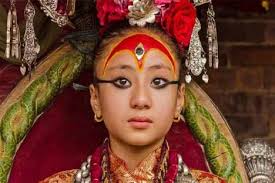
Kumari, a baby girl, dressed in red and golden costume, is regarded as an incarnation of the goddess Tulaja Bhawani. As part of her sheltered existence, she spends the rest of the years in a temple away from the public. The Kumari is the ‘virgin goddess’ adored by thousands of people during the religious festival. ‘Living Goddesses’ infants from the Buddhist community are chosen after she passes 32 tests of ‘perfection’ and until she reaches puberty. To become Kumari, a child has to meet specific criteria such as sporting ‘eyelashes like a cow,’ ‘thighs like a deer,’ and a ‘voice as clear as a duck. Even if a child has all of the aforementioned characteristics, her astrological chart must be considered favourable to the King of Nepal. She will also be tested for signs of fearlessness and serenity before she is adorned with the title. In Nepal, Kumari is believed to be the protector from evil and the bestowal of good luck and prosperity.
Since 2006, Nepal’s situation has been gradually deteriorating. As our basic foundations have been destroyed; consequently national unity and sustainable peace have not been achieved. The 1990 constitution was suddenly suspended in the interests of RAW, EU and CIA. It has thus derailed our religious tradition as well. To keep intact Nepal’s sovereignty and religious traditions, constitutional monarchy and Hindu kingdom should have to have existed. After the declaration of Nepal a republic many religious authorities are demanding restoration of the institution of monarchy to continue religious traditions.
It was almost 100 years before Germany and Italy were unified and the Meiji dynasty was restored, Prithvi Narayan Shah had unified 54 small nations. Remarkably, an American citizen never forgets the history of Gorge Washington, who gave freedom to the people from the British imperialism and unified the United State of America. Almost 30 years before the American independence the great king had unified Nepal (1768). The British Empire was expanding in Asia, after getting a hold in India the British had eyed on mountainous region Nepal. As the culture, religion and nationality was in danger, the great king was compelled to unify the Greater Nepal incorporating many small Hindu states and protecting Buddhism and other religions. The great king had kept the originality of mountainous Nepal by depicting the Moon and Sun on Nepal’s national flag.
English imperialist the East India Company invaded India with Christianity. They came first as traders, secondly, Bible and thirdly sword. Finally, they became successful in their mission. The great king saved the unified Hindu Kingdom Nepal from the British expansionists. There were more than 25 independent nations in India before the British colonial rule. British imperialists annexed one after another nation and named it as a ‘Hindustan.’ However, the great King declining the British claim, declared “Nepal a true Hindustan”.
The great king, in his divine message, had described, “This is not the nation gained by my trifle efforts, this is the garden of verities of flowers, may all be aware of it.” He has mentioned that every citizen enjoys equal ownership in the country. The Gorkha King proclaimed Kathmandu as the capital and Nepal as the Kingdom but not Gorkha. He not only brought different castes and ethnic groups under an umbrella but also laid a solid foundation for the modern nation. He described Nepal as a “yam between two boulders” suggesting the need for balanced relations with two big neighbours, a fundamental base of Nepal’s foreign policy. He warned that bribe offering or receiving both the practices are punishable. Today, people are pointing out their fingers to the political leaders who are practicing corruption and commission.
Nepal’s glorious history describes that after the victory over Kirtipur, the Gorkha troops fought a bloody war with the English platoon of 2,400 under the leadership of Killok in Sindhuli with the support from Ram Krishna Kunwar, Dev Narayan Magar, Ramchandra Prasai, among others. The English platoon had to face a humiliating defeat on that war. The unification mission of the great king contributed to expanding Nepal’s international border up to Tista in the East, Kangada in the West and Ganges in the South. Prithvi Narayan Shah’s policy of ‘right of inheritors over the land’- (Jagga Mathi Raitiko Adhikar) has heralded a tremendous influence over the people. The culture, tradition, religion, religious rituals, language and attires of all ethnic groups in the country were respected and accepted as a common property for co-existence.
Nepal a strong sovereign nation was created with the participation of the indigenous people. To note, King Prithivi Narayan Shah’s timely unification contributed to Nepal becoming an independent and sovereign nation.
The writer can be reached at: dirgharajprasai@gmail.com

Login to add a comment