








By Milan Chauhan
2020 reminds us of 2015 when we were suffering the brunt of the massive earthquake and the subsequent blockade imposed by India. This year, we’re facing an unprecedented Covid-19 pandemic coupled with a triggered border encroachment issues with India. Though these two horrificperiods, seem similar in many aspects, in terms of nationality crisis, impairment on physical and economic health, we do not want the post-pandemic resilience to be the way similar to the 2015 aftermath. Instead, we want a strong commitment by our leadership for action now.Two things that reverberated in Nepalis’ mind were “agriculture” and “self-dependency” in 2015, the similar expectations, now have been reiterated by both the political leaders and the citizens. But this has raised a question, how committed are our leaders for agriculture and self-dependency?
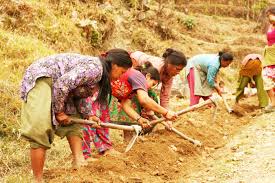 The government, for FY 2020/21 has already predicted an ambitious economic growth to be 7% falling from 8% in FY 2019/20due to the pandemic, and the contribution of agriculture on GDP be less than the existing 26.98%. Since over 80% of populace belongs to rural areas with a background of farming, their probable return to domicile from foreign labor migration, even if a proportion of total 6 million does so, will be a challenge for the government to deploy in employment markets and a significant drop in remittance income, the second lifeline of Nepali’s economy after agriculture. How wise is it to seek resilience for them in agriculture when most of the youths migrate because of low income and physical drudgery of agriculture in our subsistence farming? Had all the three tiers of government been serious to address agriculture issues before, there would be no challenges laid amid crisis. But this has not let us stop to think for a path to reshape the scenario of agriculture and all we need a strong vision, commitment, and continuity of implementation. We de facto need a national mission to redefine agriculture in our country.
In highlighting the manifested role of leadership for agriculture development and self-dependency on foods; we can take exemplary lessons from the Israeli history of agriculture, their commitments, and promised leadership to continue for the benefit of their nation. After independence, in 1948 Israeli leaders of the early 1950s to 1960s have prioritized their one-third budget to agriculture, 30% on education, and 30% on security. This has led them to be grown up to Israel of now, a $42,000 per capita income nation that exports majors of fruits to the world from $1,000, where we are standingnow. Their strong commitment to agriculture has constructed an impossibly water and irrigation supply system in an arid and semi-arid region, the two-thirds territory of their whole country, albeit the engineers didn’t believe they would make it out. This has very much to suggest to our leaders, who should prioritize actions rather a superficial speech to grab sentiments of distraught farmers, the unemployed, and the agriculture professionals at the time of crisis. Our agriculture, unfortunately follows the tune of the traditional norms. The budget, in FY 2020/21 has been allocatedto the figure of 2.80% only, where the last year had the suit of 2.27%.Unlike others, the agriculture sector needs a strong reformation and its position should be redefined with an astute visionary policy.
The success of limited resources lies not only in its pre-defined sectors but leadership for tomorrow. In agriculture, there’s a dire need to attract youths, private sectors, and possible primacy on factory farms and industrialized agriculture by the government. The discourse of self-subsistence be started and dependency on Indian markets for agriculture commodities needs to be cut off substantially. Like most of the developed countries, farmers need to be provided with certificates, ideas on their potential crops to grow, and improved technological knowledge as an extension service by the government. Farmers must be treated individually and specifically. Governmental bodies meant for technical consultations are heavily occupied with old-fashioned customs, lack essential technical knowledge on research aspects, which has led us to conclude its remark as dull and idle institutions for years. An adept single technical body with high investment in research and development should be envisioned by the government, reforming the existing, hiring young minds, more-a-technical than administrative.
One extraordinarilystewardship of our agriculture minister, “protected agriculture, assured saving”, needs to be implemented smoothly to end the middlemen problem in marketing and help farmers fetch a fair price. There are still a series of queries on the workings and effectiveness of newly proposed “land banking”, that Agriculture Development Bank on the similar purpose, once established for rural credit institution, now has been turned into a top class “commercial bank” since past few decades.Besides, harnessing the innovation of “thinking out of the box” of youths will be storytelling for the future if we start right now. For this, promotion on youth start up oncommercial agriculture, livestock innovation with the provision of easy loans, and proper facilitation on lands, farm machines, and modern tools- a fair environment of the farm business is urgent.
Though following lessons-learned from several crises in the past, our political leaders seem reluctant to change the course and evoke agriculture, only as a buffer for complacency in hard times. It is high time we realized our strength in the agriculture sector and the government tookstrong leadership for the cutting-edge agriculture for days to count from now.
The author is the president of Technical Students’ Association of Nepal (TSAN), Agriculture and Forestry University, Chitwan. He can be reached at: milanchauhan684@gmail.com
twitter: elninoMilanCh
People’s Review Print Edition

Login to add a comment