







 By Our Reporter
As fear of food crisis looms among homeless, daily wage earners and workers in the informal sector, the Kathmandu Metropolitan City (KMC) has come up with relief package for the poor city dwellers.
A special meeting called by the Municipal Executive on Monday decided to provide relief package to the poor and daily wage earners residing inside the city by counting the heads of their family members.
Considering the prolonged lockdown in the country and its devastating impact on daily wage earners and workers of informal sectors, the meeting has set a Coronavirus Relief Distribution Standard-2076 BS, to make the relief programme more effective.
Prior to this, the Municipal Executive had established a fund of Rs. 100 million for prevention and control of COVID-19.
There are tens of thousands of people in Kathmandu who work in the informal sector and cannot afford to purchase food grains and other essentials for more than a week.
After the four active cases of virus were confirmed in the country, the government on Sunday extended a lockdown by one more week to break the chain of coronavirus infection.
It has already been nine days since many workers of informal sector became jobless.
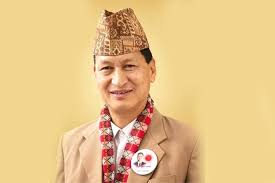
“We introduced the provision of relief so that every single person of a poor family should get equal portion of relief and no one should die of hunger during the nationwide lockdown,” said Mayor Bidhya Sundar Shakya.
Mayor Shakya said that due to the prolonged lockdown, many poor people and daily wage earners were deprived of their livelihood.
As per the standard, those people without guardianship, without income sources, property and dependent on others are defined as helpless.
People living in the orphanage, old age home, care homes, temples, monasteries, and mosques, among others, belong to this group.
Meanwhile, the labourers who work in the informal sector, daily wage earners and potters and those without land and house in Kathmandu are defined as daily wage earners. However, this definition doesn’t cover the unemployed youngsters with or without property in Kathmandu.
The standard will be brought into effect immediately and the relief package will be provided to the families which are included in the list of ward office of their respective wards, said Mayor Shakya.
According to him, the relief package would be prepared according to the members of the family. “If a family has only one member, then that family will be provided four kg of rice grain, 1 kg lentil, one kg salt, half litre oil, half kg bitten rice and one kg vegetables.
Similarly, there will be second package of 12 kg of rice grains, 2 kg o lentil, 1 kg of salt, half litre oil, 2 kg of bitten rice and 3 kg of vegetables for a family with two to four members.
If any family has five or more members, then it will get 16 kg of rice, 3 kg of lentil, one kg salt, 1 litre oil, 3 kg bitten rice and 4 kg vegetables.” He said.
Likewise, considering the condition of a family or a person, the metropolitan city will be responsible to provide prepared meals for helpless and extremely poor.
To distribute the relief package, the ward office could mobilise and take support of the non-profit organisations or religious organisations.

Login to add a comment