







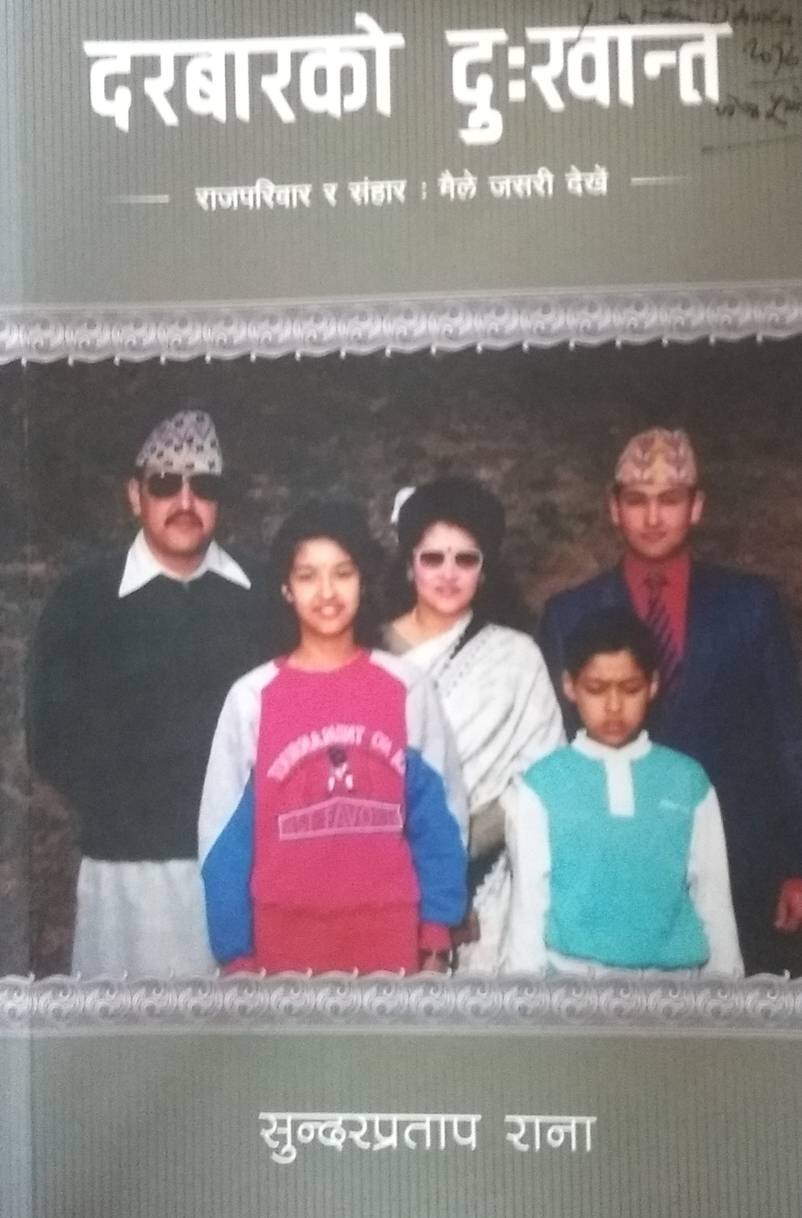
By Sundar Pratap Rana
Pub. Kitab Publishers P. Ltd, Kathmandu
Price Rs 600/-
This book wasn’t picked up review. One is hoping though that this review will pick extra readers. This is simply because the writer, in his biographical account of his life and service at the royal palace has brought to public what is perhaps the most profound account of the royal palace massacre, its actors and even explored its motives in a more holistic sense. But this is not all. Having served at the epi-centre of Nepali decision making for some seventeen years, it is also a professional soldier’s of the manner of Nepali policy making at that centre. The reader will have been made aware of the challenges, compulsions and purposes of Nepali decisions by time the book is rested. Indeed, one will have been enriched in knowledge of genuine Nepali policy priorities put into words by a soldier in a matter of fact manner that is different from the many autobiographies proliferating the Nepali vernacular market.
There is more though. The reader finishes the book with a better knowledge of King Birendra and family. Having had a hand in bringing up the princes and princess, glimpses into their upbringing are valuable character judgements into what could have gone wrong. Spurts of brilliant analyses into Nepali policy making at the palace level both under direct palace rule and during the multiparty phase enrich the reader. King Birendra and Queen Aishwarya unwittingly come to focus in the process. Also the Nepali army and the palace security machine, something not as thoroughly discussed as in this book. Indeed, Nepali security concerns and foreign pressures and priorities come very well to light as do palace formalities and ceremonial and recreational diversions. And then there are the numerous names dropped in the account of both political and social figures foreign and domestic which sends the mind reeling of the manner with which security shadows observe the goings about of a world while fulfilling security duties.
In short, a Nepal reeling through a republican anarchy where emphasis is one of institutional destruct and not on institution building has much to gain from a recollection of what and how things functioned and then compare things with today’s nonfunctional system. This is where the book scores. The tragedy of the Royal Massacre is real as the account underscores, but it need not have resulted in a derelict, dead palace today turned into a dilapidated museum is a salient message that is telling. If this review contributes to even a single reader, it will have served the purpose of this column.
–Reviewer

Login to add a comment